THE ADVENTURE COLLECTIVE® · Independent discovery and booking for outdoor travel

Discover Bhaktapur’s carved temples and ride the ridge to Nagarkot for a sunrise view toward Everest. This half-day private tour blends Newar history and Himalayan panoramas with simple logistics and local insights.
Discover Bhaktapur’s carved temples and ride the ridge to Nagarkot for a sunrise view toward Everest. This half-day private tour blends Newar history and Himalayan panoramas with simple logistics and local insights.
You step out of the car onto an uneven brick street in Bhaktapur as morning light slides across terraced roofs and ornate wooden windows. The air tastes faintly of roasting spices and damp stone; temple bells measure time while the horizon beyond the town rises into the silhouettes of the Kathmandu Valley and, on a clear day, the Everest massif daring you to look higher.
Verified experiences and guided adventures in the surrounding area.
Operated by Swami Narayan Travels Pvt Ltd · Bhaktapur, Bagmati Province
You step out of the car onto an uneven brick street in Bhaktapur as morning light slides across terraced roofs and ornate wooden windows. The air tastes faintly of roasting spices and damp stone; temple bells measure time while the horizon beyond the town rises into the silhouettes of the Kathmandu Valley and, on a clear day, the Everest massif daring you to look higher.
Bhaktapur was a center of Newar arts and Malla-era court culture — its Durbar Square keeps centuries of woodcarvings, pagoda roofs, and the squat, towering Nyatapola Temple. The itinerary usually threads through pottery squares, narrow alleys, and temple courtyards before a short drive uphill to Nagarkot. Nagarkot occupies a ridge east of the valley; its viewpoint is renowned for early-morning panoramas of the Himalaya when spring and autumn clarity align.
Geologically, the valley sits where the Himalayan thrust folds steeply; the mountains you’ll watch are young, sharp, and constantly shifting in lighting and snow. Culturally, encounters are local and direct: markets, shrine rituals, and craftsmen at work.
Practical guidance: plan for a half-day (4–5 hours) with steady walking on paved and step-strewn surfaces, bring layered clothing for temperature swings and wind at Nagarkot, and book sunrise slots if Everest visibility is a priority. Carry small local currency for temple donations and snacks, and allow extra time for photography—the vistas and carved details reward patience.
easy.
4–5 hours.
Suitable for average fitness; involves walking on paved streets, steps, and short uphill sections.
Visibility depends on season and weather—autumn (Sept–Nov) and spring (Mar–May) usually offer the clearest views; mornings are best.
Yes; the tour is rated easy with minimal walking distances, but expect steps and some standing; inform the operator of mobility needs.
This tour lists attractions visited but admission policies vary; bring small cash for any local entry fees or donations.
The overall tour runs about 4–5 hours door-to-door within the Kathmandu Valley; private pickup and drop-off are typically included.
Bhaktapur was a medieval Newar kingdom and Malla-era cultural center; its Durbar Square preserves traditional architecture and civic temples from the 15th–17th centuries.
Respect temple spaces, avoid feeding wildlife, and carry out any trash; supporting local guides and artisans helps sustain conservation and cultural preservation.
Swami Narayan Travels Pvt Ltd operates guided outdoor trips and adventures with an emphasis on safety, stewardship, and memorable experiences.
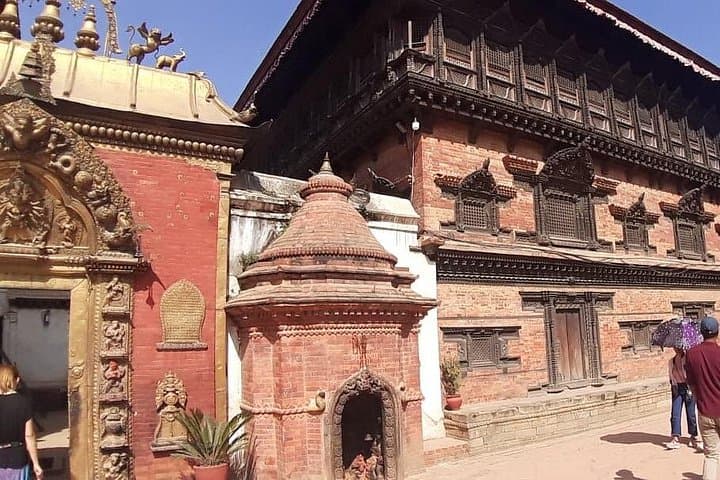
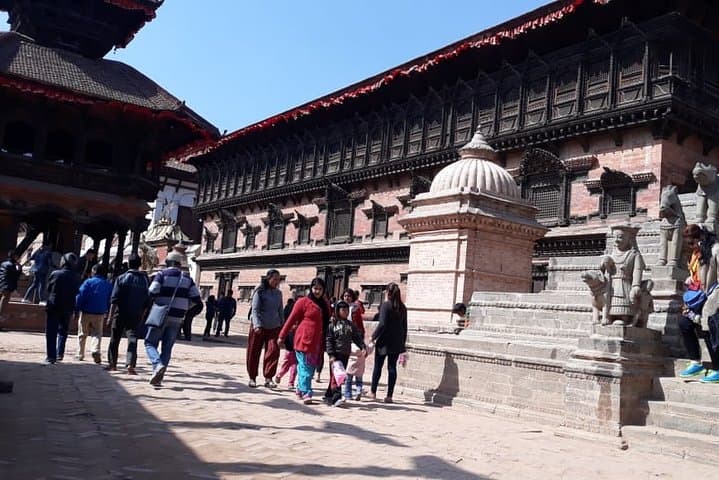
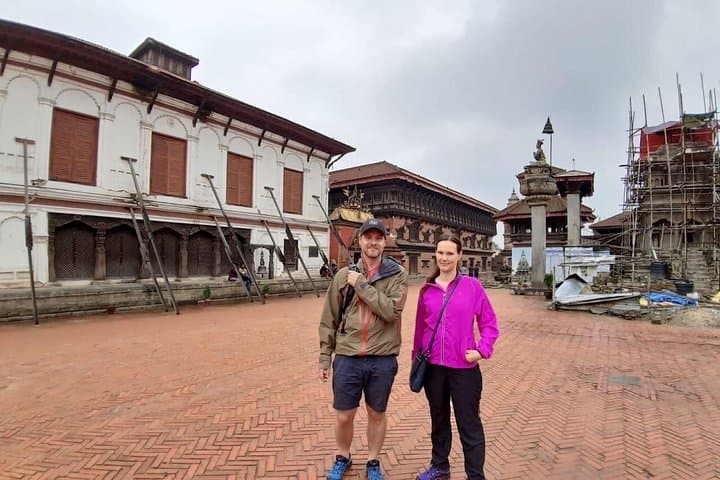
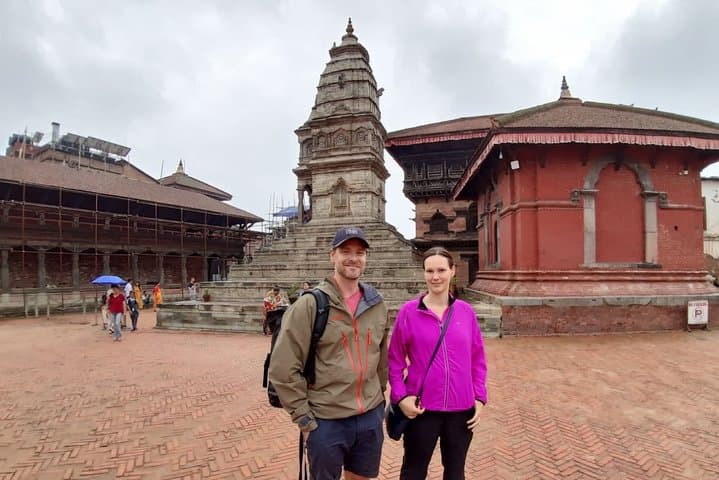
You step out of the car onto an uneven brick street in Bhaktapur as morning light slides across terraced roofs and ornate wooden windows. The air tastes faintly of roasting spices and damp stone; temple bells measure time while the horizon beyond the town rises into the silhouettes of the Kathmandu Valley and, on a clear day, the Everest massif daring you to look higher.
You step out of the car onto an uneven brick street in Bhaktapur as morning light slides across terraced roofs and ornate wooden windows. The air tastes faintly of roasting spices and damp stone; temple bells measure time while the horizon beyond the town rises into the silhouettes of the Kathmandu Valley and, on a clear day, the Everest massif daring you to look higher.
Bhaktapur was a center of Newar arts and Malla-era court culture — its Durbar Square keeps centuries of woodcarvings, pagoda roofs, and the squat, towering Nyatapola Temple. The itinerary usually threads through pottery squares, narrow alleys, and temple courtyards before a short drive uphill to Nagarkot. Nagarkot occupies a ridge east of the valley; its viewpoint is renowned for early-morning panoramas of the Himalaya when spring and autumn clarity align.
Geologically, the valley sits where the Himalayan thrust folds steeply; the mountains you’ll watch are young, sharp, and constantly shifting in lighting and snow. Culturally, encounters are local and direct: markets, shrine rituals, and craftsmen at work.
Practical guidance: plan for a half-day (4–5 hours) with steady walking on paved and step-strewn surfaces, bring layered clothing for temperature swings and wind at Nagarkot, and book sunrise slots if Everest visibility is a priority. Carry small local currency for temple donations and snacks, and allow extra time for photography—the vistas and carved details reward patience.