THE ADVENTURE COLLECTIVE® · Independent discovery and booking for outdoor travel

Drive east from Kathmandu to the towering Kailashnath Mahadev statue at Saanga, climb steps lined with Shiva-lingas, and take in wide views across Bhaktapur valley. This half-day private tour pairs culture, short walks, and panoramic landscape photo ops.
Drive east from Kathmandu to the towering Kailashnath Mahadev statue at Saanga, climb steps lined with Shiva-lingas, and take in wide views across Bhaktapur valley. This half-day private tour pairs culture, short walks, and panoramic landscape photo ops.
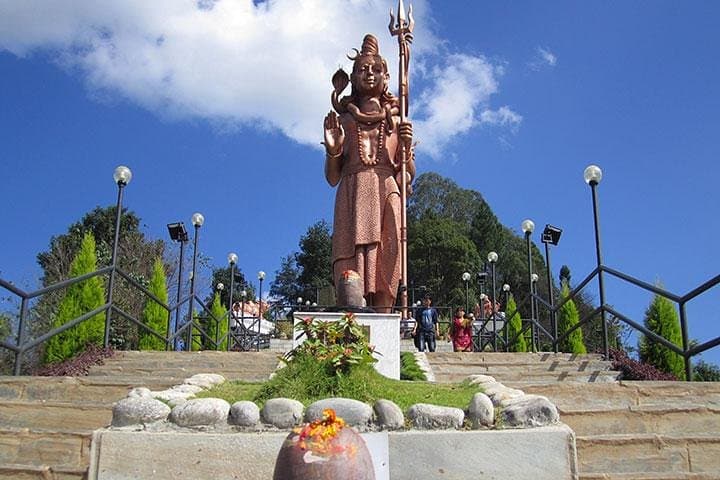
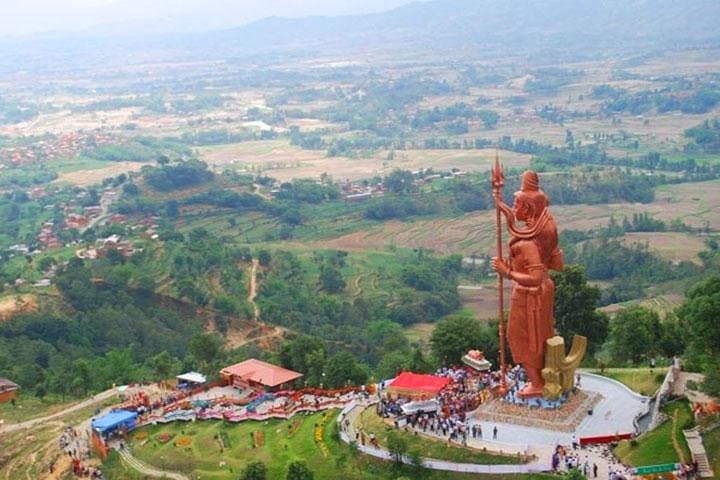
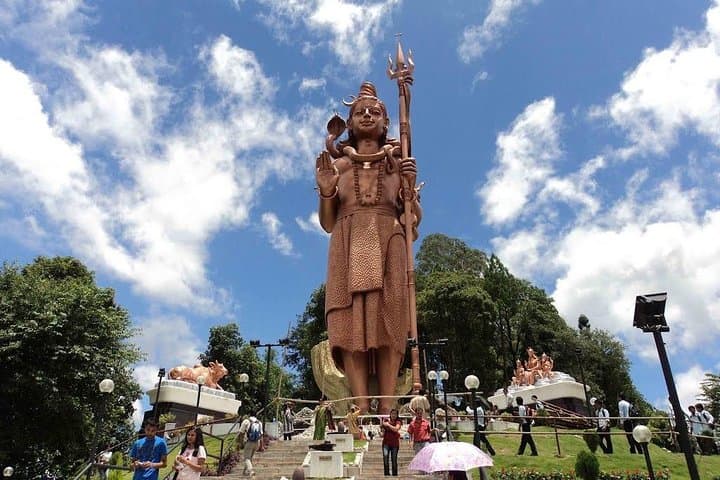
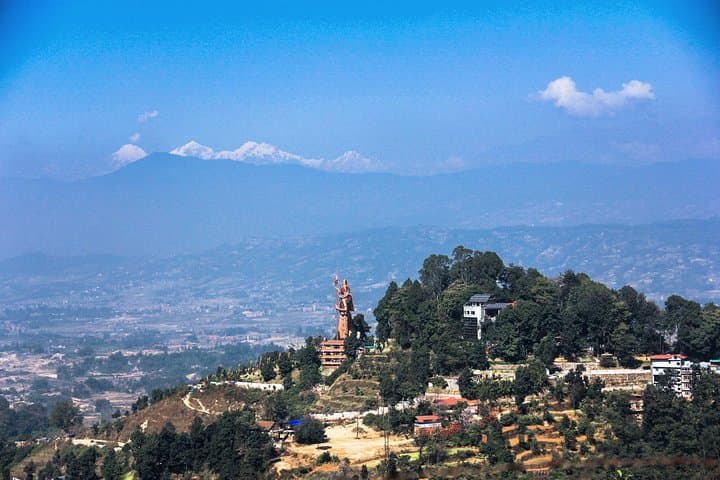
You leave Kathmandu and the city tightens behind you as terraced fields and hill ridges spread out toward Bhaktapur. The road climbs gently; the air sharpens and, from the hill by Saanga, the 44-meter Kailashnath Mahadev statue comes into view—Shiva upright and commanding, watching the valley below.
Verified experiences and guided adventures in the surrounding area.
Operated by Liberty Holidays · Saanga, Bagmati Province
You leave Kathmandu and the city tightens behind you as terraced fields and hill ridges spread out toward Bhaktapur. The road climbs gently; the air sharpens and, from the hill by Saanga, the 44-meter Kailashnath Mahadev statue comes into view—Shiva upright and commanding, watching the valley below.
The statue, completed between 2004 and 2011, stands on the Bhaktapur–Kavre border and has become a modern focal point for both worship and panoramic sightseeing. Below it, the Bhaktapur valley opens in cultivated squares and redbrick roofs shaped by centuries of Newar craftsmanship. Stairs lead up past twelve Shiva-lingas, offering a compact lesson in Hindu iconography, while nearby statuary depicts Shiva’s family: Parvati, Kumar and Ganesh.
Geologically the hill is part of the Kathmandu basin rim—rolling uplands that frame the low-lying valley and provide clear sightlines to the Kathmandu Valley and, on a good day, the distant Himalaya. Culturally, the area blends pilgrimage, local leisure (there’s a children’s park and picnic areas) and village life; guides will often point out traditional brick kilns and rice paddies on the approach.
Practical guidance: the tour is a short drive (about 30–60 minutes each way depending on traffic) with light walking and a climb to the statue platform. Wear comfortable shoes for steps, bring water and sun protection, and carry modest clothing for respect at religious sites. Lunch is included; spas and village visits are optional extras. Note some heritage sites in the region still show earthquake damage from 2015—your guide can advise current conditions and accessibility.
easy.
4 hours.
Suitable for most fitness levels; involves short periods of walking and climbing stairs.
The transfer is typically 30–60 minutes each way depending on traffic; plan for around four hours total for the private half-day tour.
Yes, admission to the Kailashnath Mahadev site is included in the tour’s itinerary.
Yes, children are permitted but the operator requires a minimum age of 5; infants must sit on an adult’s lap during transport.
Lunch at a local restaurant is included; optional extras such as spa visits or village activities are not included.
The Kailashnath Mahadev statue is a recent addition (completed 2011) built as a large-scale devotional landmark near historic Bhaktapur, an ancient Newar city with medieval palaces and pagoda architecture.
Visitors should stick to marked paths and avoid littering; the site balances religious use with local recreation, and waste management is a community concern in the valley.
Liberty Holidays operates guided outdoor trips and adventures with an emphasis on safety, stewardship, and memorable experiences.
You leave Kathmandu and the city tightens behind you as terraced fields and hill ridges spread out toward Bhaktapur. The road climbs gently; the air sharpens and, from the hill by Saanga, the 44-meter Kailashnath Mahadev statue comes into view—Shiva upright and commanding, watching the valley below.
You leave Kathmandu and the city tightens behind you as terraced fields and hill ridges spread out toward Bhaktapur. The road climbs gently; the air sharpens and, from the hill by Saanga, the 44-meter Kailashnath Mahadev statue comes into view—Shiva upright and commanding, watching the valley below.
The statue, completed between 2004 and 2011, stands on the Bhaktapur–Kavre border and has become a modern focal point for both worship and panoramic sightseeing. Below it, the Bhaktapur valley opens in cultivated squares and redbrick roofs shaped by centuries of Newar craftsmanship. Stairs lead up past twelve Shiva-lingas, offering a compact lesson in Hindu iconography, while nearby statuary depicts Shiva’s family: Parvati, Kumar and Ganesh.
Geologically the hill is part of the Kathmandu basin rim—rolling uplands that frame the low-lying valley and provide clear sightlines to the Kathmandu Valley and, on a good day, the distant Himalaya. Culturally, the area blends pilgrimage, local leisure (there’s a children’s park and picnic areas) and village life; guides will often point out traditional brick kilns and rice paddies on the approach.
Practical guidance: the tour is a short drive (about 30–60 minutes each way depending on traffic) with light walking and a climb to the statue platform. Wear comfortable shoes for steps, bring water and sun protection, and carry modest clothing for respect at religious sites. Lunch is included; spas and village visits are optional extras. Note some heritage sites in the region still show earthquake damage from 2015—your guide can advise current conditions and accessibility.