THE ADVENTURE COLLECTIVE® · Independent discovery and booking for outdoor travel

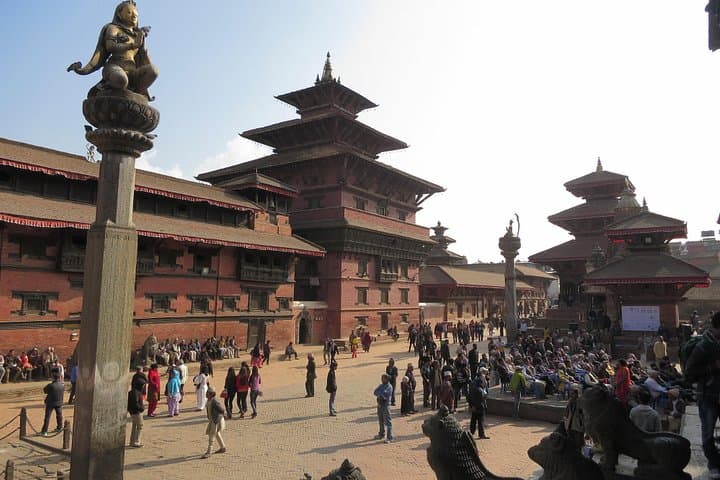
Walk Bhaktapur’s Durbar Square, stand beneath Nyatapola’s five tiers and watch traditional thanka painters and potters at work. This half-day cultural tour pairs architecture, crafts and local food with an experienced guide.
Walk Bhaktapur’s Durbar Square, stand beneath Nyatapola’s five tiers and watch traditional thanka painters and potters at work. This half-day cultural tour pairs architecture, crafts and local food with an experienced guide.
You step from the car onto a brick-paved plaza where the air carries incense, frying spices and the low chatter of afternoon prayers. The five-tiered silhouette of Nyatapola rises before you, each terrace holding stone guardians that watch over centuries of festivals and daily life.
Verified experiences and guided adventures in the surrounding area.
Operated by Nature Explore Trekking Pvt Ltd · Bhaktapur, Bagmati Province
You step from the car onto a brick-paved plaza where the air carries incense, frying spices and the low chatter of afternoon prayers. The five-tiered silhouette of Nyatapola rises before you, each terrace holding stone guardians that watch over centuries of festivals and daily life.
Bhaktapur (Bhadgaon) grew around trade routes in the Kathmandu Valley from the 9th century and preserves a living archive of Newar architecture and artisanship. The compact city is built on alluvial plains; the earthen bricks and carved timber of its temples reflect local clay deposits and centuries of woodworking skill. Expect temple courtyards, narrow alleys, and open squares where potters, thanka painters and carpet weavers work in full view.
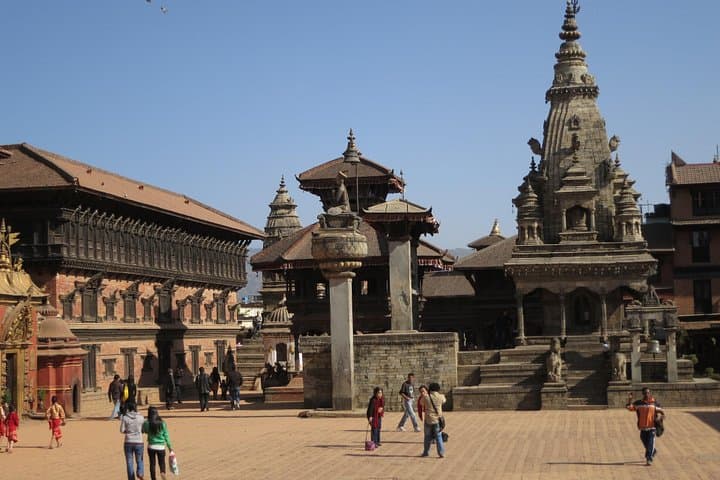
Cultural life here is tactile: lacquered masks, mandala scrolls and ritual bronze bells are not museum props but items still made and used. Your guide will point out Dattatreya Temple’s wood carvings, the famed 55-Window Palace facade, and quieter lanes where family-run workshops let you watch a carpet or thanka come to life.
Practical notes: the tour runs about 4–5 hours with moderate walking on uneven bricks. Bring water, sun protection and small bills for purchases and temple donations. Mobility access exists in main squares though some sites include steps and narrow entryways. Aim for morning or late afternoon light for photos and fewer crowds, and allow time for an unhurried lunch at a local courtyard café to sample Newari cuisine before the drive back to Kathmandu.
easy.
4–5 hours.
Light walking on mostly flat but uneven surfaces; suitable for most fitness levels
The experience runs approximately 4–5 hours including transport, site visits and a local lunch.
Main squares and some transport are wheelchair accessible, but some temples have steps and narrow entrances—check with your operator for specific arrangements.
Yes; this tour typically includes transportation, entrance fees and lunch as part of the booking.
Morning or late afternoon offers softer light, fewer crowds and cooler walking conditions—avoid midday in summer if possible.
Bhaktapur dates to the 9th century and became a medieval center of Newar art, architecture and trade; many monuments reflect Malla-period craftsmanship.
Post-2015 earthquake restoration and local artisan programs focus on preserving traditional techniques while managing tourist impact; stick to marked paths and avoid touching fragile carvings.
Nature Explore Trekking Pvt Ltd operates guided outdoor trips and adventures with an emphasis on safety, stewardship, and memorable experiences.
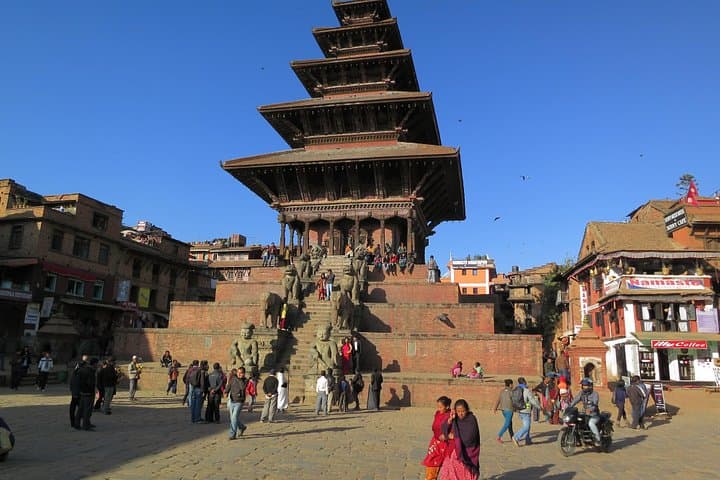
You step from the car onto a brick-paved plaza where the air carries incense, frying spices and the low chatter of afternoon prayers. The five-tiered silhouette of Nyatapola rises before you, each terrace holding stone guardians that watch over centuries of festivals and daily life.
You step from the car onto a brick-paved plaza where the air carries incense, frying spices and the low chatter of afternoon prayers. The five-tiered silhouette of Nyatapola rises before you, each terrace holding stone guardians that watch over centuries of festivals and daily life.
Bhaktapur (Bhadgaon) grew around trade routes in the Kathmandu Valley from the 9th century and preserves a living archive of Newar architecture and artisanship. The compact city is built on alluvial plains; the earthen bricks and carved timber of its temples reflect local clay deposits and centuries of woodworking skill. Expect temple courtyards, narrow alleys, and open squares where potters, thanka painters and carpet weavers work in full view.
Cultural life here is tactile: lacquered masks, mandala scrolls and ritual bronze bells are not museum props but items still made and used. Your guide will point out Dattatreya Temple’s wood carvings, the famed 55-Window Palace facade, and quieter lanes where family-run workshops let you watch a carpet or thanka come to life.
Practical notes: the tour runs about 4–5 hours with moderate walking on uneven bricks. Bring water, sun protection and small bills for purchases and temple donations. Mobility access exists in main squares though some sites include steps and narrow entryways. Aim for morning or late afternoon light for photos and fewer crowds, and allow time for an unhurried lunch at a local courtyard café to sample Newari cuisine before the drive back to Kathmandu.