THE ADVENTURE COLLECTIVE® · Independent discovery and booking for outdoor travel

Walk the ancient seabed and caves of Portugal’s Serra de Aire e Candeeiros with a certified GeoGuide. This six-hour interpretive tour pairs close-up geology with accessible walking across limestone pavements and fossil sites.
Walk the ancient seabed and caves of Portugal’s Serra de Aire e Candeeiros with a certified GeoGuide. This six-hour interpretive tour pairs close-up geology with accessible walking across limestone pavements and fossil sites.
Picture a limestone plain that was once a warm, shallow sea: pale rock underfoot, wind pushing over open fields, and the occasional bird call echoing from a cave mouth.
Verified experiences and guided adventures in the surrounding area.
Operated by SUVisTTa.pt - Hernâni Magalhães · Porto de Mós, Leiria District
Picture a limestone plain that was once a warm, shallow sea: pale rock underfoot, wind pushing over open fields, and the occasional bird call echoing from a cave mouth.
This full-day guided experience in the Parque Natural das Serras de Aire e Candeeiros moves between exposed lapiaz, prehistoric cave entrances and fossil-bearing slabs that still hold Jurassic footprints. A certified GeoGuide reads the layers for you — pointing out marine sediments, karst features and traces of human use from prehistory to modern pastoral life. The landscape is both geological classroom and quiet theater: dry valleys that once hosted lagoons, caves carved by millennia of water, and exposed surfaces that record ancient shorelines.
Historically the massif supplied stone, shelter and seasonal grazing; its karst topography created sinkholes and caves that preserved archaeological and paleontological records. Geologically the park is classic Jurassic limestone — soluble rock shaped into lapiaz, dolines and subterranean passages.
Expect several short walks across uneven limestone pavement, a cave visit, and stops at fossil beds and the so-called Jurassic Beach where you can stand on an ancient seabed. Practical notes: wear sturdy footwear with good grip, bring 1–2 liters of water, sun protection, and layers — the wind can be sharp on exposed plateaus. The itinerary moves at an interpretive pace with plenty of stops for observation and photography, making it suitable for anyone comfortable on rocky ground for up to six hours.
The tour is ideal for curious hikers, geology enthusiasts and anyone who prefers learning while moving through a landscape that still speaks in stone.
moderate.
6 hours.
Suitable for people with light-to-moderate fitness who can handle uneven limestone surfaces and several short hikes over rocky ground.
The tour is classified as easy-to-moderate: expect uneven, rocky ground and several short hikes totaling up to six hours, but no technical climbing.
The route is family-friendly for children used to hikes and active seniors who can navigate rocky terrain; consult the operator about specific needs.
A certified GeoGuide, private air-conditioned SUV transport for your group, bottled water and mandatory insurance are included; check the operator for any additional inclusions.
No — removing fossils or disturbing footprint slabs is prohibited; follow the guide’s directions to protect these non-renewable resources.
The massif preserves Jurassic marine deposits and sites showing human occupation since prehistory, linking geological and cultural narratives.
Karst landscapes are fragile; stay on designated routes, avoid collecting specimens and minimize footprint to protect caves and fossil surfaces.
SUVisTTa.pt - Hernâni Magalhães operates guided outdoor trips and adventures with an emphasis on safety, stewardship, and memorable experiences.


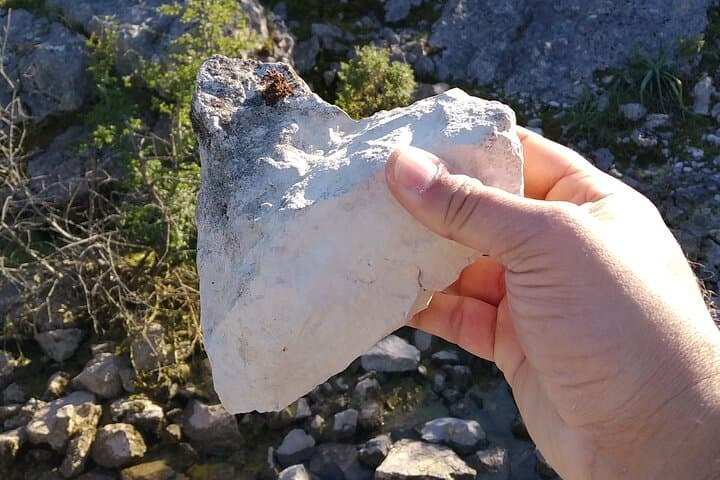

Picture a limestone plain that was once a warm, shallow sea: pale rock underfoot, wind pushing over open fields, and the occasional bird call echoing from a cave mouth.
Picture a limestone plain that was once a warm, shallow sea: pale rock underfoot, wind pushing over open fields, and the occasional bird call echoing from a cave mouth.
This full-day guided experience in the Parque Natural das Serras de Aire e Candeeiros moves between exposed lapiaz, prehistoric cave entrances and fossil-bearing slabs that still hold Jurassic footprints. A certified GeoGuide reads the layers for you — pointing out marine sediments, karst features and traces of human use from prehistory to modern pastoral life. The landscape is both geological classroom and quiet theater: dry valleys that once hosted lagoons, caves carved by millennia of water, and exposed surfaces that record ancient shorelines.
Historically the massif supplied stone, shelter and seasonal grazing; its karst topography created sinkholes and caves that preserved archaeological and paleontological records. Geologically the park is classic Jurassic limestone — soluble rock shaped into lapiaz, dolines and subterranean passages.
Expect several short walks across uneven limestone pavement, a cave visit, and stops at fossil beds and the so-called Jurassic Beach where you can stand on an ancient seabed. Practical notes: wear sturdy footwear with good grip, bring 1–2 liters of water, sun protection, and layers — the wind can be sharp on exposed plateaus. The itinerary moves at an interpretive pace with plenty of stops for observation and photography, making it suitable for anyone comfortable on rocky ground for up to six hours.
The tour is ideal for curious hikers, geology enthusiasts and anyone who prefers learning while moving through a landscape that still speaks in stone.