THE ADVENTURE COLLECTIVE® · Independent discovery and booking for outdoor travel

A full-day guided loop from Jerusalem through Bethlehem’s sacred sites, the agricultural terraces of Beit Sahour, and Jericho’s archaeology, finishing with a riverside stop at Qaser Al Yahud. Expect an 8–11 hour day with short walks, vehicle changes, and possible lines at the Nativity grotto.
A full-day guided loop from Jerusalem through Bethlehem’s sacred sites, the agricultural terraces of Beit Sahour, and Jericho’s archaeology, finishing with a riverside stop at Qaser Al Yahud. Expect an 8–11 hour day with short walks, vehicle changes, and possible lines at the Nativity grotto.
A low sun slides across the terraced slopes of the Judean hills as a small convoy heads south from Jerusalem, the city falling away to stone walls and olive groves. The morning begins in Bethlehem, where cobbled lanes funnel visitors toward Manger Square and the Church of the Nativity—an austere basilica built over the cave traditionally identified as Jesus’ birthplace. The guide moves the group through chapels and mosaics, then out again into the milk-white gloom of the Milk Grotto; salt-streaked light and the scent of incense linger.
Verified experiences and guided adventures in the surrounding area.
Operated by Judah Tours · Bethlehem, West Bank
A low sun slides across the terraced slopes of the Judean hills as a small convoy heads south from Jerusalem, the city falling away to stone walls and olive groves. The morning begins in Bethlehem, where cobbled lanes funnel visitors toward Manger Square and the Church of the Nativity—an austere basilica built over the cave traditionally identified as Jesus’ birthplace. The guide moves the group through chapels and mosaics, then out again into the milk-white gloom of the Milk Grotto; salt-streaked light and the scent of incense linger.
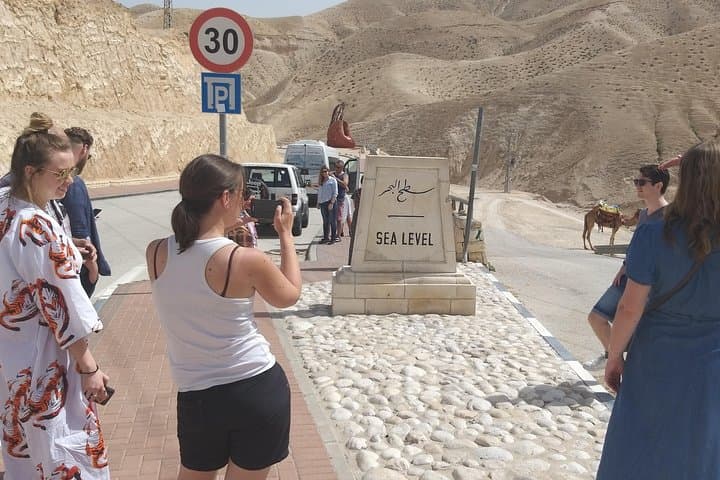
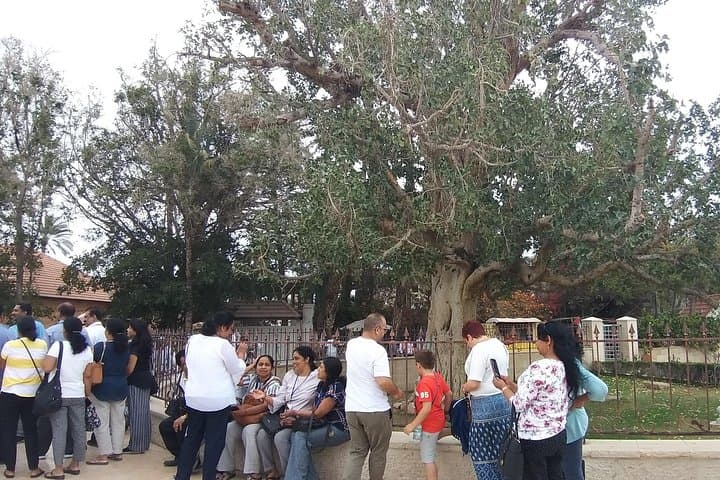
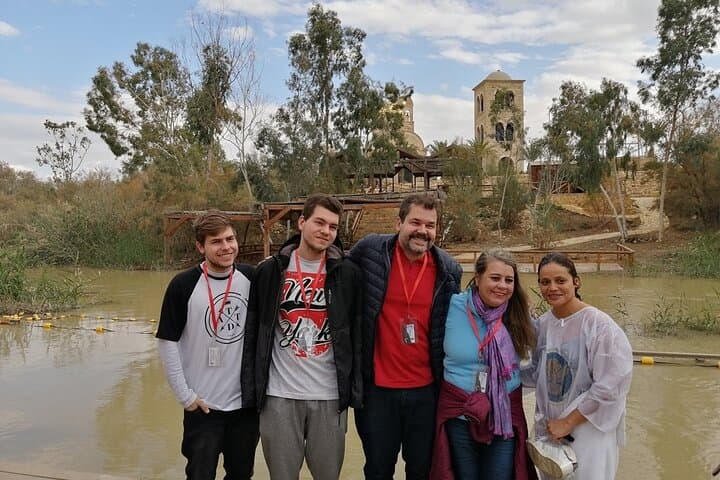
The route threads past Beit Sahour’s Shepherds’ Field and a cooperative olive-wood workshop where craftsmen carve small religious icons. After lunch the landscape shifts: orchards thin, the air warms, and Jericho rises like a green island in a tawny desert. Archaeology takes center stage at Tell es-Sultan and Hisham’s Palace—the latter remembered for its Umayyad-era mosaics and the hush of ruined colonnades. A short stop at Qaser Al Yahud on the Jordan River offers a quiet riverside moment to contemplate the same waters tied to centuries of pilgrimage.
Plan practically: this is an 8–11 hour shared tour with vehicle changes, occasional queues to enter shrines, and short walks on uneven stone and desert paths. Bring passport for West Bank crossings, modest clothing for sacred sites, sun protection, and a refillable water bottle. Expect cultural context from guides, intermittent waits for grotto access, and a compact day that pairs dense history with the tactile geography of the Jordan Valley.
easy.
8–11 hours.
Suitable for travelers who can manage multiple short walks, standing for up to 90 minutes, and getting on/off a coach
Yes—travelers must carry a passport for entry into Bethlehem and other West Bank sites; keep it with you throughout the day.
No—this itinerary does not include the Mount of Temptation or the cable car; the tour focuses on Bethlehem, Jericho and Qaser Al Yahud.
Walking consists of short guided circuits at each stop—typically 15–40 minute site walks, with standing and stairs; overall physical demand is low.
The tour includes guided visits in Bethlehem; some stops (like parts of Jericho) may be self-guided and admission rules can vary—ask the guide on arrival.
The Church of the Nativity traces a Christian presence back to the 4th century when Constantine’s builders enclosed the cave; Jericho’s Tell es-Sultan contains layers of settlement that rank among the oldest urban sites in the world.
Archaeological ruins are fragile—stay on marked paths and avoid touching mosaics. Water extraction has reduced flows in the Jordan; support local conservation efforts and minimize plastic use.
Judah Tours operates guided outdoor trips and adventures with an emphasis on safety, stewardship, and memorable experiences.
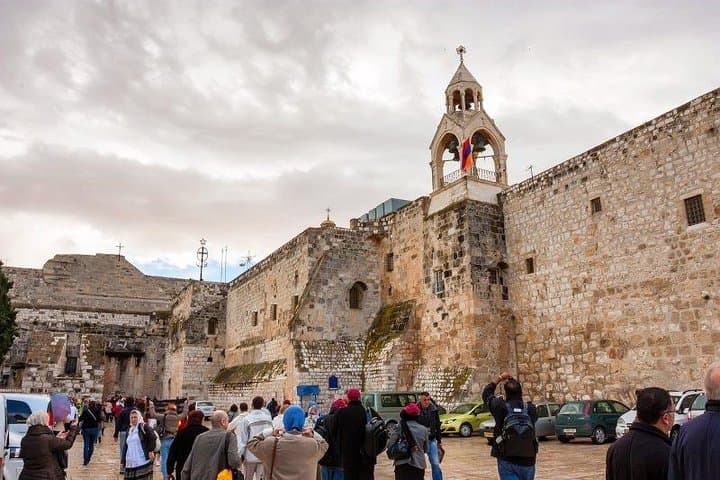
A low sun slides across the terraced slopes of the Judean hills as a small convoy heads south from Jerusalem, the city falling away to stone walls and olive groves. The morning begins in Bethlehem, where cobbled lanes funnel visitors toward Manger Square and the Church of the Nativity—an austere basilica built over the cave traditionally identified as Jesus’ birthplace. The guide moves the group through chapels and mosaics, then out again into the milk-white gloom of the Milk Grotto; salt-streaked light and the scent of incense linger.
A low sun slides across the terraced slopes of the Judean hills as a small convoy heads south from Jerusalem, the city falling away to stone walls and olive groves. The morning begins in Bethlehem, where cobbled lanes funnel visitors toward Manger Square and the Church of the Nativity—an austere basilica built over the cave traditionally identified as Jesus’ birthplace. The guide moves the group through chapels and mosaics, then out again into the milk-white gloom of the Milk Grotto; salt-streaked light and the scent of incense linger.
The route threads past Beit Sahour’s Shepherds’ Field and a cooperative olive-wood workshop where craftsmen carve small religious icons. After lunch the landscape shifts: orchards thin, the air warms, and Jericho rises like a green island in a tawny desert. Archaeology takes center stage at Tell es-Sultan and Hisham’s Palace—the latter remembered for its Umayyad-era mosaics and the hush of ruined colonnades. A short stop at Qaser Al Yahud on the Jordan River offers a quiet riverside moment to contemplate the same waters tied to centuries of pilgrimage.
Plan practically: this is an 8–11 hour shared tour with vehicle changes, occasional queues to enter shrines, and short walks on uneven stone and desert paths. Bring passport for West Bank crossings, modest clothing for sacred sites, sun protection, and a refillable water bottle. Expect cultural context from guides, intermittent waits for grotto access, and a compact day that pairs dense history with the tactile geography of the Jordan Valley.