THE ADVENTURE COLLECTIVE® · Independent discovery and booking for outdoor travel

Spend a full day moving from the stone corridors of Bethlehem’s ancient churches to the saline calm of the Dead Sea. This guided day tour pairs cultural sites — Nativity Church, the Milk Grotto, Shepherds’ Field — with a relaxing Dead Sea stop, all from Jerusalem.
Spend a full day moving from the stone corridors of Bethlehem’s ancient churches to the saline calm of the Dead Sea. This guided day tour pairs cultural sites — Nativity Church, the Milk Grotto, Shepherds’ Field — with a relaxing Dead Sea stop, all from Jerusalem.
You step out of the air-conditioned minibus into the square beside the Church of the Nativity, cool stone underfoot and the low hum of vendors and pilgrims. The church’s façade reads like a living timeline — a 4th-century foundation over a grotto, later Crusader and Ottoman additions — and the narrow lanes of Bethlehem lead quickly from sacred chapels to sun-baked vistas of the Judean hills.
Verified experiences and guided adventures in the surrounding area.
Operated by Judah Tours · Bethlehem, West Bank
You step out of the air-conditioned minibus into the square beside the Church of the Nativity, cool stone underfoot and the low hum of vendors and pilgrims. The church’s façade reads like a living timeline — a 4th-century foundation over a grotto, later Crusader and Ottoman additions — and the narrow lanes of Bethlehem lead quickly from sacred chapels to sun-baked vistas of the Judean hills.
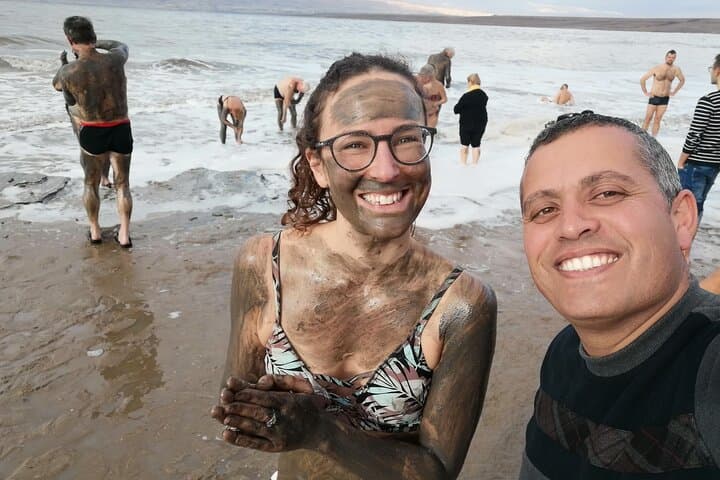
This day tour threads history and landscape: Bethlehem’s churches (Nativity, St. Catherine, the Milk Grotto) bear layers of Byzantine and Crusader heritage, while Beit Sahour’s Shepherds’ Field commemorates the biblical announcement of Christ’s birth. Geologically, the route drops toward the Dead Sea — the planet’s lowest exposed elevation at roughly 430 meters below sea level — where dense, mineral-rich water makes floating effortless and the shoreline displays evaporative salt formations and therapeutic black mud.
Expect a mix of cultural stops and relaxation: guided visits to principal churches, short walks between sites, then a two-hour Dead Sea stop with beach and pool access. Practicalities are part of the rhythm — checkpoints, possible lines for the Nativity grotto, and vehicle changes are common; bring your passport, sun protection, and patience. Avoid shaving before entering the Dead Sea, rinse off thoroughly after floating, and plan for an 8–11 hour day leaving Jerusalem early. For travelers who want history with a side of improbable buoyancy, this is a compact, accessible introduction to one of the Middle East’s most singular landscapes.
easy.
8–11 hours.
Suitable for most fitness levels; this tour involves short walks and standing during guided visits but no strenuous hiking.
Yes — passports or government ID are recommended and may be required at checkpoints when traveling from Jerusalem to Bethlehem.
Yes — the high salinity makes floating easy; avoid getting water in your eyes and don’t shave shortly before entering to reduce irritation.
Access can be limited by lines and holiday schedules; the tour includes guided visits but waiting times of 30–90 minutes are possible and grotto access is not always guaranteed.
Most beaches used by tours offer basic facilities such as restrooms, showers, and sometimes a pool; check the specific operator for exact amenities.
Bethlehem’s Church of the Nativity sits above a grotto venerated since the 4th century; the town has been a continuous pilgrimage site through Byzantine, Crusader, and Ottoman eras.
The Dead Sea is shrinking due to upstream water diversion and mineral extraction; visitors are encouraged to use designated beaches and avoid disturbing fragile salt formations.
Judah Tours operates guided outdoor trips and adventures with an emphasis on safety, stewardship, and memorable experiences.

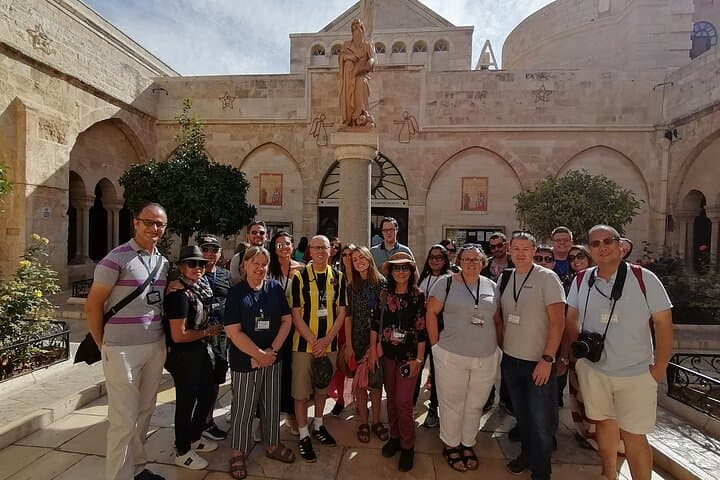
You step out of the air-conditioned minibus into the square beside the Church of the Nativity, cool stone underfoot and the low hum of vendors and pilgrims. The church’s façade reads like a living timeline — a 4th-century foundation over a grotto, later Crusader and Ottoman additions — and the narrow lanes of Bethlehem lead quickly from sacred chapels to sun-baked vistas of the Judean hills.
You step out of the air-conditioned minibus into the square beside the Church of the Nativity, cool stone underfoot and the low hum of vendors and pilgrims. The church’s façade reads like a living timeline — a 4th-century foundation over a grotto, later Crusader and Ottoman additions — and the narrow lanes of Bethlehem lead quickly from sacred chapels to sun-baked vistas of the Judean hills.
This day tour threads history and landscape: Bethlehem’s churches (Nativity, St. Catherine, the Milk Grotto) bear layers of Byzantine and Crusader heritage, while Beit Sahour’s Shepherds’ Field commemorates the biblical announcement of Christ’s birth. Geologically, the route drops toward the Dead Sea — the planet’s lowest exposed elevation at roughly 430 meters below sea level — where dense, mineral-rich water makes floating effortless and the shoreline displays evaporative salt formations and therapeutic black mud.
Expect a mix of cultural stops and relaxation: guided visits to principal churches, short walks between sites, then a two-hour Dead Sea stop with beach and pool access. Practicalities are part of the rhythm — checkpoints, possible lines for the Nativity grotto, and vehicle changes are common; bring your passport, sun protection, and patience. Avoid shaving before entering the Dead Sea, rinse off thoroughly after floating, and plan for an 8–11 hour day leaving Jerusalem early. For travelers who want history with a side of improbable buoyancy, this is a compact, accessible introduction to one of the Middle East’s most singular landscapes.