THE ADVENTURE COLLECTIVE® · Independent discovery and booking for outdoor travel

Explore Ubud’s must-see loop in one thoughtful day: waterfall viewpoints, an 11th‑century cave temple, Tegalalang rice terraces, artisan villages and the lively Sacred Monkey Forest. A private vehicle and guide move you efficiently between culture and landscape.
Explore Ubud’s must-see loop in one thoughtful day: waterfall viewpoints, an 11th‑century cave temple, Tegalalang rice terraces, artisan villages and the lively Sacred Monkey Forest. A private vehicle and guide move you efficiently between culture and landscape.
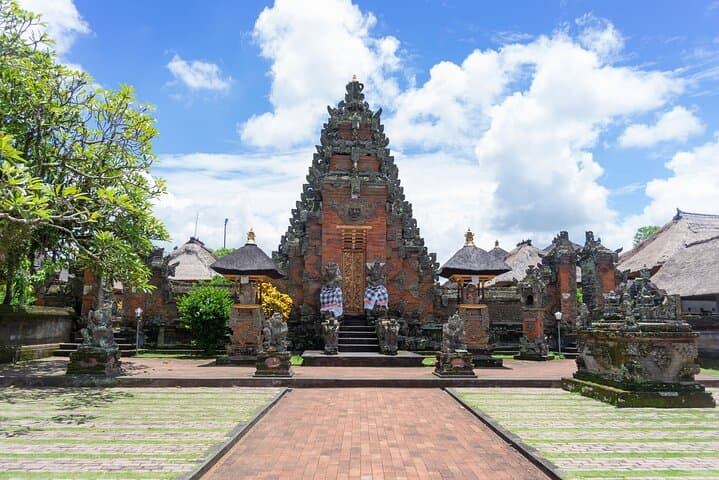
A humid morning light cuts through coconut palms as the private van threads narrow Balinese lanes toward Ubud. The day opens at Tegenungan, where the waterfall foams white over black rock and the valley exhales damp green; a handful of stone steps lead down to spray and a panoramic ledge. From there the guide steers toward the low, carved mouth of Goa Gajah—an 11th-century meditation cave whose carved façade and bathing pools recall Hindu-Balinese ritual life.
Verified experiences and guided adventures in the surrounding area.
Operated by Bali 4U Tours · Ubud, Bali
A humid morning light cuts through coconut palms as the private van threads narrow Balinese lanes toward Ubud. The day opens at Tegenungan, where the waterfall foams white over black rock and the valley exhales damp green; a handful of stone steps lead down to spray and a panoramic ledge. From there the guide steers toward the low, carved mouth of Goa Gajah—an 11th-century meditation cave whose carved façade and bathing pools recall Hindu-Balinese ritual life.
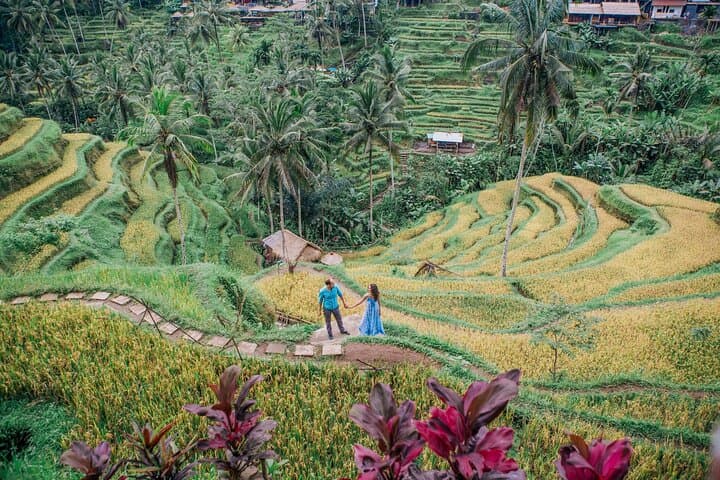
Tegalalang’s terraced fields roll like green stairs away from the road, a living irrigation system shaped by subak—centuries-old cooperative water management that defines the island’s geology and agricultural culture. In nearby art villages (Celuk, Mas, Batuan) artisans turn silver, wood, and pigment into objects that supply temple ceremonies and export markets alike.
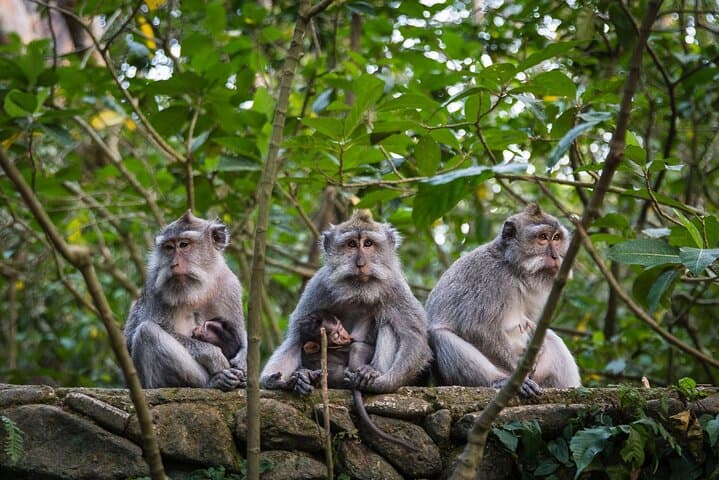
At the Sacred Monkey Forest Sanctuary, long‑tailed macaques move with intent, inspecting bags and visitors’ reactions as much as the ancient stone shrines they frequent. Expect lively animal encounters; the sanctuary is both habitat and cultural site.
Practicals: this private, air‑conditioned tour runs about nine hours with roughly an hour at each major stop, light walking on mixed surfaces (paved lanes, steps, and muddy paths). Wear sturdy sandals or light hiking shoes, bring sun and rain protection, and carry small-change for entrance fees and offerings. For temples: knees and shoulders covered; sarongs are often available on site. Secure cameras and loose items around monkeys and follow guide instructions. Start early to avoid midday heat and crowds—Ubud’s highlights are best seen at a steady pace rather than in a rush.
easy.
9 hours.
Suitable for most fitness levels; involves standing, light walking, and stairs—no technical exertion required
The full-day itinerary runs about nine hours with roughly one hour allocated per main stop (art village, waterfall, Goa Gajah, Tegalalang, Monkey Forest) plus transfer time.
Long‑tailed macaques can be bold but are usually harmless if you don’t feed or provoke them; store loose items and follow the guide’s safety instructions.
Admission fees are included per the tour; many temples require covered knees and shoulders—sarongs are often available for rent if you don’t bring one.
Tipping is customary in Bali for good service; an amount based on satisfaction and group size is appropriate but not mandatory.
Goa Gajah dates to the 11th century and served as a spiritual complex with bathing pools and ritual stone carvings; the subak system that shaped Tegalalang is a centuries-old cooperative irrigation practice.
Visitor impact is managed through site fees and sanctuary rules; avoid feeding wildlife, stick to marked paths, and support local crafts that use sustainable materials where possible.
Bali 4U Tours operates guided outdoor trips and adventures with an emphasis on safety, stewardship, and memorable experiences.
A humid morning light cuts through coconut palms as the private van threads narrow Balinese lanes toward Ubud. The day opens at Tegenungan, where the waterfall foams white over black rock and the valley exhales damp green; a handful of stone steps lead down to spray and a panoramic ledge. From there the guide steers toward the low, carved mouth of Goa Gajah—an 11th-century meditation cave whose carved façade and bathing pools recall Hindu-Balinese ritual life.
A humid morning light cuts through coconut palms as the private van threads narrow Balinese lanes toward Ubud. The day opens at Tegenungan, where the waterfall foams white over black rock and the valley exhales damp green; a handful of stone steps lead down to spray and a panoramic ledge. From there the guide steers toward the low, carved mouth of Goa Gajah—an 11th-century meditation cave whose carved façade and bathing pools recall Hindu-Balinese ritual life.
Tegalalang’s terraced fields roll like green stairs away from the road, a living irrigation system shaped by subak—centuries-old cooperative water management that defines the island’s geology and agricultural culture. In nearby art villages (Celuk, Mas, Batuan) artisans turn silver, wood, and pigment into objects that supply temple ceremonies and export markets alike.
At the Sacred Monkey Forest Sanctuary, long‑tailed macaques move with intent, inspecting bags and visitors’ reactions as much as the ancient stone shrines they frequent. Expect lively animal encounters; the sanctuary is both habitat and cultural site.
Practicals: this private, air‑conditioned tour runs about nine hours with roughly an hour at each major stop, light walking on mixed surfaces (paved lanes, steps, and muddy paths). Wear sturdy sandals or light hiking shoes, bring sun and rain protection, and carry small-change for entrance fees and offerings. For temples: knees and shoulders covered; sarongs are often available on site. Secure cameras and loose items around monkeys and follow guide instructions. Start early to avoid midday heat and crowds—Ubud’s highlights are best seen at a steady pace rather than in a rush.