THE ADVENTURE COLLECTIVE® · Independent discovery and booking for outdoor travel

Spend a private day moving from rainforest cascades to sacred springs and sculpted rice terraces around Ubud. This guided loop blends easy hikes, cultural rituals at Tirta Empul, coffee tastings, and plenty of photo stops.
Spend a private day moving from rainforest cascades to sacred springs and sculpted rice terraces around Ubud. This guided loop blends easy hikes, cultural rituals at Tirta Empul, coffee tastings, and plenty of photo stops.
The morning opens with a humid slow-burn of light as the driver threads rice-field roads away from Ubud's central market. By the time you arrive at Kanto Lampo, water has already begun its work—carving channels in volcanic stone and pulling moss into vivid green. The falls announce themselves not with a single thunderclap but in a set of cascades that run their fingers down stepped rocks, inviting travelers to step onto slippery stones and feel the spray at the edge of a natural pool.
Verified experiences and guided adventures in the surrounding area.
Operated by Wanderlust Adventure Bali · Ubud, Bali
The morning opens with a humid slow-burn of light as the driver threads rice-field roads away from Ubud's central market. By the time you arrive at Kanto Lampo, water has already begun its work—carving channels in volcanic stone and pulling moss into vivid green. The falls announce themselves not with a single thunderclap but in a set of cascades that run their fingers down stepped rocks, inviting travelers to step onto slippery stones and feel the spray at the edge of a natural pool.
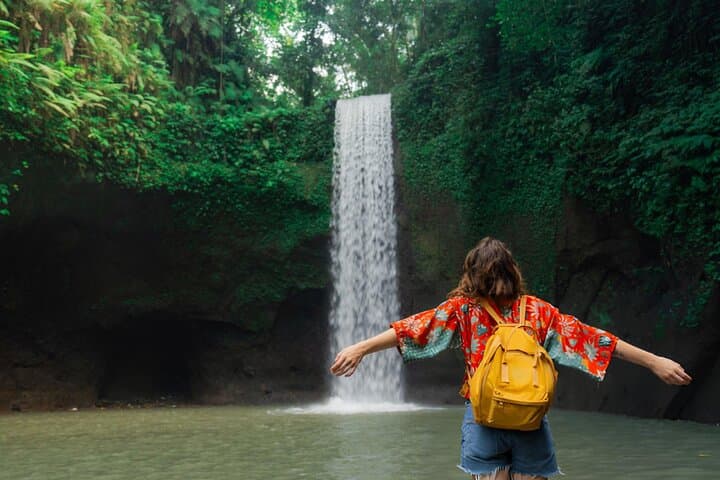
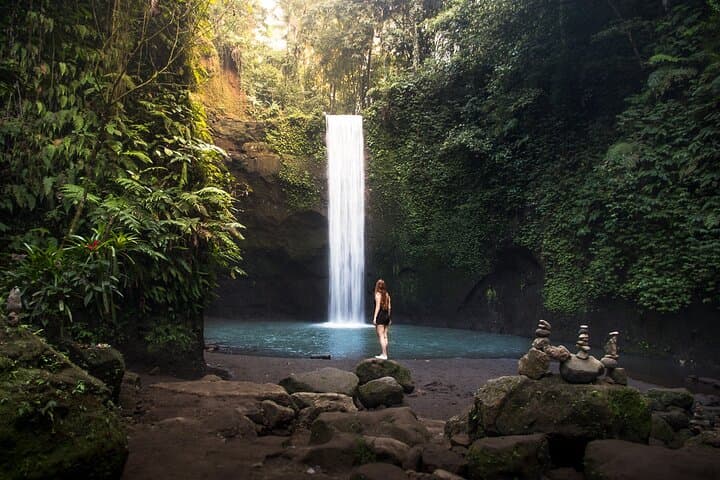
From there the route slips into a quieter bowl of forest at Tibumana, where a taller ribbon of water falls like a curtain. The pool below accepts swimmers and the air tastes of wet earth; the stream daring you to wade further until the current nudges you back to shore. Later, on a shaded path through a coffee plantation, aromas of roasted beans and clove mingle. You learn how local cultivators coax flavor from volcanic soil and why kopi luwak, controversial and rare, remains a curious stop on the menu.
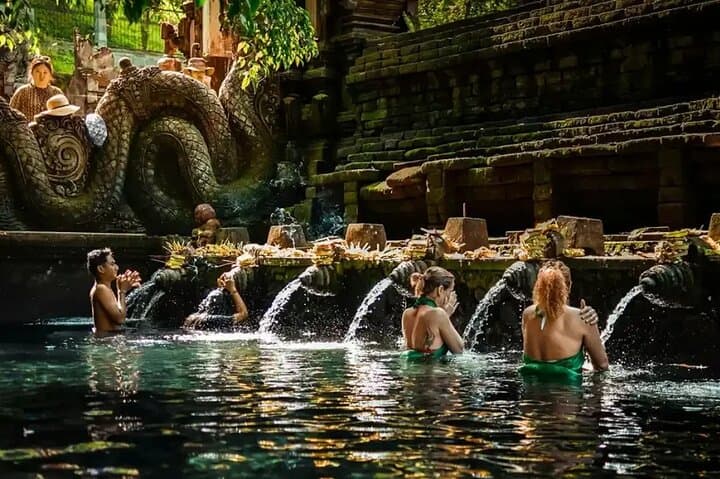
Tirta Empul brings a cultural pivot. The temple sits over a spring that Balinese Hindus have considered holy for centuries. Pilgrims move through a sequence of stone fountains in ritual cleansing; it is both intimate and public, an active piece of living heritage you watch and, if invited, may respectfully participate in. The day's last light softens at Tegalalang, where terraces roll like a geometric sea; the contours of human labor and water management reveal why this landscape became a global point of interest.
Geology and history are tightly braided here—Bali’s volcanics feed soils that support layered agriculture and dense forests; sacred springs surface where groundwater meets fractured rock. The region’s rice terraces are the product of an irrigation cooperative system called subak, a cultural landscape recognized by UNESCO for linking environment, agriculture, and ritual.
Practical guidance: expect a full private day—about eight to ten hours—so pack a small daypack, quick-dry clothes, insect repellent, and reef-safe sunscreen. Footwear should have a grippy sole for muddy paths and wet rocks; sandals work for some but a lightweight trail shoe is safer. Bring cash for small entrance fees, tip in local currency, and carry a sarong if you plan to enter temple areas (one is provided but having your own speeds transitions). The guide doubles as a photographer, so keep your phone charged and a lightweight lanyard or dry pouch handy.
Timing matters: start early to avoid midday crowds, and plan for local traffic when routing back to your hotel. This private tour is equal parts nature and culture—arrive curious and leave with a clearer sense of how water shapes life across Bali.
easy.
8–10 hours.
Suitable for travelers with light fitness who can handle short walks, stairs, and occasional slippery terrain
The private tour runs about 8–10 hours depending on traffic and group pace, with roughly 60 minutes at each major stop.
Yes, many stops have natural pools for swimming; follow your guide’s safety instructions and watch for currents and slippery rocks.
Entrance is included as noted, and a sarong for temple entry is provided; additional donations at temples are optional.
Yes, pickup and drop-off from Ubud-area hotels is included and airport pickup can be arranged—confirm your pickup point when booking.
The itinerary is gentle and suitable for most ages, though slippery sections at waterfalls and steps at temples mean mobility limitations should be evaluated.
The driver and guide are English-speaking and can assist with photos and local information throughout the day.
The subak irrigation system that shapes Bali’s terraces dates back centuries and links agriculture to Balinese Hindu ritual, which UNESCO recognizes for its cultural landscape.
Stick to marked paths and use reef-safe sunscreen to limit run-off into freshwater systems; support small local businesses for sustainable economic impact.
Wanderlust Adventure Bali operates guided outdoor trips and adventures with an emphasis on safety, stewardship, and memorable experiences.
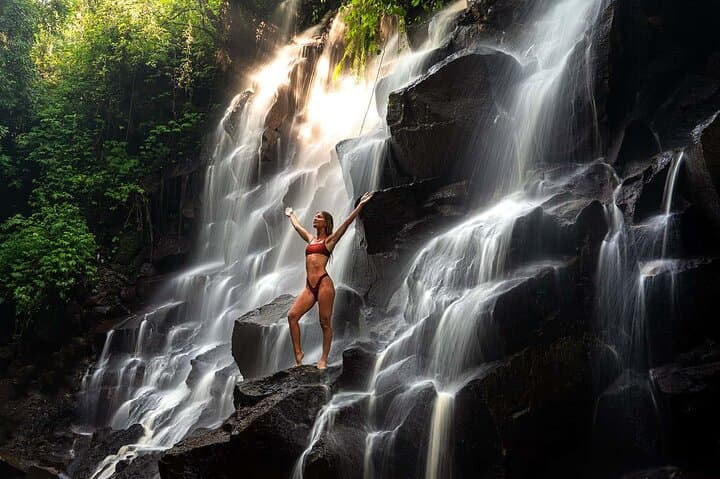
The morning opens with a humid slow-burn of light as the driver threads rice-field roads away from Ubud's central market. By the time you arrive at Kanto Lampo, water has already begun its work—carving channels in volcanic stone and pulling moss into vivid green. The falls announce themselves not with a single thunderclap but in a set of cascades that run their fingers down stepped rocks, inviting travelers to step onto slippery stones and feel the spray at the edge of a natural pool.
The morning opens with a humid slow-burn of light as the driver threads rice-field roads away from Ubud's central market. By the time you arrive at Kanto Lampo, water has already begun its work—carving channels in volcanic stone and pulling moss into vivid green. The falls announce themselves not with a single thunderclap but in a set of cascades that run their fingers down stepped rocks, inviting travelers to step onto slippery stones and feel the spray at the edge of a natural pool.
From there the route slips into a quieter bowl of forest at Tibumana, where a taller ribbon of water falls like a curtain. The pool below accepts swimmers and the air tastes of wet earth; the stream daring you to wade further until the current nudges you back to shore. Later, on a shaded path through a coffee plantation, aromas of roasted beans and clove mingle. You learn how local cultivators coax flavor from volcanic soil and why kopi luwak, controversial and rare, remains a curious stop on the menu.
Tirta Empul brings a cultural pivot. The temple sits over a spring that Balinese Hindus have considered holy for centuries. Pilgrims move through a sequence of stone fountains in ritual cleansing; it is both intimate and public, an active piece of living heritage you watch and, if invited, may respectfully participate in. The day's last light softens at Tegalalang, where terraces roll like a geometric sea; the contours of human labor and water management reveal why this landscape became a global point of interest.
Geology and history are tightly braided here—Bali’s volcanics feed soils that support layered agriculture and dense forests; sacred springs surface where groundwater meets fractured rock. The region’s rice terraces are the product of an irrigation cooperative system called subak, a cultural landscape recognized by UNESCO for linking environment, agriculture, and ritual.
Practical guidance: expect a full private day—about eight to ten hours—so pack a small daypack, quick-dry clothes, insect repellent, and reef-safe sunscreen. Footwear should have a grippy sole for muddy paths and wet rocks; sandals work for some but a lightweight trail shoe is safer. Bring cash for small entrance fees, tip in local currency, and carry a sarong if you plan to enter temple areas (one is provided but having your own speeds transitions). The guide doubles as a photographer, so keep your phone charged and a lightweight lanyard or dry pouch handy.
Timing matters: start early to avoid midday crowds, and plan for local traffic when routing back to your hotel. This private tour is equal parts nature and culture—arrive curious and leave with a clearer sense of how water shapes life across Bali.