THE ADVENTURE COLLECTIVE® · Independent discovery and booking for outdoor travel

Spend a private day through Ubud’s most photographed spots: macaques at the Sacred Monkey Forest, the sculpted lines of Tegalalang rice terraces, a thrill at Aloha Swing, ritual at Tirta Empul, and the spray of Tegenungan Waterfall. Practical tips for timing, dress, and photography included.
Spend a private day through Ubud’s most photographed spots: macaques at the Sacred Monkey Forest, the sculpted lines of Tegalalang rice terraces, a thrill at Aloha Swing, ritual at Tirta Empul, and the spray of Tegenungan Waterfall. Practical tips for timing, dress, and photography included.
You arrive to Ubud on a humid morning; the road opens onto a green chorus of palms and rice benches, and the Sacred Monkey Forest greets you with chattering macaques that treat the temple ruins like an open-air playground.
Verified experiences and guided adventures in the surrounding area.
Operated by Bali Day Tour · Ubud, Bali
You arrive to Ubud on a humid morning; the road opens onto a green chorus of palms and rice benches, and the Sacred Monkey Forest greets you with chattering macaques that treat the temple ruins like an open-air playground.
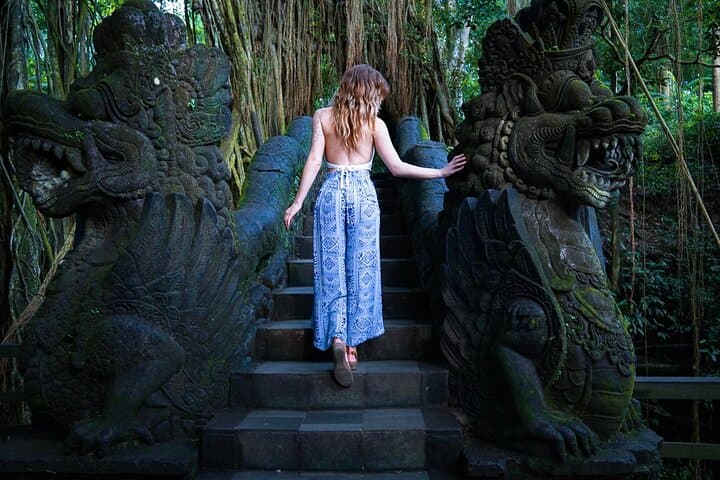
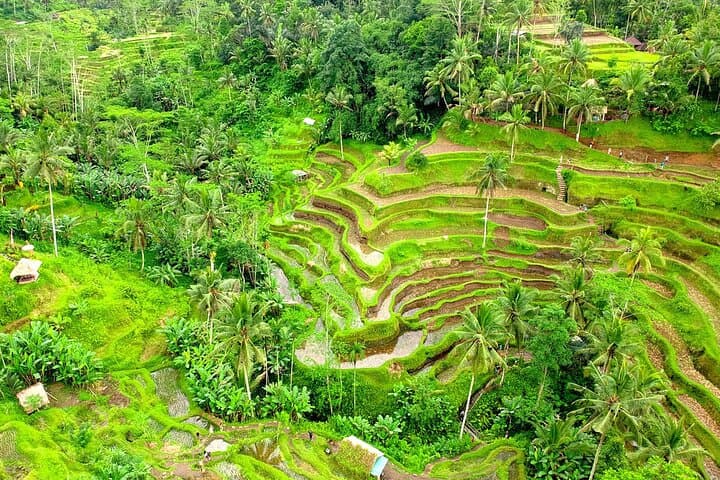
This full-day loop stitches together Bali’s cultural core and its volcanic geography. The Monkey Forest sits on alluvial terraces above the Petanu River, its stone shrines carved in the 14th–16th century Majapahit style. Nearby, the Tegalalang rice terraces trace ancient subak irrigation lines—engineered contours that follow volcanic slopes and channel water like a living map.
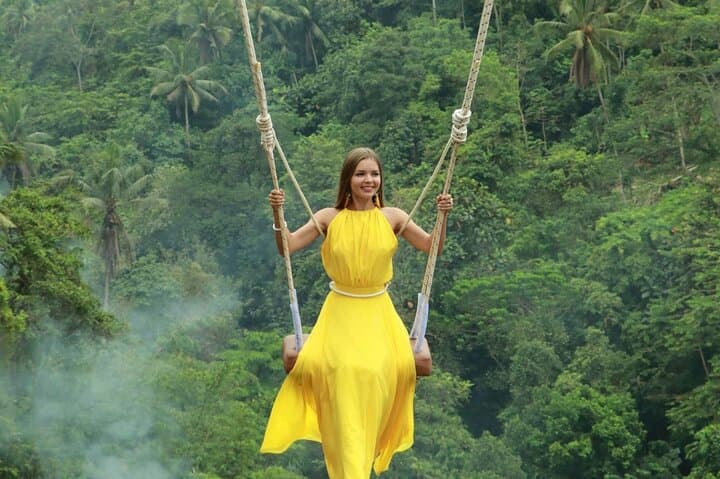
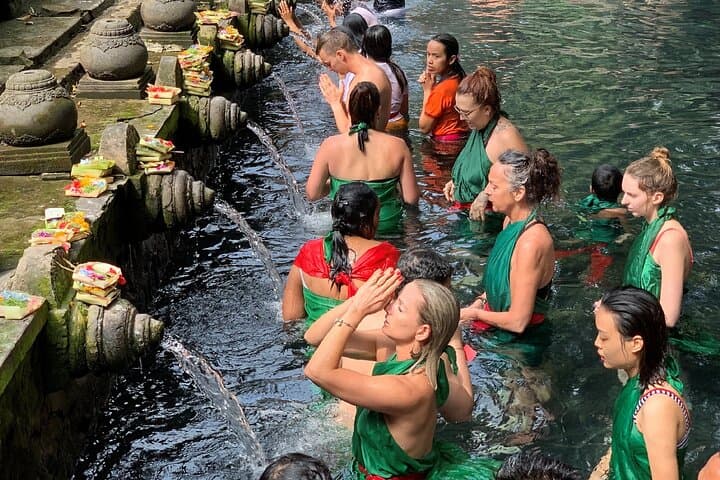
Aloha Ubud Swing gives a modern, adrenaline-lined counterpoint: you’re literally leaning out over a canopy, the valley breathing beneath you. Tirta Empul adds a quieter note—sacred springs where purification rituals continue from Bali’s Hindu courts. Tegenungan Waterfall, formed by river downcutting through volcanic ash and basalt, offers a closing plunge of cool spray.
Practical guidance: plan for a 6‑hour day with an air‑conditioned private car; arrive at the Monkey Forest early to avoid crowds and the midday heat. Dress modestly for Tirta Empul (sarong available at the temple) and wear closed-toe shoes for uneven paths at Tegalalang and Tegenungan. Keep camera gear secure around monkeys and carry cash for small purchases.
Expect light walking, photo stops, and short climbs—this is a cultural landscape as much as a hike. Rehydrate often; the island sun pushes hard and the rice terraces will reward the effort with wide, quietly commanding views.
easy.
6 hours.
Light fitness; able to handle short walks on uneven ground and steps with occasional climbs.
The full experience runs about six hours with hotel pickup and drop-off included in a private, air‑conditioned vehicle.
Aloha Swing has minimum and maximum age and weight restrictions; this operator allows children from around age 6—confirm at booking.
You can bring your own sarong or borrow one at the temple; wearing one is required for participating in purification rituals.
Macaques can bite or grab loose items—avoid feeding them, keep a safe distance, and secure belongings to reduce incidents.
Ubud grew as a center of arts and royal courts; its temples and rice irrigation reflect centuries of Balinese Hindu culture and subak cooperative water management.
Visitor pressure threatens fragile terrace soils and temple sites—stick to marked paths, avoid feeding wildlife, and support local guides and community-run businesses.
Bali Day Tour operates guided outdoor trips and adventures with an emphasis on safety, stewardship, and memorable experiences.
You arrive to Ubud on a humid morning; the road opens onto a green chorus of palms and rice benches, and the Sacred Monkey Forest greets you with chattering macaques that treat the temple ruins like an open-air playground.
You arrive to Ubud on a humid morning; the road opens onto a green chorus of palms and rice benches, and the Sacred Monkey Forest greets you with chattering macaques that treat the temple ruins like an open-air playground.
This full-day loop stitches together Bali’s cultural core and its volcanic geography. The Monkey Forest sits on alluvial terraces above the Petanu River, its stone shrines carved in the 14th–16th century Majapahit style. Nearby, the Tegalalang rice terraces trace ancient subak irrigation lines—engineered contours that follow volcanic slopes and channel water like a living map.
Aloha Ubud Swing gives a modern, adrenaline-lined counterpoint: you’re literally leaning out over a canopy, the valley breathing beneath you. Tirta Empul adds a quieter note—sacred springs where purification rituals continue from Bali’s Hindu courts. Tegenungan Waterfall, formed by river downcutting through volcanic ash and basalt, offers a closing plunge of cool spray.
Practical guidance: plan for a 6‑hour day with an air‑conditioned private car; arrive at the Monkey Forest early to avoid crowds and the midday heat. Dress modestly for Tirta Empul (sarong available at the temple) and wear closed-toe shoes for uneven paths at Tegalalang and Tegenungan. Keep camera gear secure around monkeys and carry cash for small purchases.
Expect light walking, photo stops, and short climbs—this is a cultural landscape as much as a hike. Rehydrate often; the island sun pushes hard and the rice terraces will reward the effort with wide, quietly commanding views.