THE ADVENTURE COLLECTIVE® · Independent discovery and booking for outdoor travel

Spend a full day tracing Ubud’s most iconic stops — monkey forests, sculpted rice terraces, a traditional coffee plantation, Tirta Empul’s holy spring, and a hidden waterfall. This private tour pairs local insight with easy walking and cultural context for a grounded, unforgettable day.
Spend a full day tracing Ubud’s most iconic stops — monkey forests, sculpted rice terraces, a traditional coffee plantation, Tirta Empul’s holy spring, and a hidden waterfall. This private tour pairs local insight with easy walking and cultural context for a grounded, unforgettable day.
You step out of an air-conditioned car into a humid Balinese morning and the town of Ubud seems to inhale around you — motorbikes, incense, and a chorus of birdsong. The first footsteps lead into the Sacred Monkey Forest Sanctuary, where long-tailed macaques navigate mossy temple steps with the confidence of locals. They are curious, fast, and part of the living history here; your guide keeps a watchful eye as you move through centuries-old courtyards cracked with banyan roots and shadowed by giant fig trees.
Verified experiences and guided adventures in the surrounding area.
Operated by Wanderlust Adventure Bali · Ubud, Bali
You step out of an air-conditioned car into a humid Balinese morning and the town of Ubud seems to inhale around you — motorbikes, incense, and a chorus of birdsong. The first footsteps lead into the Sacred Monkey Forest Sanctuary, where long-tailed macaques navigate mossy temple steps with the confidence of locals. They are curious, fast, and part of the living history here; your guide keeps a watchful eye as you move through centuries-old courtyards cracked with banyan roots and shadowed by giant fig trees.
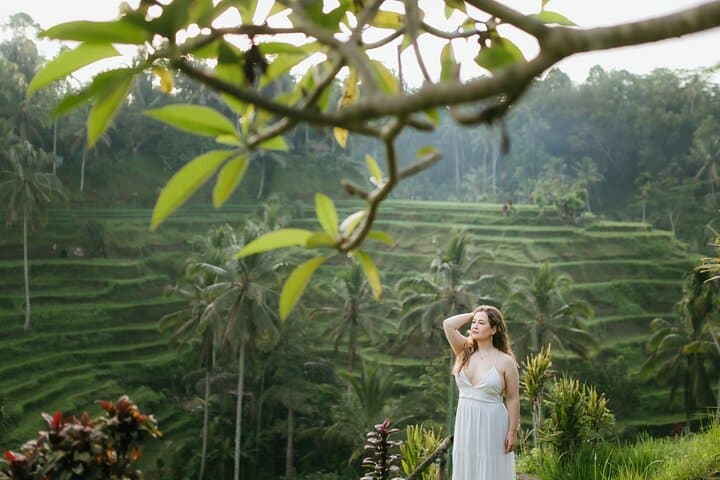
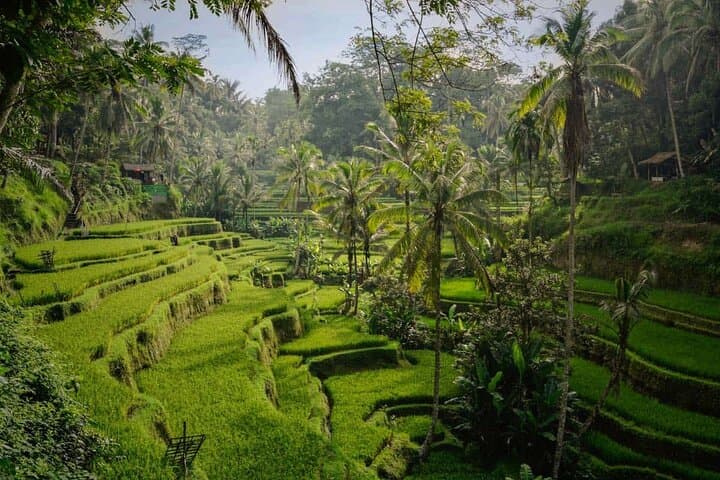
From monkey chatter the day turns to a greener hush. A short drive north opens onto Tegalalang, where rice terraces stair-step down the hillside. These rice paddies are shaped by the subak system — a cooperative irrigation method managed by villagers for centuries and recognized by UNESCO for its social as well as hydraulic design. The terraces sit on volcanic soils deposited by Bali's fertile peaks; when light hits in late morning the terraces gleam a layered green.
Coffee follows. At a local plantation you’ll see how smallholder farmers dry and roast beans, and you’ll taste Luwak coffee and herbal infusions while sitting above the valley. It’s an earthy, hands-on moment that ties agriculture to ritual: coffee here is livelihood and culture, not just a souvenir.
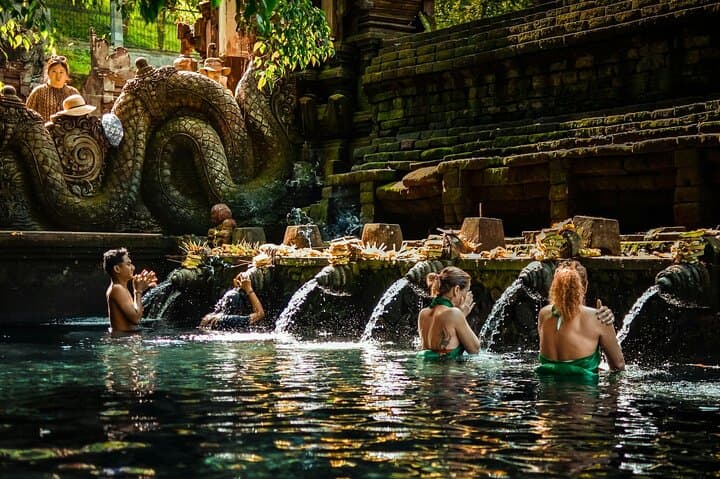
Tirta Empul Temple brings a contrasting rhythm. Built around a natural spring, its stone pools host purification rituals where locals queue under carved spouts to wash away impurities. Learn the respectful procedures from your guide — the ritual is as much social as sacred, and sarongs are required for entry.
The finale is Kanto Lampo Waterfall, where the jungle relaxes into a stepped cascade and a pool invites a quick dip. The waterfall is gentler than the island’s plunging cataracts, but the water is cooler and the photo angles are immediate — dramatic rock faces, ferns clinging to seams, and light slipping between leaves.
Practical edge: this is an eight-hour, guide-led private tour that covers short drives between sites, light walking at each stop, and some uneven terrain at the waterfall and in the monkey sanctuary. Bring a sarong (though one is provided at Tirta Empul), sturdy shoes for muddy paths, a refillable water bottle, and a small daypack for valuables. Keep electronics secured around monkeys, carry cash for small entrance fees or donations, and aim to start early to beat heat and tour buses.
Respect local custom — avoid touching offerings, follow the purification etiquette, and listen to your guide’s directions around wildlife. Do that and Ubud’s convergence of religion, agriculture, and nature reveals itself as a day of striking contrasts: lively monkeys, cultivated hills, sacred springs, and a waterfall that cools the end of a full, sensory day.
easy.
8 hours.
Suitable for most fitness levels; expect short walks on uneven ground and some stairs at temples and the waterfall.
Yes — private pickup and drop-off from Ubud-area hotels is included; airport pickup at Ngurah Rai can be arranged with instructions provided.
Entrance fees are included if you select the option that covers All Entrance Tickets; confirm at booking to avoid paying on-site.
Visitors may participate; follow your guide’s instructions, wear a sarong, and be respectful of worshippers and local customs.
Macaques are generally not aggressive but will grab loose items; do not feed or provoke them and follow your guide’s safety tips.
Yes — the itinerary allows a refreshing dip; bring swimwear and water shoes, and be cautious on slippery rocks.
The tour is family-friendly and rated easy, but those with mobility issues should note steps and uneven terrain at some sites.
The subak irrigation system around Tegalalang reflects a centuries-old cooperative water management tied to Balinese Hindu philosophy.
The Monkey Forest and rice terraces face visitor pressure; stick to paths, avoid feeding wildlife, and support local conservation fees when asked.
Wanderlust Adventure Bali operates guided outdoor trips and adventures with an emphasis on safety, stewardship, and memorable experiences.

You step out of an air-conditioned car into a humid Balinese morning and the town of Ubud seems to inhale around you — motorbikes, incense, and a chorus of birdsong. The first footsteps lead into the Sacred Monkey Forest Sanctuary, where long-tailed macaques navigate mossy temple steps with the confidence of locals. They are curious, fast, and part of the living history here; your guide keeps a watchful eye as you move through centuries-old courtyards cracked with banyan roots and shadowed by giant fig trees.
You step out of an air-conditioned car into a humid Balinese morning and the town of Ubud seems to inhale around you — motorbikes, incense, and a chorus of birdsong. The first footsteps lead into the Sacred Monkey Forest Sanctuary, where long-tailed macaques navigate mossy temple steps with the confidence of locals. They are curious, fast, and part of the living history here; your guide keeps a watchful eye as you move through centuries-old courtyards cracked with banyan roots and shadowed by giant fig trees.
From monkey chatter the day turns to a greener hush. A short drive north opens onto Tegalalang, where rice terraces stair-step down the hillside. These rice paddies are shaped by the subak system — a cooperative irrigation method managed by villagers for centuries and recognized by UNESCO for its social as well as hydraulic design. The terraces sit on volcanic soils deposited by Bali's fertile peaks; when light hits in late morning the terraces gleam a layered green.
Coffee follows. At a local plantation you’ll see how smallholder farmers dry and roast beans, and you’ll taste Luwak coffee and herbal infusions while sitting above the valley. It’s an earthy, hands-on moment that ties agriculture to ritual: coffee here is livelihood and culture, not just a souvenir.
Tirta Empul Temple brings a contrasting rhythm. Built around a natural spring, its stone pools host purification rituals where locals queue under carved spouts to wash away impurities. Learn the respectful procedures from your guide — the ritual is as much social as sacred, and sarongs are required for entry.
The finale is Kanto Lampo Waterfall, where the jungle relaxes into a stepped cascade and a pool invites a quick dip. The waterfall is gentler than the island’s plunging cataracts, but the water is cooler and the photo angles are immediate — dramatic rock faces, ferns clinging to seams, and light slipping between leaves.
Practical edge: this is an eight-hour, guide-led private tour that covers short drives between sites, light walking at each stop, and some uneven terrain at the waterfall and in the monkey sanctuary. Bring a sarong (though one is provided at Tirta Empul), sturdy shoes for muddy paths, a refillable water bottle, and a small daypack for valuables. Keep electronics secured around monkeys, carry cash for small entrance fees or donations, and aim to start early to beat heat and tour buses.
Respect local custom — avoid touching offerings, follow the purification etiquette, and listen to your guide’s directions around wildlife. Do that and Ubud’s convergence of religion, agriculture, and nature reveals itself as a day of striking contrasts: lively monkeys, cultivated hills, sacred springs, and a waterfall that cools the end of a full, sensory day.