THE ADVENTURE COLLECTIVE® · Independent discovery and booking for outdoor travel

A five-day private itinerary that pairs Lisbon’s historic quarters with Sintra’s palaces, Cascais’ shoreline, and Évora’s UNESCO-listed center. Includes hotel stays, a Fado dinner, guided tours and a winery visit.
A five-day private itinerary that pairs Lisbon’s historic quarters with Sintra’s palaces, Cascais’ shoreline, and Évora’s UNESCO-listed center. Includes hotel stays, a Fado dinner, guided tours and a winery visit.
Morning light spills over Lisbon’s seven hills as a private van pulls away from Praça do Comércio, the Tagus behind it rippling like a road to the sea. Over five days this itinerary moves from the city’s tiled facades into the cooling, forested slopes of Sintra, down the Atlantic coast to Cascais, and eastward across the cork- and olive-studded plains to Évora.
Verified experiences and guided adventures in the surrounding area.
Operated by Portugal Travel Center · Lisbon, Lisbon District
Morning light spills over Lisbon’s seven hills as a private van pulls away from Praça do Comércio, the Tagus behind it rippling like a road to the sea. Over five days this itinerary moves from the city’s tiled facades into the cooling, forested slopes of Sintra, down the Atlantic coast to Cascais, and eastward across the cork- and olive-studded plains to Évora.
Lisbon’s Alfama and Castelo de São Jorge speak to centuries of maritime power and seismic reinvention after the 1755 quake; Sintra’s palaces sit on granite outcrops and mist-fed laurel woods shaped by a mild Atlantic climate, with hilltops reaching roughly 400–500 m above sea level. Cascais remains a working fishing town turned seaside retreat, its beaches and promenades shaped by coastal dunes. Évora, a UNESCO World Heritage site since 1986, preserves Roman temples, medieval churches and Alentejo’s vineyard-strewn landscape that frames the region’s wine culture.
Expect walking on cobbled streets and uneven castle ramps, coastal drives with ocean views, and a day sampling regional wines and rural estates. Cultural threads—Fado performances, traditional cuisine, Arraiolos carpets—anchor the route.
Practical notes: the program includes private transfers, four nights in 4-star hotels, breakfasts, a Fado dinner, and guided city and day tours. Mornings are best for Sintra to avoid crowds; bring layered clothing for coastal breeze and higher-elevation cool. Mobility-friendly options are noted, but comfortable walking shoes and a light daypack will make the days smoother. This trip balances sightseeing with relaxed pacing—ideal for travelers who want scenic variety with cultural depth.
easy.
5 days.
Suitable for travelers in generally good health who can manage several hours of walking over cobbles and short stair climbs
The operator lists wheelchair-accessible transportation and some accessible sites, but historic sites like castles and narrow streets may have limited access—check specific site access in advance.
The itinerary notes admissions as included for some city highlights and guided tours, while several palace entries and optional tastings may be extra—confirm at booking.
The experience includes an English-speaking guide for activities and excursions; ask about other language options when booking.
Private transfers include hotel pickup and drop-off within Lisbon; you will be asked for flight and pickup details during booking.
Lisbon’s waterfront and hilltop quarters reflect centuries of maritime trade and rebuilding after the major 1755 earthquake; Évora preserves Roman and medieval layers from Portugal’s early history.
Sintra-Cascais and Alentejo landscapes are sensitive to foot traffic and wildfire risk; stick to marked paths, avoid single-use plastics, and support local producers to help sustain rural economies.
Portugal Travel Center operates guided outdoor trips and adventures with an emphasis on safety, stewardship, and memorable experiences.

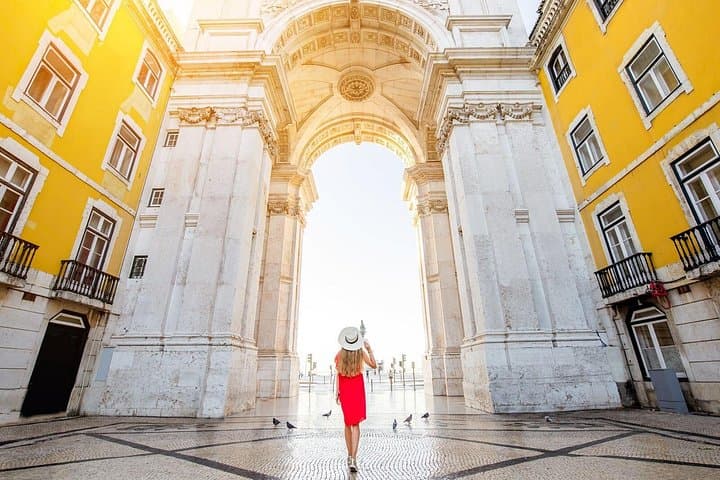


Morning light spills over Lisbon’s seven hills as a private van pulls away from Praça do Comércio, the Tagus behind it rippling like a road to the sea. Over five days this itinerary moves from the city’s tiled facades into the cooling, forested slopes of Sintra, down the Atlantic coast to Cascais, and eastward across the cork- and olive-studded plains to Évora.
Morning light spills over Lisbon’s seven hills as a private van pulls away from Praça do Comércio, the Tagus behind it rippling like a road to the sea. Over five days this itinerary moves from the city’s tiled facades into the cooling, forested slopes of Sintra, down the Atlantic coast to Cascais, and eastward across the cork- and olive-studded plains to Évora.
Lisbon’s Alfama and Castelo de São Jorge speak to centuries of maritime power and seismic reinvention after the 1755 quake; Sintra’s palaces sit on granite outcrops and mist-fed laurel woods shaped by a mild Atlantic climate, with hilltops reaching roughly 400–500 m above sea level. Cascais remains a working fishing town turned seaside retreat, its beaches and promenades shaped by coastal dunes. Évora, a UNESCO World Heritage site since 1986, preserves Roman temples, medieval churches and Alentejo’s vineyard-strewn landscape that frames the region’s wine culture.
Expect walking on cobbled streets and uneven castle ramps, coastal drives with ocean views, and a day sampling regional wines and rural estates. Cultural threads—Fado performances, traditional cuisine, Arraiolos carpets—anchor the route.
Practical notes: the program includes private transfers, four nights in 4-star hotels, breakfasts, a Fado dinner, and guided city and day tours. Mornings are best for Sintra to avoid crowds; bring layered clothing for coastal breeze and higher-elevation cool. Mobility-friendly options are noted, but comfortable walking shoes and a light daypack will make the days smoother. This trip balances sightseeing with relaxed pacing—ideal for travelers who want scenic variety with cultural depth.