THE ADVENTURE COLLECTIVE® · Independent discovery and booking for outdoor travel

Walk Roman avenues, inspect mosaics in the Terrace Houses, and visit the House of the Virgin Mary on a focused private tour from Kusadasi. This 5–7 hour cruise-friendly itinerary blends archaeology, local culture and practical timing for ship passengers.
Walk Roman avenues, inspect mosaics in the Terrace Houses, and visit the House of the Virgin Mary on a focused private tour from Kusadasi. This 5–7 hour cruise-friendly itinerary blends archaeology, local culture and practical timing for ship passengers.
You step off the ship and the Aegean breeze nudges you toward limestone and marble carved by millennia of traffic — traders, pilgrims and soldiers. The road into Ephesus widens into colonnaded avenues; voices from the past seem to return your footsteps.
Verified experiences and guided adventures in the surrounding area.
Operated by Moira Travel · Kusadasi, Aydın
You step off the ship and the Aegean breeze nudges you toward limestone and marble carved by millennia of traffic — traders, pilgrims and soldiers. The road into Ephesus widens into colonnaded avenues; voices from the past seem to return your footsteps.
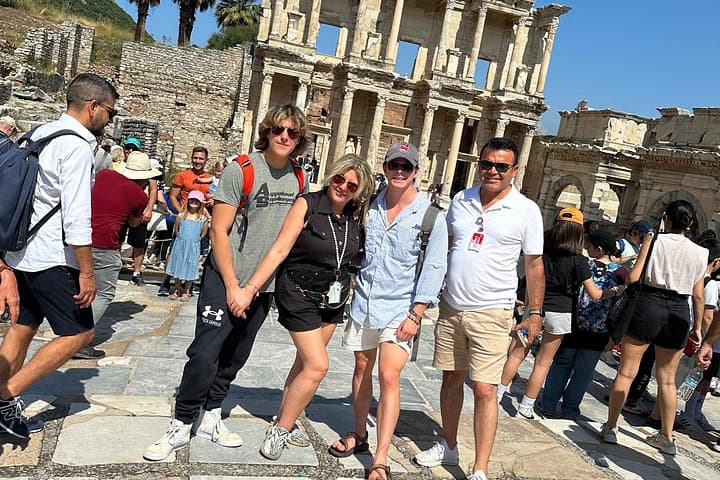
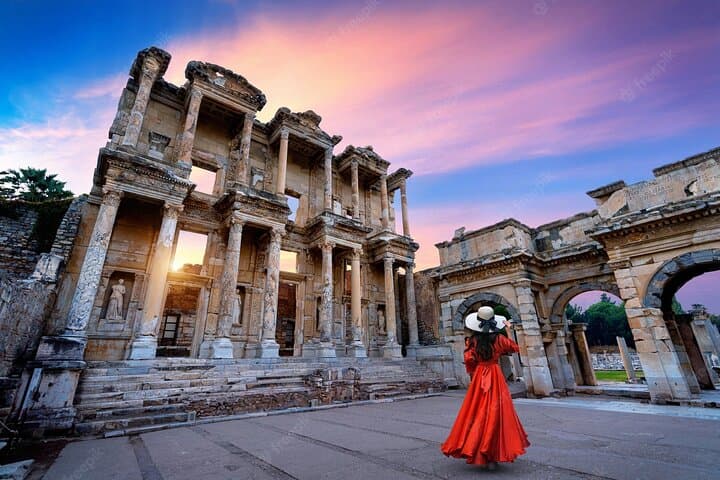
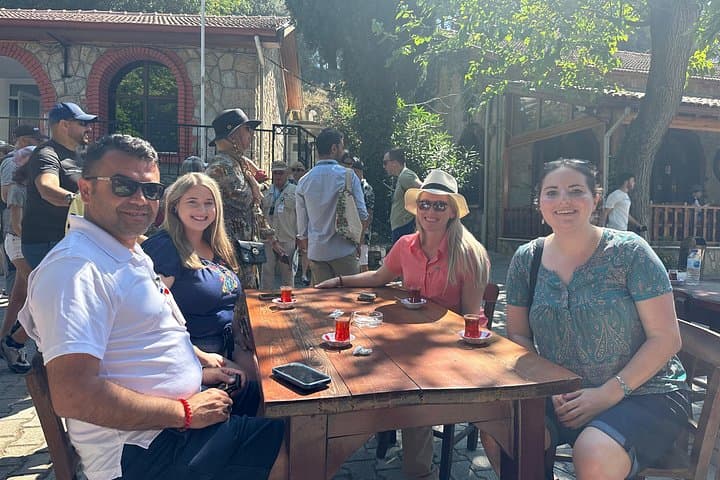
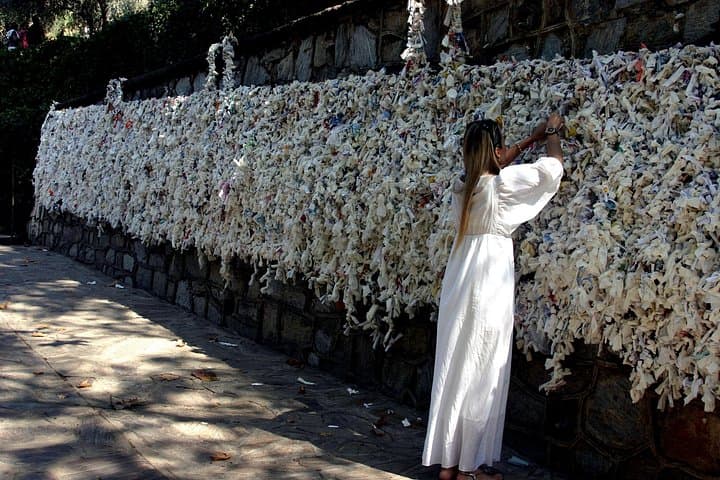
Ephesus was a major Roman port and urban center whose streets still frame the sweep of civic life: the Library of Celsus’ ornate façade, the wide marble bouleuterion, and the intimate frescoed rooms of the Terrace Houses that reveal domestic life 2,000 years ago. Nearby, the House of the Virgin Mary sits on Bulbul Mountain, a modest stone chapel that draws pilgrims, while the ruined columns of the Temple of Artemis remind you a wonder once rose here. Şirince village, reachable at day’s end, offers stone lanes and local wines — a quieter counterpoint.
Geologically this coastline is Aegean limestone and alluvial plains; occasional earthquakes have reshaped the ruins and the archaeological work is ongoing. The culture you’ll encounter is a layered mix of Hellenistic, Roman and Ottoman influences, with small-town Aegean hospitality in Selçuk and Kusadasi.
Practicalities: expect 5–7 hours on tour, roughly 2–3 km of walking inside Ephesus on uneven marble and packed earth, plus a short drive (≈6 km) to the House of Virgin Mary with a short uphill approach. Bring sun protection, steady footwear, and water; admissions are typically not included so budget for tickets. Communicate your ship’s return time — guides coordinate closely, but timing is crucial for cruisers.
easy.
5–7 hours.
Suitable for travelers in average physical condition who can walk 2–3 km on uneven surfaces and climb short stair sections.
No — most archaeological site admissions are not included; plan to pay on-site or confirm with your operator before booking.
Yes — the operator coordinates pickup and return to Kusadasi Cruise Port but you should confirm your ship’s arrival/departure and share onboard time at booking.
Access is limited inside Ephesus due to uneven marble and steps; operators list wheelchair-accessible vehicles and some flat areas, but full site access may be restricted.
Expect roughly 2–3 km of walking across mixed terrain within Ephesus plus short transfers by vehicle to the House of the Virgin Mary (≈6 km).
Ephesus was a major Roman provincial capital and port; its Temple of Artemis once ranked among the Seven Wonders of the Ancient World and much of the city's layout reflects Roman urban planning.
Ongoing conservation works aim to stabilize marble facades and mosaics; visitors should stay on designated paths, avoid touching frescoes and support entrance fees that fund preservation.
Moira Travel operates guided outdoor trips and adventures with an emphasis on safety, stewardship, and memorable experiences.
You step off the ship and the Aegean breeze nudges you toward limestone and marble carved by millennia of traffic — traders, pilgrims and soldiers. The road into Ephesus widens into colonnaded avenues; voices from the past seem to return your footsteps.
You step off the ship and the Aegean breeze nudges you toward limestone and marble carved by millennia of traffic — traders, pilgrims and soldiers. The road into Ephesus widens into colonnaded avenues; voices from the past seem to return your footsteps.
Ephesus was a major Roman port and urban center whose streets still frame the sweep of civic life: the Library of Celsus’ ornate façade, the wide marble bouleuterion, and the intimate frescoed rooms of the Terrace Houses that reveal domestic life 2,000 years ago. Nearby, the House of the Virgin Mary sits on Bulbul Mountain, a modest stone chapel that draws pilgrims, while the ruined columns of the Temple of Artemis remind you a wonder once rose here. Şirince village, reachable at day’s end, offers stone lanes and local wines — a quieter counterpoint.
Geologically this coastline is Aegean limestone and alluvial plains; occasional earthquakes have reshaped the ruins and the archaeological work is ongoing. The culture you’ll encounter is a layered mix of Hellenistic, Roman and Ottoman influences, with small-town Aegean hospitality in Selçuk and Kusadasi.
Practicalities: expect 5–7 hours on tour, roughly 2–3 km of walking inside Ephesus on uneven marble and packed earth, plus a short drive (≈6 km) to the House of Virgin Mary with a short uphill approach. Bring sun protection, steady footwear, and water; admissions are typically not included so budget for tickets. Communicate your ship’s return time — guides coordinate closely, but timing is crucial for cruisers.