THE ADVENTURE COLLECTIVE® · Independent discovery and booking for outdoor travel

A compact, full-day circuit from Paphos that pairs cliffside archaeology with Crusader architecture and a mountain village wine tasting. Expect coastal views, mosaics, cobbled lanes and a leisurely tavern lunch.
A compact, full-day circuit from Paphos that pairs cliffside archaeology with Crusader architecture and a mountain village wine tasting. Expect coastal views, mosaics, cobbled lanes and a leisurely tavern lunch.
You step onto the bus before sunrise and the coastline slips by like a held breath—rocky bluffs, scrubby pines and the flash of Mediterranean blue. The first stop is Petra tou Romiou, Aphrodite’s birthplace, where wind and wave have sculpted a clutch of sea-stacked boulders. The rocks look deliberate, as if placed to mark an entrance to the island’s layered past.
Verified experiences and guided adventures in the surrounding area.
Operated by Destination Services Cyprus · Paphos, Paphos District
You step onto the bus before sunrise and the coastline slips by like a held breath—rocky bluffs, scrubby pines and the flash of Mediterranean blue. The first stop is Petra tou Romiou, Aphrodite’s birthplace, where wind and wave have sculpted a clutch of sea-stacked boulders. The rocks look deliberate, as if placed to mark an entrance to the island’s layered past.
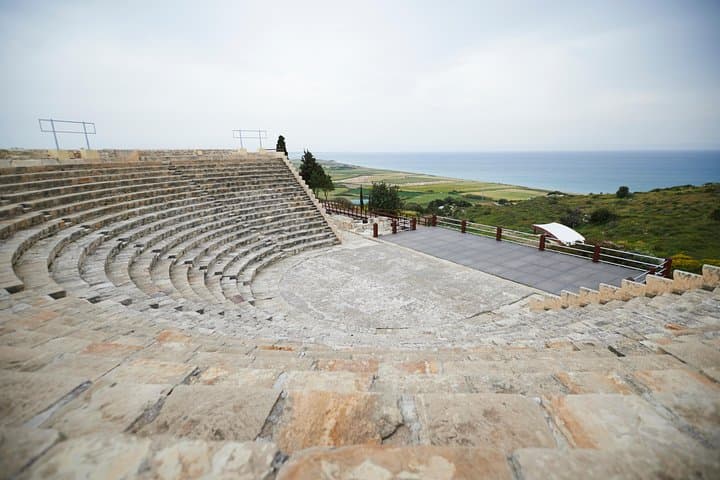
From there the landscape tightens into the sweeping ruins of Kourion. The theatre perches on a cliff, a curved mouth of stone facing the sea; sit on the lower tiers and the carved limestone seems to remember the footfall of Roman actors. Nearby, the House of Eustolios reveals mosaic floors and early-Christian adaptations—domestic life turned civic spectacle as empires shifted. Geologically this stretch is Pleistocene limestone over older sediments, eroded into terraces and marine benches that make the coastline dramatic and fragile.
Next is Kolossi Castle, a compact Crusader keep whose whitewashed courtyard and straight battlements contrast with the wild hillside. Historically it’s tied to the medieval sugar and wine trade—the same industry you’ll taste later in the day. After a leisurely tavern lunch in Foini—home-style flavors, local olive oil and a glass of Commandaria or village wine—the road climbs into the Troodos foothills.
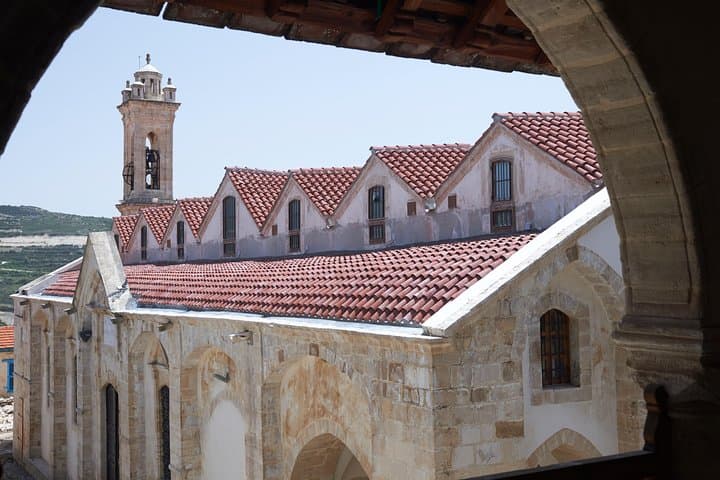
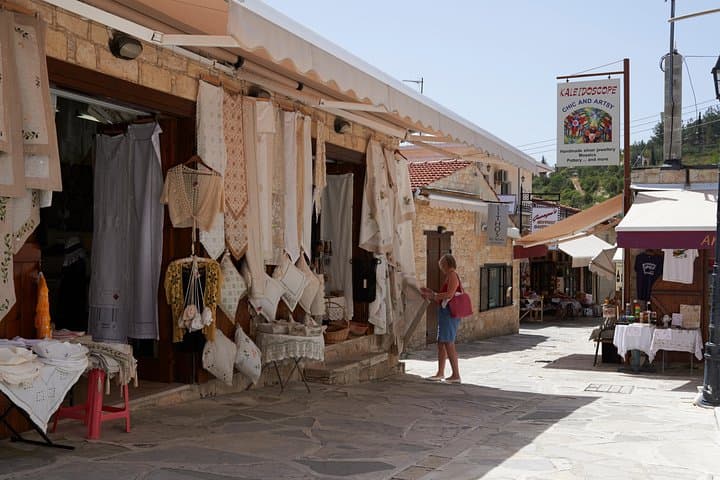
Omodos is a slow village of cobbled streets and frescoed churches, ringed by vine terraces. The monastery bell seems to set the tempo and the winery tasting that closes the day is a practical primer on Cyprus vintages: citrus-forward whites, structured reds and the ancient sweet Commandaria.
This is a full day—expect 8–9 hours—with a mix of easy walking and short stretches of uneven stone and steps at Kourion and in Omodos. Bring sun protection and a camera; the best light is morning at Aphrodite’s Rock and late afternoon on the theatre’s seaward face. Dress respectfully for religious sites—knees and shoulders covered—and plan for narrow village streets and brief uphill sections.
Practically, hotel pickup is arranged from Paphos resorts but confirm your exact time 48–72 hours before departure. The tour blends archaeology, culinary culture and light foothill hiking: it's ideal for travelers who want context as well as scenery. Keep water handy, wear supportive shoes, and save room for local wine—Cyprus’s viticulture is more than an afterthought; it’s part of the island’s long human story.
moderate.
8–9 hours.
Suitable for travelers with moderate fitness—able to walk short, uneven sections and climb steps.
Admissions for Kourion and Kolossi are included in this tour as listed; your guide will manage tickets where applicable.
The local operator contacts you with the exact pickup 48–72 hours before departure—if you haven’t heard, contact them directly.
Lunch at a local tavern with one drink is included; notify the operator of dietary requirements when booking.
Children are welcome but infants must sit on an adult’s lap; keep in mind some walking on uneven terrain.
No—there is a strict dress code for churches and some museums: cover shoulders and knees to ensure entry.
This tour involves steps and uneven ground; contact the provider before booking to assess accessibility and alternative arrangements.
Kourion was a major Greco-Roman city whose theatre and villas reflect centuries of occupation; Kolossi Castle later anchored medieval agricultural exports like sugar and wine.
The coastal ruins are vulnerable to erosion and visitor impact—stay on marked paths and avoid stepping on mosaics; support local wineries that follow sustainable viticulture where possible.
Destination Services Cyprus operates guided outdoor trips and adventures with an emphasis on safety, stewardship, and memorable experiences.
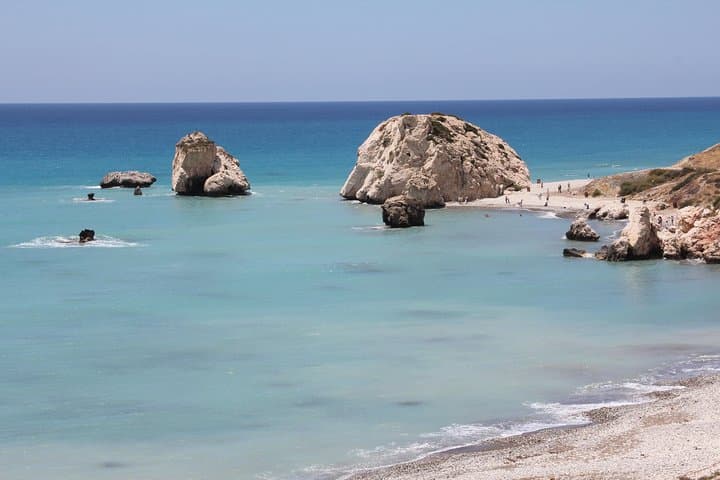
You step onto the bus before sunrise and the coastline slips by like a held breath—rocky bluffs, scrubby pines and the flash of Mediterranean blue. The first stop is Petra tou Romiou, Aphrodite’s birthplace, where wind and wave have sculpted a clutch of sea-stacked boulders. The rocks look deliberate, as if placed to mark an entrance to the island’s layered past.
You step onto the bus before sunrise and the coastline slips by like a held breath—rocky bluffs, scrubby pines and the flash of Mediterranean blue. The first stop is Petra tou Romiou, Aphrodite’s birthplace, where wind and wave have sculpted a clutch of sea-stacked boulders. The rocks look deliberate, as if placed to mark an entrance to the island’s layered past.
From there the landscape tightens into the sweeping ruins of Kourion. The theatre perches on a cliff, a curved mouth of stone facing the sea; sit on the lower tiers and the carved limestone seems to remember the footfall of Roman actors. Nearby, the House of Eustolios reveals mosaic floors and early-Christian adaptations—domestic life turned civic spectacle as empires shifted. Geologically this stretch is Pleistocene limestone over older sediments, eroded into terraces and marine benches that make the coastline dramatic and fragile.
Next is Kolossi Castle, a compact Crusader keep whose whitewashed courtyard and straight battlements contrast with the wild hillside. Historically it’s tied to the medieval sugar and wine trade—the same industry you’ll taste later in the day. After a leisurely tavern lunch in Foini—home-style flavors, local olive oil and a glass of Commandaria or village wine—the road climbs into the Troodos foothills.
Omodos is a slow village of cobbled streets and frescoed churches, ringed by vine terraces. The monastery bell seems to set the tempo and the winery tasting that closes the day is a practical primer on Cyprus vintages: citrus-forward whites, structured reds and the ancient sweet Commandaria.
This is a full day—expect 8–9 hours—with a mix of easy walking and short stretches of uneven stone and steps at Kourion and in Omodos. Bring sun protection and a camera; the best light is morning at Aphrodite’s Rock and late afternoon on the theatre’s seaward face. Dress respectfully for religious sites—knees and shoulders covered—and plan for narrow village streets and brief uphill sections.
Practically, hotel pickup is arranged from Paphos resorts but confirm your exact time 48–72 hours before departure. The tour blends archaeology, culinary culture and light foothill hiking: it's ideal for travelers who want context as well as scenery. Keep water handy, wear supportive shoes, and save room for local wine—Cyprus’s viticulture is more than an afterthought; it’s part of the island’s long human story.