THE ADVENTURE COLLECTIVE® · Independent discovery and booking for outdoor travel

Board the Bernina red train for a full-day trip from Milan to St. Moritz, crossing the UNESCO-listed Bernina line. Expect 12–13 hours of coach and rail travel, sweeping alpine views, free time in St. Moritz, and iconic stops like Alp Grüm and Diavolezza.
Board the Bernina red train for a full-day trip from Milan to St. Moritz, crossing the UNESCO-listed Bernina line. Expect 12–13 hours of coach and rail travel, sweeping alpine views, free time in St. Moritz, and iconic stops like Alp Grüm and Diavolezza.
Morning light hits Milan platforms as the coach eases out of the city and the Alps begin to sharpen on the horizon. By midmorning you board the Bernina red train in Tirano, windows opening to let alpine air push across your face as the route climbs toward the pass.
Verified experiences and guided adventures in the surrounding area.
Operated by Italy Adventures · St. Moritz, Graubünden
Morning light hits Milan platforms as the coach eases out of the city and the Alps begin to sharpen on the horizon. By midmorning you board the Bernina red train in Tirano, windows opening to let alpine air push across your face as the route climbs toward the pass.
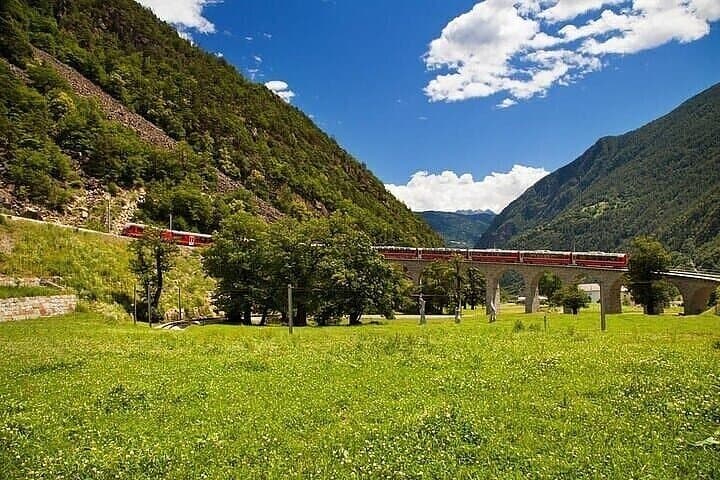
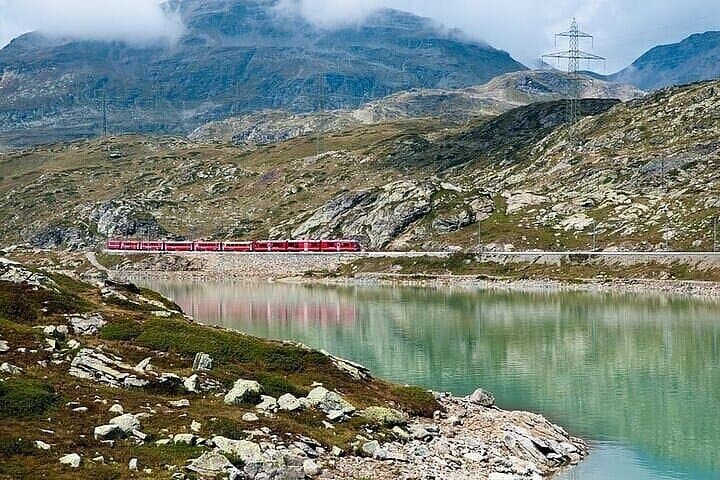
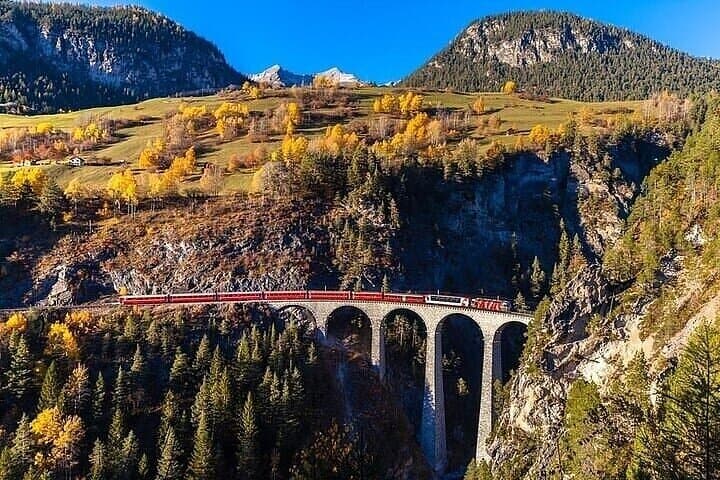
The Rhaetian Railway’s Bernina line—part of the UNESCO Albula/Bernina landscapes—threads 61 km of narrow-gauge track, crossing dramatic viaducts and spirals, including the iconic Brusio Spiral, and reaching the Bernina Pass at roughly 2,328 m. Glaciers loom above Diavolezza and Alp Grüm; their slow, pale crevasses watch the train like old surveyors. The route links Italian-speaking Tirano with high-Rhaeto Romansch St. Moritz, a town shaped by winter sport culture and Belle Époque resorts.
Travelers can expect a mix of coach transfers and multiple rail legs, with guided commentary that layers geology, railway engineering, and local culture. Free time in St. Moritz gives space for a lakeside walk, a quick visit to the casino district, or a coffee under alpine light.
Practical notes: this is a long, mostly sedentary day—12–13 hours—so pack layers, snacks, and a valid passport for border crossings. Steps into stations and the train’s second-class cars are standard height; mobility-impaired travelers should check accessibility in advance. Expect variable mountain weather and pockets of sun between wind and showers. For photographers and keen hikers, aim for clear weather to maximize views; even cloudy days show dramatic mood and depth across the pass.
easy.
12–13 hours.
Suitable for most fitness levels; the day is long but low-impact—expect walking between stations and short steps on/off the train.
Yes—this tour crosses into Switzerland from Italy, so a valid passport (and visas if applicable) is required.
The tour runs about 12–13 hours, including coach transfers and multiple train segments with scheduled stops in Tirano, Alp Grüm, Pontresina, and St. Moritz.
The trip uses the Bernina red train on the UNESCO Bernina line; timetable and rolling stock vary but the route is the same scenic corridor known internationally.
The tour is listed as physically easy but is not suitable for wheelchair users due to steps at some stations and train access—contact the operator if you have mobility concerns.
The Bernina line is part of the Rhaetian Railway, engineering completed in the early 20th century to link the Engadin valley with Tirano; its lines reflect local ingenuity in narrow-gauge mountain railroading.
The route runs through protected alpine landscapes; visitors should stick to paths, avoid disturbing wildlife, and follow ‘leave no trace’ principles to protect fragile high-altitude ecosystems.
Italy Adventures operates guided outdoor trips and adventures with an emphasis on safety, stewardship, and memorable experiences.
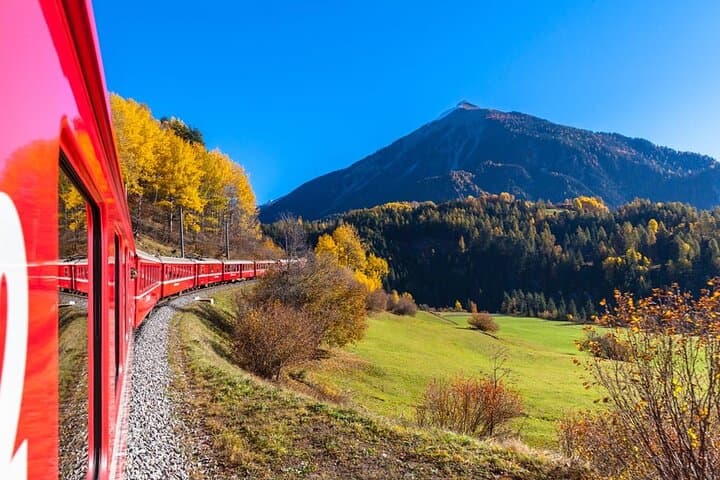
Morning light hits Milan platforms as the coach eases out of the city and the Alps begin to sharpen on the horizon. By midmorning you board the Bernina red train in Tirano, windows opening to let alpine air push across your face as the route climbs toward the pass.
Morning light hits Milan platforms as the coach eases out of the city and the Alps begin to sharpen on the horizon. By midmorning you board the Bernina red train in Tirano, windows opening to let alpine air push across your face as the route climbs toward the pass.
The Rhaetian Railway’s Bernina line—part of the UNESCO Albula/Bernina landscapes—threads 61 km of narrow-gauge track, crossing dramatic viaducts and spirals, including the iconic Brusio Spiral, and reaching the Bernina Pass at roughly 2,328 m. Glaciers loom above Diavolezza and Alp Grüm; their slow, pale crevasses watch the train like old surveyors. The route links Italian-speaking Tirano with high-Rhaeto Romansch St. Moritz, a town shaped by winter sport culture and Belle Époque resorts.
Travelers can expect a mix of coach transfers and multiple rail legs, with guided commentary that layers geology, railway engineering, and local culture. Free time in St. Moritz gives space for a lakeside walk, a quick visit to the casino district, or a coffee under alpine light.
Practical notes: this is a long, mostly sedentary day—12–13 hours—so pack layers, snacks, and a valid passport for border crossings. Steps into stations and the train’s second-class cars are standard height; mobility-impaired travelers should check accessibility in advance. Expect variable mountain weather and pockets of sun between wind and showers. For photographers and keen hikers, aim for clear weather to maximize views; even cloudy days show dramatic mood and depth across the pass.