THE ADVENTURE COLLECTIVE® · Independent discovery and booking for outdoor travel

Ride one of Europe’s most dramatic railways on a full-day Bernina Express tour from Milan to St. Moritz. Expect panoramic cars, glacial valleys, and a UNESCO-listed route with unforgettable alpine views.
Ride one of Europe’s most dramatic railways on a full-day Bernina Express tour from Milan to St. Moritz. Expect panoramic cars, glacial valleys, and a UNESCO-listed route with unforgettable alpine views.
You step off the coach in Milan with a ticket to a different climate: windows fog slightly as the Bernina Express eases out of Tirano and climbs, stone viaducts curving like ribbons over gullied valleys. Snow patches still cling above tree line, while below, glassy lakes flash like coins. The train’s panoramic cars turn the route into a slow-motion nature film — glaciers, serrated ridgelines and quiet hamlets slide by.
Verified experiences and guided adventures in the surrounding area.
Operated by Travelmade · St. Moritz, Graubünden
You step off the coach in Milan with a ticket to a different climate: windows fog slightly as the Bernina Express eases out of Tirano and climbs, stone viaducts curving like ribbons over gullied valleys. Snow patches still cling above tree line, while below, glassy lakes flash like coins. The train’s panoramic cars turn the route into a slow-motion nature film — glaciers, serrated ridgelines and quiet hamlets slide by.
The line itself is history in motion: the Rhaetian Railway—now UNESCO-listed—opened in the early 20th century and threads engineering feats such as the Brusio spiral viaduct and steep climbs to the Bernina Pass (2,253 m). Geologically, the route traces glaciated valleys and moraine-fed lakes; culturally it bridges Lombardy’s Italian-speaking Tirano and Graubünden’s Romansh and German-influenced alpine towns. St. Moritz arrives with its crystalline lake and high-end boutiques, a town shaped by winter sport traditions and summer hiking culture.
Practicalities matter on an 11–12 hour day: the Tirano–St. Moritz stretch is about 61 km with roughly 1,800 m of elevation gain from Tirano, so bring layers for temperature swings and a charged camera for iconic views. Have passports or ID ready for the Italy–Switzerland border, and plan cash or card for lunch in St. Moritz. Seating and panoramic cars sell out; reserve early. If the itinerary runs in reverse you’ll still get the same highlights but adjust meeting times accordingly.
Expect an easy physical day with long sit-down periods punctuated by two-hour walking windows in charming towns — the reward is uninterrupted Alpine scenery and a compact, unforgettable slice of the high Alps.
The full-day excursion runs about 11–12 hours door-to-door; the Bernina rail segment between Tirano and St. Moritz takes roughly 2–2.5 hours each way depending on stops.
Meals are not included; you’ll have scheduled free time in Tirano and St. Moritz to purchase lunch or snacks.
Schengen rules apply for non-EU visitors — ensure your passport and any necessary visas are valid for crossing into Switzerland from Italy.
Yes — for operational reasons the route may operate Tirano→St. Moritz or the reverse; both directions cover the same scenic highlights.
Travelmade operates guided outdoor trips and adventures with an emphasis on safety, stewardship, and memorable experiences.
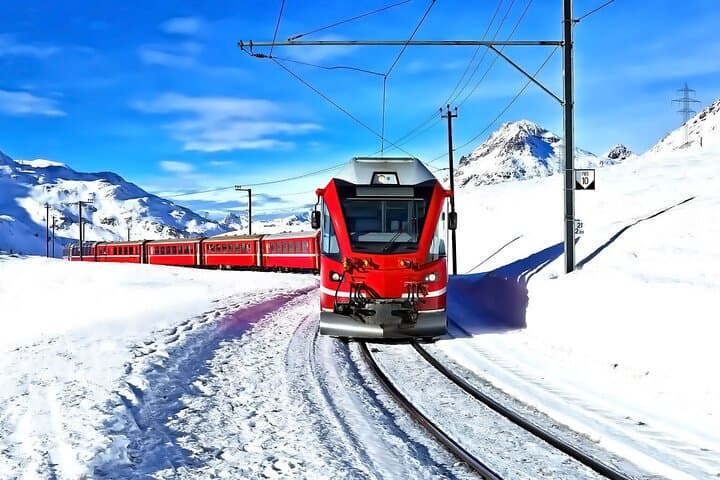
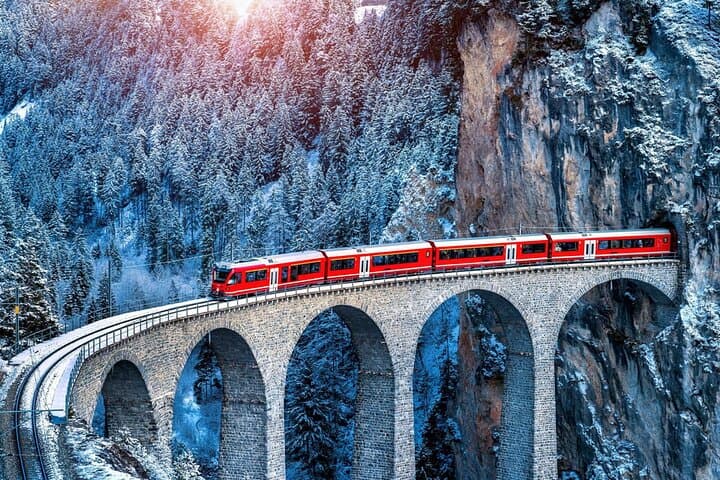
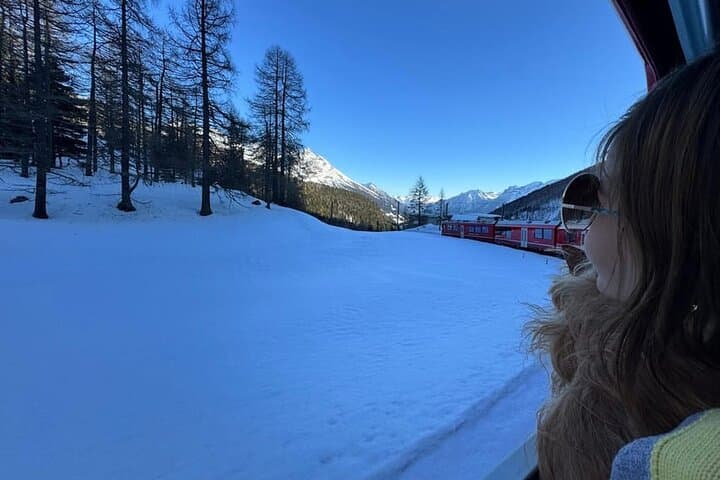
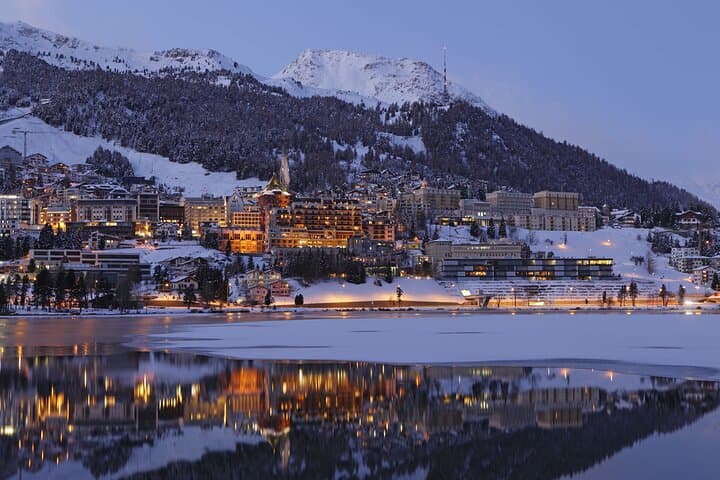
You step off the coach in Milan with a ticket to a different climate: windows fog slightly as the Bernina Express eases out of Tirano and climbs, stone viaducts curving like ribbons over gullied valleys. Snow patches still cling above tree line, while below, glassy lakes flash like coins. The train’s panoramic cars turn the route into a slow-motion nature film — glaciers, serrated ridgelines and quiet hamlets slide by.
You step off the coach in Milan with a ticket to a different climate: windows fog slightly as the Bernina Express eases out of Tirano and climbs, stone viaducts curving like ribbons over gullied valleys. Snow patches still cling above tree line, while below, glassy lakes flash like coins. The train’s panoramic cars turn the route into a slow-motion nature film — glaciers, serrated ridgelines and quiet hamlets slide by.
The line itself is history in motion: the Rhaetian Railway—now UNESCO-listed—opened in the early 20th century and threads engineering feats such as the Brusio spiral viaduct and steep climbs to the Bernina Pass (2,253 m). Geologically, the route traces glaciated valleys and moraine-fed lakes; culturally it bridges Lombardy’s Italian-speaking Tirano and Graubünden’s Romansh and German-influenced alpine towns. St. Moritz arrives with its crystalline lake and high-end boutiques, a town shaped by winter sport traditions and summer hiking culture.
Practicalities matter on an 11–12 hour day: the Tirano–St. Moritz stretch is about 61 km with roughly 1,800 m of elevation gain from Tirano, so bring layers for temperature swings and a charged camera for iconic views. Have passports or ID ready for the Italy–Switzerland border, and plan cash or card for lunch in St. Moritz. Seating and panoramic cars sell out; reserve early. If the itinerary runs in reverse you’ll still get the same highlights but adjust meeting times accordingly.
Expect an easy physical day with long sit-down periods punctuated by two-hour walking windows in charming towns — the reward is uninterrupted Alpine scenery and a compact, unforgettable slice of the high Alps.