THE ADVENTURE COLLECTIVE® · Independent discovery and booking for outdoor travel

Ride the UNESCO-listed Bernina Railway from Milan to the high Alps, cross the dizzying Brusio viaduct, and spend free time in chic St. Moritz. This full-day trip pairs engineering feats and glacial scenery with practical travel ease.
Ride the UNESCO-listed Bernina Railway from Milan to the high Alps, cross the dizzying Brusio viaduct, and spend free time in chic St. Moritz. This full-day trip pairs engineering feats and glacial scenery with practical travel ease.
On a clear morning the coach peels away from Milan’s stone-faced avenues and heads north, the city’s hum shrinking behind you as the Alps rise like a challenge on the horizon. By the time the Bernina Express appears—a crimson train with panoramic windows—sunlight has already picked out the serrated ridge of the Bernina massif. The rail slips into hairpin turns, the famous Brusio helical viaduct spinning the carriages gently around its engineering loop, and the mountains begin to dictate the pace: slow turns, sudden reveals, a glacier that seems to breathe.
Verified experiences and guided adventures in the surrounding area.
Operated by Bologna Tour & Best Italy Tour · St. Moritz, Graubünden
On a clear morning the coach peels away from Milan’s stone-faced avenues and heads north, the city’s hum shrinking behind you as the Alps rise like a challenge on the horizon. By the time the Bernina Express appears—a crimson train with panoramic windows—sunlight has already picked out the serrated ridge of the Bernina massif. The rail slips into hairpin turns, the famous Brusio helical viaduct spinning the carriages gently around its engineering loop, and the mountains begin to dictate the pace: slow turns, sudden reveals, a glacier that seems to breathe.
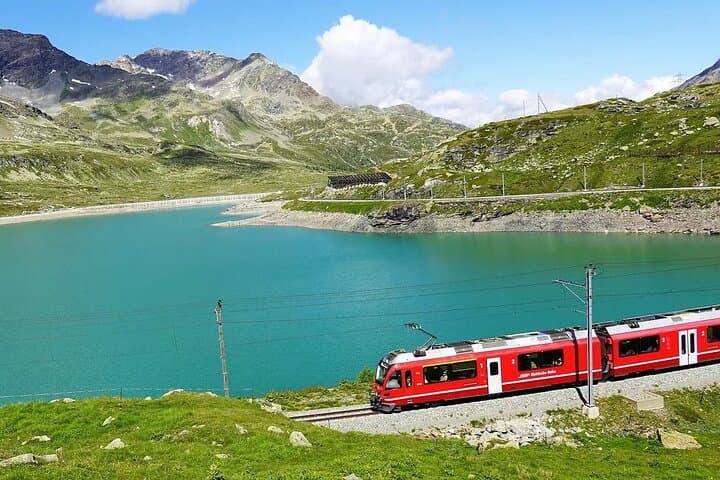
The Bernina Railway, inscribed on the UNESCO list in 2008 as part of the Rhaetian Railway in the Albula/Bernina landscapes, is an early 20th-century marriage of daring engineering and landscape. Tracks climb to the Bernina Pass at roughly 2,328 meters, slicing through glacial moraine and high-alpine pastures where stone hutresses and old shepherd paths mark centuries of seasonal movement. St. Moritz, the tour’s alpine star, evolved in the 19th century from a mineral-spring health resort into one of Europe’s most internationally known mountain towns—known as much for its designer shops and hot chocolate as for the lakeside panorama.
Geology is on nearly every page of the route: glacial scouring has left broad U-shaped valleys; the Morteratsch Glacier, visible from viewpoints near the track, is the largest tongue of ice in the Bernina massif and a clear indicator of climate shifts. Locals talk about the glacier with a practical reverence; it shapes water supplies, winter snowpack, and the quiet economy of the Engadin.
Practical nuts and bolts: this is a full-day outing—expect about 12 hours from Milan and a mix of coach and rail travel. Bring your passport (Switzerland uses the franc but cards are accepted), layered clothing for rapid altitude changes, and a power bank—phone reception is intermittent and you’ll want battery for photos. The tour includes guided commentary, the Bernina train segment with opening windows for fresh alpine air, and roughly three hours of free time in St. Moritz to walk the lakefront, sample Alpine chocolate, or visit a boutique chalet café.
Timing matters: mornings catch low-angle light across glaciers; late afternoon can clamp shadows into the valleys. If you’re sensitive to motion, choose a window seat away from the coach’s jointed sections—rail panoramas are best enjoyed slowly. Above all, leave room for the simple logistics of an international day trip: efficient packing, a modest timetable, and a readiness to let the landscape set the rhythm.
easy.
12 hours.
Suitable for most fitness levels; expect a few short walks in St. Moritz and standing on trains.
This is a full-day tour of approximately 12 hours round-trip from Milan, including rail and coach transfers and free time in St. Moritz.
Yes, carry a valid passport or national ID; Switzerland is not in the EU but participates in Schengen, and officials may still request ID.
Yes—the itinerary includes the Bernina train segment across the Bernina Pass and views of the Brusio viaduct and Morteratsch Glacier.
Meals are not included; you'll have free time in St. Moritz to eat—expect cafés and restaurants, but plan for limited dining options on the rail segments.
The tour is rated easy and suitable for most ages, though it involves long travel days and some standing on trains—consider mobility limitations.
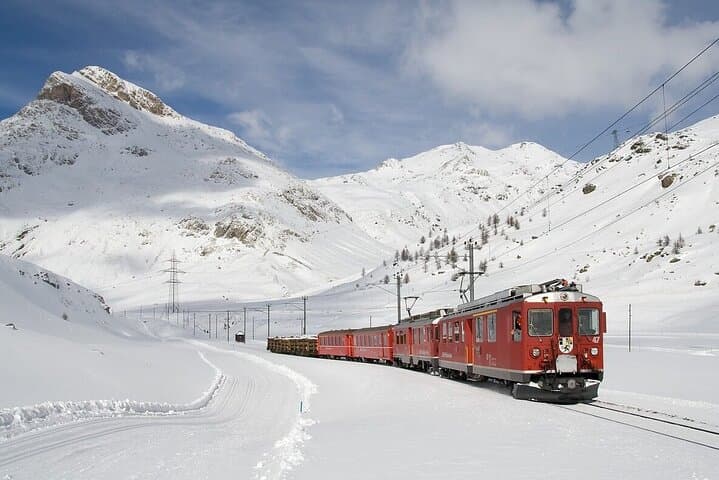
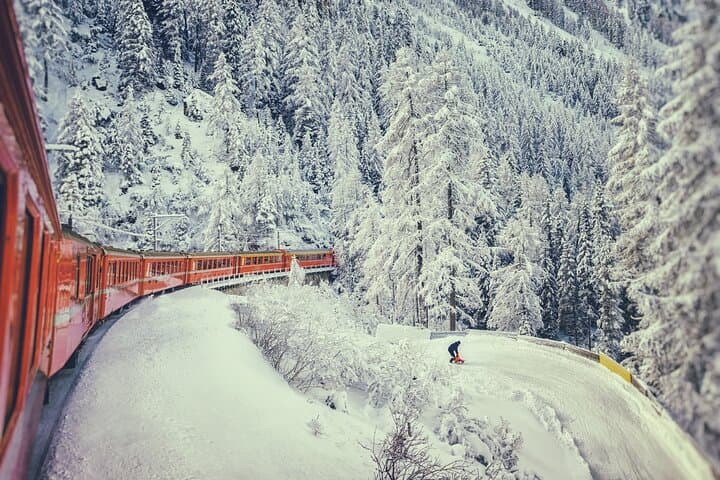
Summer and early fall offer clear mountain roads and accessible glacier viewpoints; winter provides dramatic snow-covered scenery but colder conditions.
The Bernina line is a feat of early 20th-century alpine engineering; its spiral viaducts and high passes were built to maintain gentle gradients through rugged terrain.
Glacial retreat around Morteratsch is visible year to year; visitors are encouraged to stay on marked paths and support local conservation messaging.
Bologna Tour & Best Italy Tour operates guided outdoor trips and adventures with an emphasis on safety, stewardship, and memorable experiences.
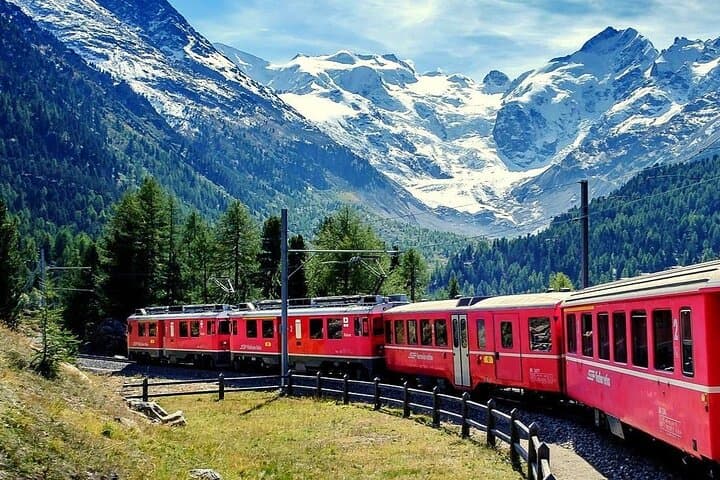
On a clear morning the coach peels away from Milan’s stone-faced avenues and heads north, the city’s hum shrinking behind you as the Alps rise like a challenge on the horizon. By the time the Bernina Express appears—a crimson train with panoramic windows—sunlight has already picked out the serrated ridge of the Bernina massif. The rail slips into hairpin turns, the famous Brusio helical viaduct spinning the carriages gently around its engineering loop, and the mountains begin to dictate the pace: slow turns, sudden reveals, a glacier that seems to breathe.
On a clear morning the coach peels away from Milan’s stone-faced avenues and heads north, the city’s hum shrinking behind you as the Alps rise like a challenge on the horizon. By the time the Bernina Express appears—a crimson train with panoramic windows—sunlight has already picked out the serrated ridge of the Bernina massif. The rail slips into hairpin turns, the famous Brusio helical viaduct spinning the carriages gently around its engineering loop, and the mountains begin to dictate the pace: slow turns, sudden reveals, a glacier that seems to breathe.
The Bernina Railway, inscribed on the UNESCO list in 2008 as part of the Rhaetian Railway in the Albula/Bernina landscapes, is an early 20th-century marriage of daring engineering and landscape. Tracks climb to the Bernina Pass at roughly 2,328 meters, slicing through glacial moraine and high-alpine pastures where stone hutresses and old shepherd paths mark centuries of seasonal movement. St. Moritz, the tour’s alpine star, evolved in the 19th century from a mineral-spring health resort into one of Europe’s most internationally known mountain towns—known as much for its designer shops and hot chocolate as for the lakeside panorama.
Geology is on nearly every page of the route: glacial scouring has left broad U-shaped valleys; the Morteratsch Glacier, visible from viewpoints near the track, is the largest tongue of ice in the Bernina massif and a clear indicator of climate shifts. Locals talk about the glacier with a practical reverence; it shapes water supplies, winter snowpack, and the quiet economy of the Engadin.
Practical nuts and bolts: this is a full-day outing—expect about 12 hours from Milan and a mix of coach and rail travel. Bring your passport (Switzerland uses the franc but cards are accepted), layered clothing for rapid altitude changes, and a power bank—phone reception is intermittent and you’ll want battery for photos. The tour includes guided commentary, the Bernina train segment with opening windows for fresh alpine air, and roughly three hours of free time in St. Moritz to walk the lakefront, sample Alpine chocolate, or visit a boutique chalet café.
Timing matters: mornings catch low-angle light across glaciers; late afternoon can clamp shadows into the valleys. If you’re sensitive to motion, choose a window seat away from the coach’s jointed sections—rail panoramas are best enjoyed slowly. Above all, leave room for the simple logistics of an international day trip: efficient packing, a modest timetable, and a readiness to let the landscape set the rhythm.