THE ADVENTURE COLLECTIVE® · Independent discovery and booking for outdoor travel

Combine marine life and subterranean spectacle on a four‑hour guided tour that pairs the Bermuda Aquarium with the island’s famous Crystal Caves. Learn about geology, wildlife and local culture while descending 203 feet into luminous caverns.
Combine marine life and subterranean spectacle on a four‑hour guided tour that pairs the Bermuda Aquarium with the island’s famous Crystal Caves. Learn about geology, wildlife and local culture while descending 203 feet into luminous caverns.
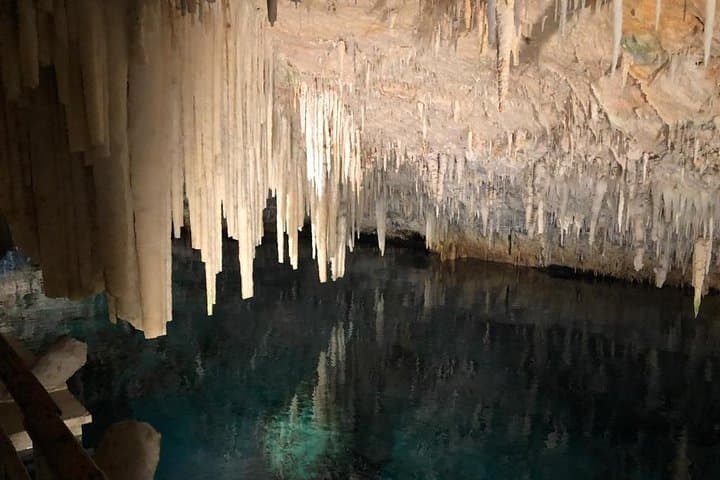
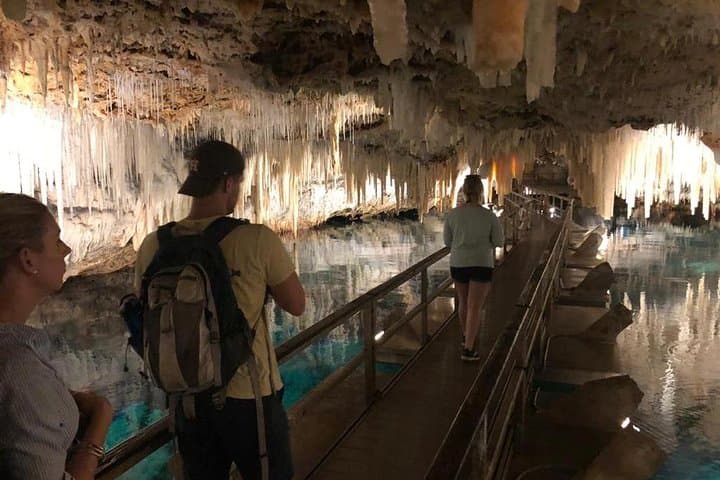
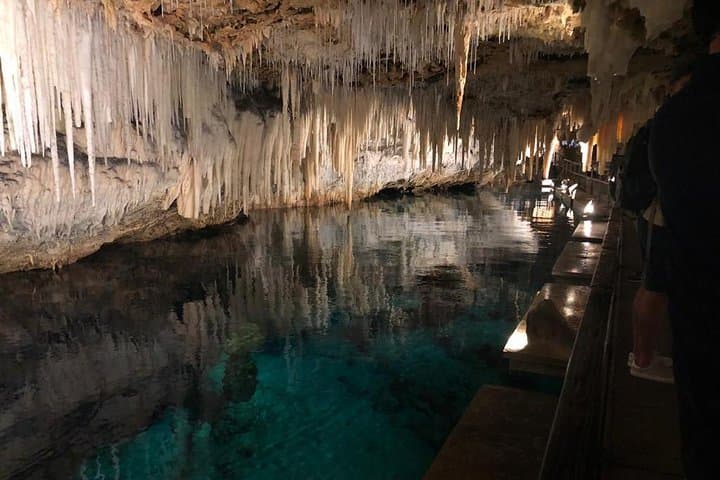
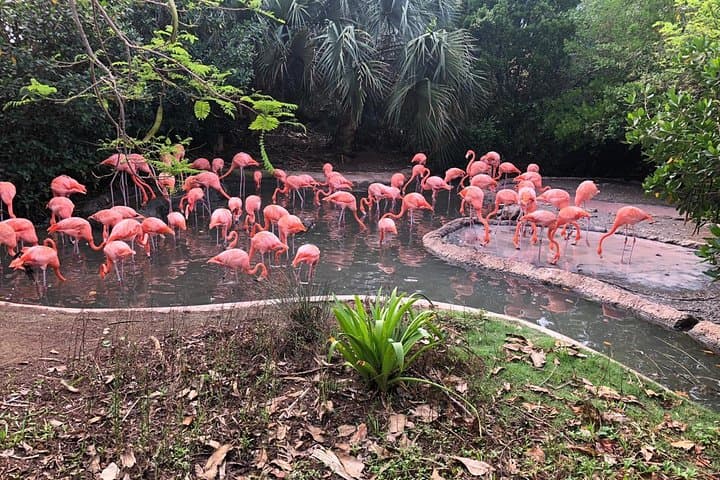
A warm Atlantic breeze lifts the salt from the harbor as visitors step off an air‑conditioned shuttle and into a compact world of Bermudian nature. The day begins at the Bermuda Aquarium, where aviary calls and the clack of peacock feet meet tanks full of reef life; then the route slips inland to a stone stairway that leads down, 203.41 feet below the island surface, to caverns lit by still pools that catch the light like small, ancient mirrors.
Verified experiences and guided adventures in the surrounding area.
Operated by Bermuda Explorer · Hamilton, Hamilton Parish
A warm Atlantic breeze lifts the salt from the harbor as visitors step off an air‑conditioned shuttle and into a compact world of Bermudian nature. The day begins at the Bermuda Aquarium, where aviary calls and the clack of peacock feet meet tanks full of reef life; then the route slips inland to a stone stairway that leads down, 203.41 feet below the island surface, to caverns lit by still pools that catch the light like small, ancient mirrors.
The Crystal Caves were opened to the public in the early 20th century after local discovery, and their calcite formations are products of limestone bedrock dissolved and reformed over millennia. Aboveground, the Aquarium and small museum explain how Bermuda’s isolation shaped its unique birds, reptiles and introduced species; cultural exhibits show tools and objects used by Bermudians from colonial times to the present.
Expect two hours at the Aquarium and roughly two hours exploring the caves, with a guided narrative about geology, discovery and the island’s natural history. The caves’ wooden bridges and narrow passages mean steady footing and modest stair climbing; humidity and cool, shadowed pools change tactile perception, so layers are useful. Hydrate before you descend, keep cameras ready for reflections on the water, and follow posted conservation rules: formations are fragile and tours stick to paths.
Practical notes: the tour includes round‑trip transport, admission, and runs about four hours total—suitable for a broad range of fitness levels but not ideal for those with severe mobility limitations. Mid‑morning departures avoid the hottest hours and give the best light for the aquarium’s outdoor enclosures.
easy.
4 hours.
Suitable for a wide range of fitness levels; requires ability to climb stairs and walk at least 30–45 minutes intermittently.
The full experience is approximately four hours: roughly two hours at the Bermuda Aquarium and two hours exploring the Crystal Caves, including round‑trip transport.
The caves include steep staircases and narrow bridges, so they are not fully wheelchair accessible; the aquarium has more accessible areas—check with the operator for specific accommodations.
Yes—admission to both the Bermuda Aquarium and Crystal Caves and round‑trip transportation in an air‑conditioned vehicle are included in the booking price.
Wear closed‑toe shoes with good grip, layered clothing for variable temperatures, and bring a light jacket since caves can be cool and humid.
The Crystal Caves were brought to public attention in the early 20th century; both the caves and the aquarium illustrate how Bermuda’s isolated limestone developed unique habitats used by humans and wildlife.
Cave formations and nearby reef systems are fragile—follow trails, avoid touching formations, and use reef‑safe sunscreen when nearshore.
Bermuda Explorer operates guided outdoor trips and adventures with an emphasis on safety, stewardship, and memorable experiences.
A warm Atlantic breeze lifts the salt from the harbor as visitors step off an air‑conditioned shuttle and into a compact world of Bermudian nature. The day begins at the Bermuda Aquarium, where aviary calls and the clack of peacock feet meet tanks full of reef life; then the route slips inland to a stone stairway that leads down, 203.41 feet below the island surface, to caverns lit by still pools that catch the light like small, ancient mirrors.
A warm Atlantic breeze lifts the salt from the harbor as visitors step off an air‑conditioned shuttle and into a compact world of Bermudian nature. The day begins at the Bermuda Aquarium, where aviary calls and the clack of peacock feet meet tanks full of reef life; then the route slips inland to a stone stairway that leads down, 203.41 feet below the island surface, to caverns lit by still pools that catch the light like small, ancient mirrors.
The Crystal Caves were opened to the public in the early 20th century after local discovery, and their calcite formations are products of limestone bedrock dissolved and reformed over millennia. Aboveground, the Aquarium and small museum explain how Bermuda’s isolation shaped its unique birds, reptiles and introduced species; cultural exhibits show tools and objects used by Bermudians from colonial times to the present.
Expect two hours at the Aquarium and roughly two hours exploring the caves, with a guided narrative about geology, discovery and the island’s natural history. The caves’ wooden bridges and narrow passages mean steady footing and modest stair climbing; humidity and cool, shadowed pools change tactile perception, so layers are useful. Hydrate before you descend, keep cameras ready for reflections on the water, and follow posted conservation rules: formations are fragile and tours stick to paths.
Practical notes: the tour includes round‑trip transport, admission, and runs about four hours total—suitable for a broad range of fitness levels but not ideal for those with severe mobility limitations. Mid‑morning departures avoid the hottest hours and give the best light for the aquarium’s outdoor enclosures.