THE ADVENTURE COLLECTIVE® · Independent discovery and booking for outdoor travel

Cover Berlin’s defining sites in three hours by bike—designed for school groups. A guide-led route connects Old Town, Museum Island and Cold War landmarks with safety-focused stops and local insights.
Cover Berlin’s defining sites in three hours by bike—designed for school groups. A guide-led route connects Old Town, Museum Island and Cold War landmarks with safety-focused stops and local insights.
A bicycle hums through narrow lanes, tires whispering over cobbles as a group of students leans into the rhythm of the city. The tour begins at the square in front of Nikolaikirche, where the old town’s compact streets open onto the wider stages of Berlin: memorials, museums, and modern government façades that argue with history at every corner.
Verified experiences and guided adventures in the surrounding area.
Operated by FREE BERLIN Bike Tours · Berlin, Berlin
A bicycle hums through narrow lanes, tires whispering over cobbles as a group of students leans into the rhythm of the city. The tour begins at the square in front of Nikolaikirche, where the old town’s compact streets open onto the wider stages of Berlin: memorials, museums, and modern government façades that argue with history at every corner.
Berlin’s streets are layered: medieval market plots, 18th‑century royal projects, wartime scars and Cold War division, then 1990s reinvention. Guides narrate how the Spree shaped settlement and commerce, how Prussian ambitions stacked stone upon stone, and how the Wall reconfigured urban life—leaving gaps now filled by parks, plazas, and sites of remembrance.
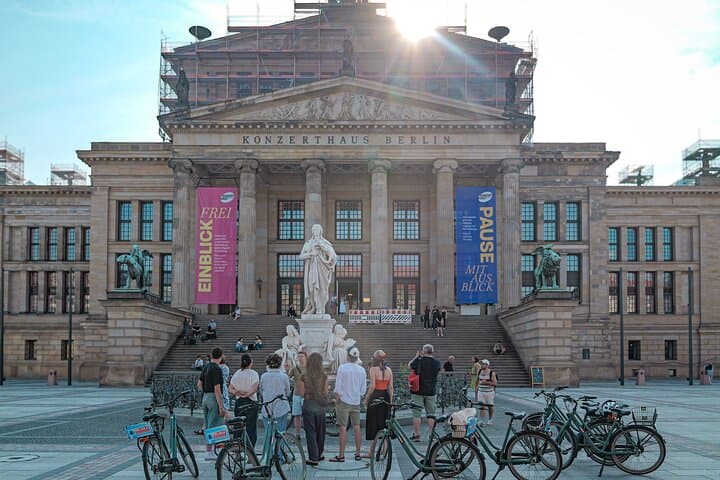
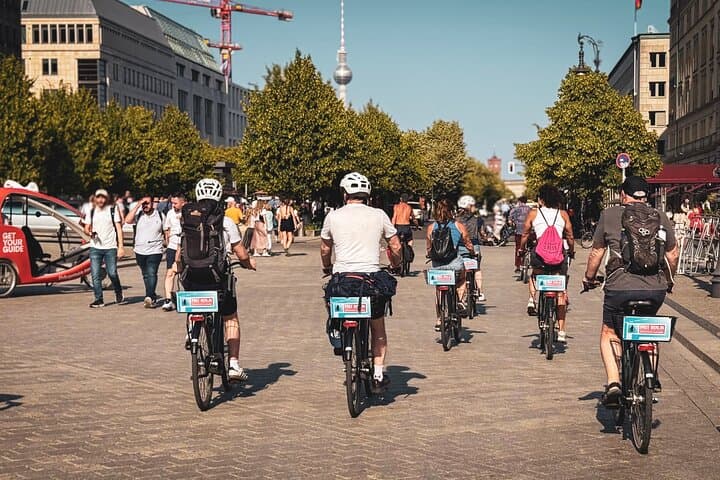
Riding past the TV Tower, Museum Island and the Brandenburg Gate, participants get a condensed civic lesson—architecture as narrative, public space as archive. The route crosses plazas that hosted book burnings, checkpoints that once divided families, and the grand boulevards that became stages for both pageantry and protest.
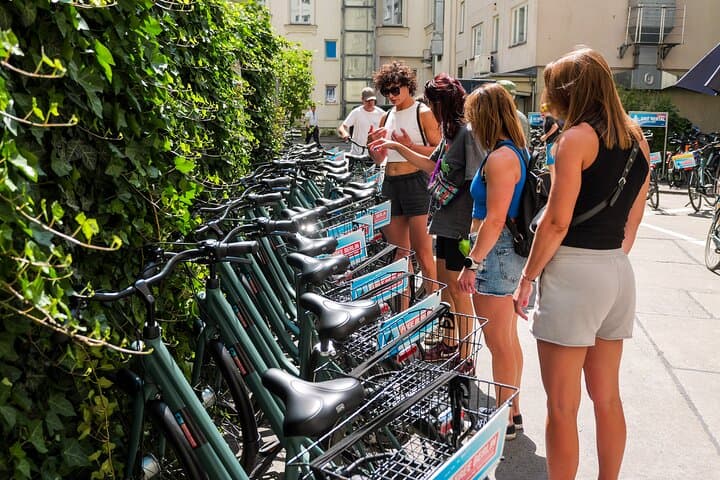
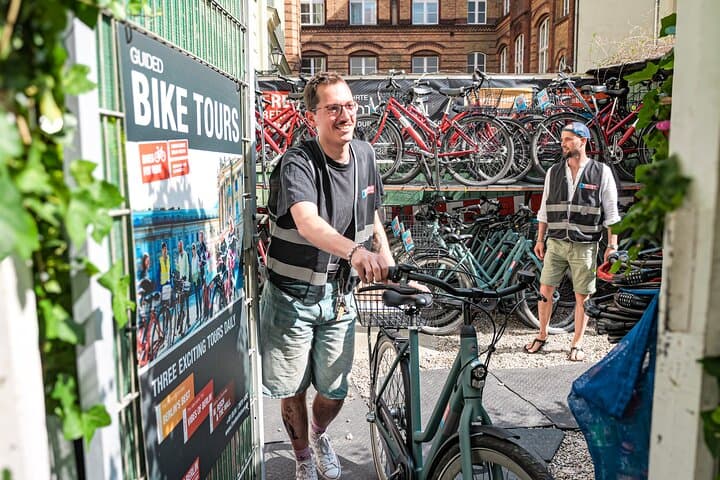
Practical guidance: expect a relaxed, urban ride with short stops for explanations; average speed is modest and helmets are available on request. Dress for the weather—layers and closed shoes—carry a small water bottle, and arrive 10 minutes early for fitting and safety briefing. Groups are balanced for safety, teachers join free per group, and routes adapt to traffic and weather. For school groups this is an efficient, guided way to introduce students to Berlin’s history, built environment and the daily pulse of the city without losing sight of safety and accessibility.
easy.
2–3 hours.
Suitable for school-aged children and adults with basic mobility; riders should be comfortable cycling on flat city streets for 2–3 hours.
Yes; the pace is relaxed and the route is on flat city streets with frequent stops for explanation and rest.
Helmets are available on request; schools should request sizes in advance when possible.
Tours operate in German and English; Dutch, French and Spanish are available on request.
The tour operates in all weather—rain capes are provided; the guide may adjust the route for safety in heavy rain or storms.
Berlin’s urban core records layers of power and rupture: royal Prussia, cultural growth on Museum Island, Nazi-era atrocities and Cold War division before reunification reshaped the center.
Urban tours emphasize low-impact travel—stay on paths, avoid littering, and respect memorial sites; guides often highlight local efforts to preserve green corridors like the Tiergarten.
FREE BERLIN Bike Tours operates guided outdoor trips and adventures with an emphasis on safety, stewardship, and memorable experiences.
A bicycle hums through narrow lanes, tires whispering over cobbles as a group of students leans into the rhythm of the city. The tour begins at the square in front of Nikolaikirche, where the old town’s compact streets open onto the wider stages of Berlin: memorials, museums, and modern government façades that argue with history at every corner.
A bicycle hums through narrow lanes, tires whispering over cobbles as a group of students leans into the rhythm of the city. The tour begins at the square in front of Nikolaikirche, where the old town’s compact streets open onto the wider stages of Berlin: memorials, museums, and modern government façades that argue with history at every corner.
Berlin’s streets are layered: medieval market plots, 18th‑century royal projects, wartime scars and Cold War division, then 1990s reinvention. Guides narrate how the Spree shaped settlement and commerce, how Prussian ambitions stacked stone upon stone, and how the Wall reconfigured urban life—leaving gaps now filled by parks, plazas, and sites of remembrance.
Riding past the TV Tower, Museum Island and the Brandenburg Gate, participants get a condensed civic lesson—architecture as narrative, public space as archive. The route crosses plazas that hosted book burnings, checkpoints that once divided families, and the grand boulevards that became stages for both pageantry and protest.
Practical guidance: expect a relaxed, urban ride with short stops for explanations; average speed is modest and helmets are available on request. Dress for the weather—layers and closed shoes—carry a small water bottle, and arrive 10 minutes early for fitting and safety briefing. Groups are balanced for safety, teachers join free per group, and routes adapt to traffic and weather. For school groups this is an efficient, guided way to introduce students to Berlin’s history, built environment and the daily pulse of the city without losing sight of safety and accessibility.