THE ADVENTURE COLLECTIVE® · Independent discovery and booking for outdoor travel

Take Berlin at street level in a rickshaw—an easy, low‑carbon way to see the Brandenburg Gate, Reichstag dome, Tiergarten and remnants of the Wall. Practical, accessible tours run from one hour to four and include onboard Wi‑Fi, a photographer option and blankets for chilly rides.
Take Berlin at street level in a rickshaw—an easy, low‑carbon way to see the Brandenburg Gate, Reichstag dome, Tiergarten and remnants of the Wall. Practical, accessible tours run from one hour to four and include onboard Wi‑Fi, a photographer option and blankets for chilly rides.
A rickshaw glides through Berlin with the Spree breathing at its edges and plane trees shading the wide boulevards. You sit low and forward, the city unfolding at pedestrian pace—sandstone columns of the Brandenburg Gate, the glass dome of the Reichstag catching sunlight, and street art tracing the Wall’s old scar. The rickshaw moves where cars slow and walkers hurry.
Verified experiences and guided adventures in the surrounding area.
Operated by Rikscha & Bier Bike & Party Beer Bike - Leo Rickshaw Tours · Berlin, Berlin
A rickshaw glides through Berlin with the Spree breathing at its edges and plane trees shading the wide boulevards. You sit low and forward, the city unfolding at pedestrian pace—sandstone columns of the Brandenburg Gate, the glass dome of the Reichstag catching sunlight, and street art tracing the Wall’s old scar. The rickshaw moves where cars slow and walkers hurry.
Berlin is a city of recent upheavals and long continuities: Prussian classicism gave the Brandenburg Gate its form in 1791; the 20th century left scars from which the city rebuilt—Checkpoint Charlie, the Topography of Terror, and the East Side Gallery all map stories of division and repair. Geologically the city lies on a glacial plain with the Spree threading low-lying marshy valleys that became the arteries of settlement and trade.
Culturally, the ride passes opera houses, modern plazas like Potsdamer Platz and intimate neighborhoods where markets and cafés mark daily life. Local guides steer you through contrasts—state monuments, quiet courtyards, and the green lungs of the Tiergarten.
Practically: tours run 1–4 hours, are wheelchair- and stroller-accessible, and come with onboard Wi‑Fi, a photographer option, music on request and even a warm blanket for cool evenings. Wear layered clothing—Berlin weather shifts fast—bring a camera and carry small cash for tips or market snacks. Morning and late-afternoon slots give softer light and lighter traffic; midday is busiest near Museum Island. For a relaxed, low‑carbon way to cover central attractions and pick up neighborhood stories, the rickshaw is efficient, social, and uncommonly memorable.
easy.
1–4 hours.
Suitable for all fitness levels; passengers are seated for the duration but should be able to step in and out of the rickshaw.
Yes—this rickshaw service indicates wheelchair accessibility; notify the operator of requirements when booking to confirm suitable equipment.
Tours may be cancelled for severe weather per the operator’s policy; light rain is common—bring a rain layer and the operator provides blankets for chill.
Yes—tours are private and customizable within route limits; a photographer option and music on request are listed as inclusions.
Standard bookings are per rickshaw (one per booking); for groups requiring multiple rickshaws search the group tour option to reserve coordinated rides.
The Brandenburg Gate (1788–1791) and the Reichstag have anchored Berlin’s changing governments; the Berlin Wall’s remain at the East Side Gallery documents the city’s Cold War division and artistic reclaiming.
Rickshaw tours advertise a low carbon footprint as a sustainable city option; visitors should avoid littering, stick to public paths, and support small local vendors to spread economic benefits.
Rikscha & Bier Bike & Party Beer Bike - Leo Rickshaw Tours operates guided outdoor trips and adventures with an emphasis on safety, stewardship, and memorable experiences.
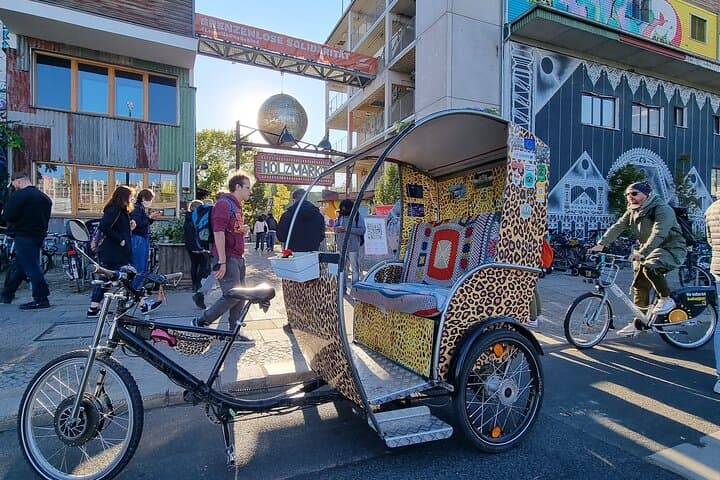
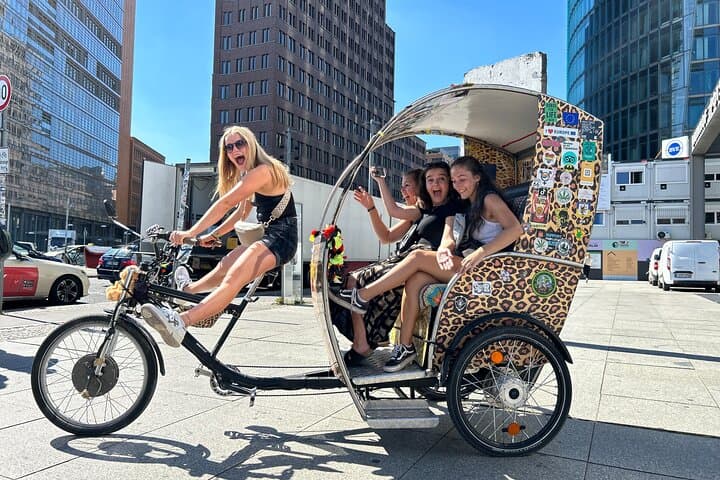
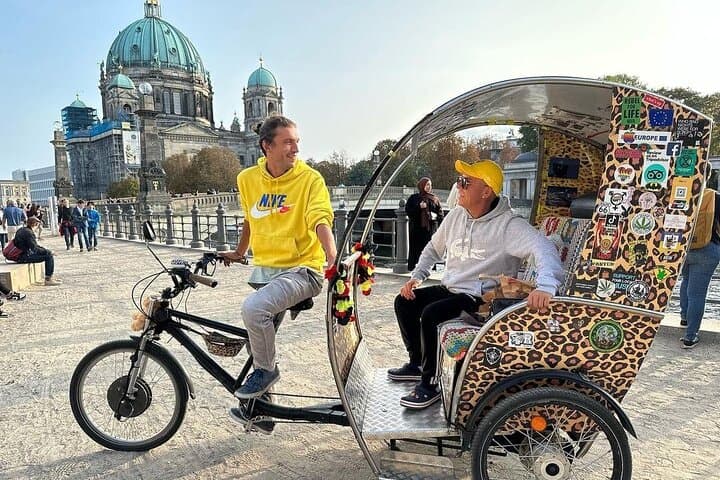

A rickshaw glides through Berlin with the Spree breathing at its edges and plane trees shading the wide boulevards. You sit low and forward, the city unfolding at pedestrian pace—sandstone columns of the Brandenburg Gate, the glass dome of the Reichstag catching sunlight, and street art tracing the Wall’s old scar. The rickshaw moves where cars slow and walkers hurry.
A rickshaw glides through Berlin with the Spree breathing at its edges and plane trees shading the wide boulevards. You sit low and forward, the city unfolding at pedestrian pace—sandstone columns of the Brandenburg Gate, the glass dome of the Reichstag catching sunlight, and street art tracing the Wall’s old scar. The rickshaw moves where cars slow and walkers hurry.
Berlin is a city of recent upheavals and long continuities: Prussian classicism gave the Brandenburg Gate its form in 1791; the 20th century left scars from which the city rebuilt—Checkpoint Charlie, the Topography of Terror, and the East Side Gallery all map stories of division and repair. Geologically the city lies on a glacial plain with the Spree threading low-lying marshy valleys that became the arteries of settlement and trade.
Culturally, the ride passes opera houses, modern plazas like Potsdamer Platz and intimate neighborhoods where markets and cafés mark daily life. Local guides steer you through contrasts—state monuments, quiet courtyards, and the green lungs of the Tiergarten.
Practically: tours run 1–4 hours, are wheelchair- and stroller-accessible, and come with onboard Wi‑Fi, a photographer option, music on request and even a warm blanket for cool evenings. Wear layered clothing—Berlin weather shifts fast—bring a camera and carry small cash for tips or market snacks. Morning and late-afternoon slots give softer light and lighter traffic; midday is busiest near Museum Island. For a relaxed, low‑carbon way to cover central attractions and pick up neighborhood stories, the rickshaw is efficient, social, and uncommonly memorable.