THE ADVENTURE COLLECTIVE® · Independent discovery and booking for outdoor travel

Slow down and see Berlin up close from a two-person rickshaw: 3.5 hours of guided stops at the Brandenburg Gate, Reichstag, remnants of the Wall, and quieter parkways. Ideal for those who prefer a relaxed pace and frequent photo stops.
Slow down and see Berlin up close from a two-person rickshaw: 3.5 hours of guided stops at the Brandenburg Gate, Reichstag, remnants of the Wall, and quieter parkways. Ideal for those who prefer a relaxed pace and frequent photo stops.
A Rickshaw waits at the edge of Tiergarten, wheels silent against cobbled approaches while the Spree threads through the city like a cool thought. Climb in and the guide steers you toward the Brandenburg Gate; the rickshaw’s slow cadence lets the city’s edges reveal themselves — street art, grand façades, and quotidian life passing in a steady, readable rhythm.
Verified experiences and guided adventures in the surrounding area.
A Rickshaw waits at the edge of Tiergarten, wheels silent against cobbled approaches while the Spree threads through the city like a cool thought. Climb in and the guide steers you toward the Brandenburg Gate; the rickshaw’s slow cadence lets the city’s edges reveal themselves — street art, grand façades, and quotidian life passing in a steady, readable rhythm.
This three-and-a-half-hour route moves through Berlin’s historical core: Prussian boulevards, the Reichstag’s glass crown, fragments of the Cold War along the former Wall and the East Side Gallery, and intimate squares that once hosted markets and rallies. Geology here is urban: post-glacial plains and river terraces shaped where Berlin sits, but the real texture comes from layered human history — imperial, devastated, divided, and reinvented.
Culturally the ride is conversational; guides point out memorials, explain neighborhood character, and note how cuisine and street culture have shifted since reunification. Local insight matters: routes favor quieter park paths and pedestrian zones to keep the ride smooth and personable.
Practicalities: expect roughly 8–12 km of easy terrain at a relaxed pace with minimal elevation. Bring a light jacket and comfortable shoes for short dismounts, and a charged camera — photo stops are frequent. Tours are shared by default; if you need a different vehicle or private ride, book separately. Weather can change quickly; a rain cover or waterproof layer keeps the experience intact. The rickshaw is ideal for travelers who want an up-close, low-impact way to see Berlin without long walks.
easy.
3.5 hours.
Minimal fitness required—participants should be able to sit for extended periods and manage brief walks on flat ground.
Yes—rickshaws are low-impact and good for riders of most ages, though participants should be able to sit for the duration and handle brief dismounts.
The listed experience is a shared two-person rickshaw; for private or alternate vehicles book a separate listing or contact the operator directly.
Tours generally proceed in light rain with rain covers; operators may cancel or reschedule for heavy storms for safety and comfort—check the provider’s policy.
Guides typically plan short breaks near cafés or public facilities—bring small change for quick purchases or tipping.
This route threads sites from Prussian-era boulevards through WWII ruins and Cold War divisions to the contemporary reunified capital, offering a condensed civic history.
Rickshaws are a low-emission way to tour the city; stay on designated paths, avoid blocking bike lanes, and follow guide instructions to minimize impact.
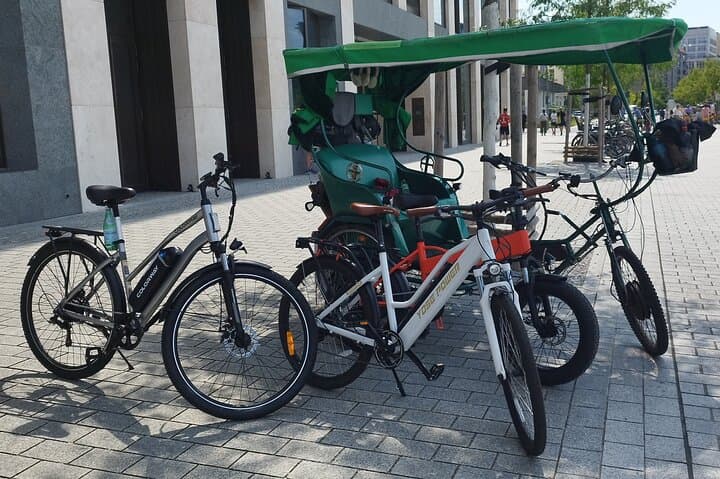
A Rickshaw waits at the edge of Tiergarten, wheels silent against cobbled approaches while the Spree threads through the city like a cool thought. Climb in and the guide steers you toward the Brandenburg Gate; the rickshaw’s slow cadence lets the city’s edges reveal themselves — street art, grand façades, and quotidian life passing in a steady, readable rhythm.
A Rickshaw waits at the edge of Tiergarten, wheels silent against cobbled approaches while the Spree threads through the city like a cool thought. Climb in and the guide steers you toward the Brandenburg Gate; the rickshaw’s slow cadence lets the city’s edges reveal themselves — street art, grand façades, and quotidian life passing in a steady, readable rhythm.
This three-and-a-half-hour route moves through Berlin’s historical core: Prussian boulevards, the Reichstag’s glass crown, fragments of the Cold War along the former Wall and the East Side Gallery, and intimate squares that once hosted markets and rallies. Geology here is urban: post-glacial plains and river terraces shaped where Berlin sits, but the real texture comes from layered human history — imperial, devastated, divided, and reinvented.
Culturally the ride is conversational; guides point out memorials, explain neighborhood character, and note how cuisine and street culture have shifted since reunification. Local insight matters: routes favor quieter park paths and pedestrian zones to keep the ride smooth and personable.
Practicalities: expect roughly 8–12 km of easy terrain at a relaxed pace with minimal elevation. Bring a light jacket and comfortable shoes for short dismounts, and a charged camera — photo stops are frequent. Tours are shared by default; if you need a different vehicle or private ride, book separately. Weather can change quickly; a rain cover or waterproof layer keeps the experience intact. The rickshaw is ideal for travelers who want an up-close, low-impact way to see Berlin without long walks.