THE ADVENTURE COLLECTIVE® · Independent discovery and booking for outdoor travel

Move through Berlin’s historic core by rickshaw, e-bike and e-scooter on a private three-hour tour. Ideal for mixed-age groups, the route hits Museum Island, Gendarmenmarkt, Checkpoint Charlie and Brandenburg Gate with frequent stops and local context.
Move through Berlin’s historic core by rickshaw, e-bike and e-scooter on a private three-hour tour. Ideal for mixed-age groups, the route hits Museum Island, Gendarmenmarkt, Checkpoint Charlie and Brandenburg Gate with frequent stops and local context.
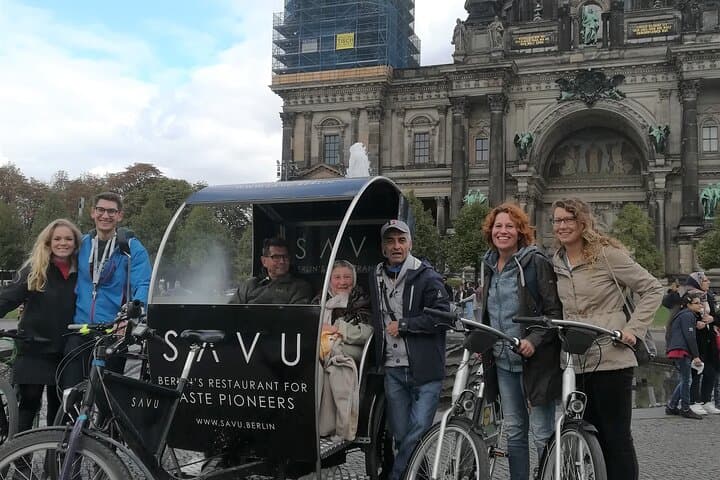
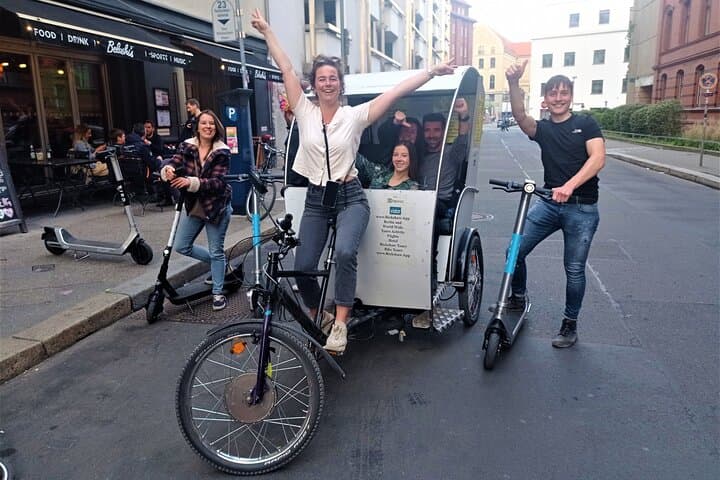
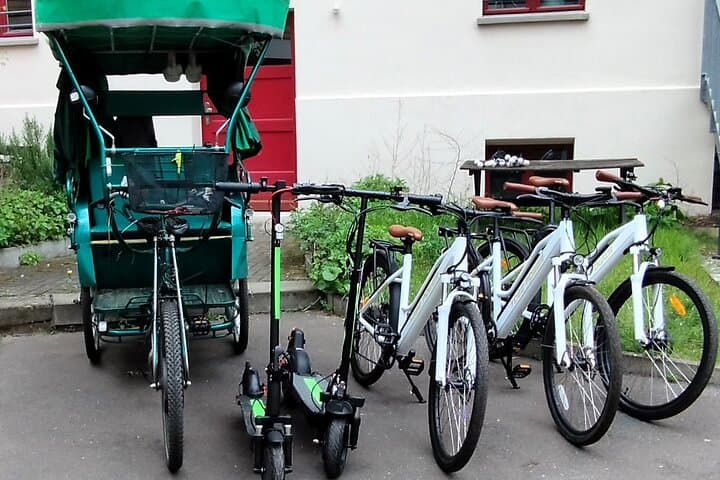
You roll away from Alexanderplatz under the shadow of the TV Tower, the city unfolding in quick frames: river-spattered light along the Spree, the pastel façades of Museum Island, and the stately columns of Gendarmenmarkt. The rickshaw hums softly for those who want to soak it in; e-bikes and scooters carry the rest, a compact convoy moving through the arteries of Mitte.
Verified experiences and guided adventures in the surrounding area.
Operated by Berlin-Rickshaw / Berlin-Excursions · Berlin, Berlin
You roll away from Alexanderplatz under the shadow of the TV Tower, the city unfolding in quick frames: river-spattered light along the Spree, the pastel façades of Museum Island, and the stately columns of Gendarmenmarkt. The rickshaw hums softly for those who want to soak it in; e-bikes and scooters carry the rest, a compact convoy moving through the arteries of Mitte.
This condensed route threads Berlin’s fractured history into its present — from Prussian boulevards and the rubble of wartime rebuilding to the Cold War’s scar where the Wall once stood. Geologically simple — a low-lying North German Plain cut by the Spree — the city’s drama comes from human layers: imperial courts, modernist experiments, and post‑1989 reinvention. Culture here is public and loud: memorials and museums sit alongside cafés and market stalls that pulse with neighborhood life.
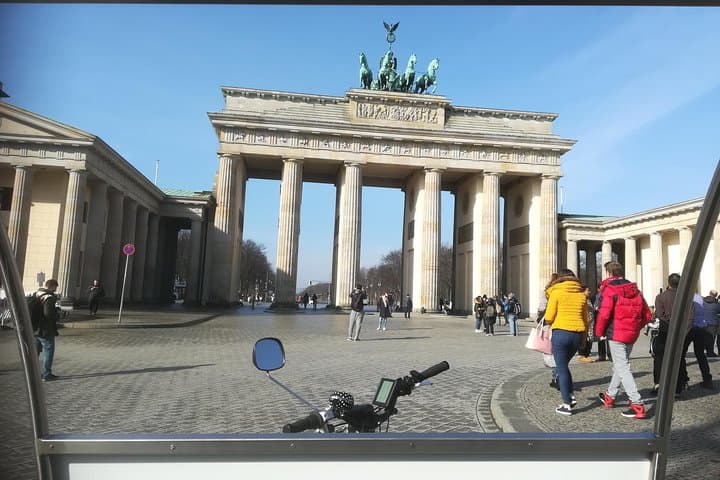
Expect frequent stops at major sites: Museum Island’s UNESCO cluster, Bebelplatz’s book-burn memorial, Checkpoint Charlie, Potsdamer Platz, the Holocaust Memorial and Brandenburg Gate, all paced to suit mixed mobility groups. Guides provide context and practicalities — where to dismount, where to photograph, and when to sample a street snack.
Practical notes: this is a 3‑hour private experience for up to 12, suitable for a wide range of ages and mobility — rickshaw seating is quick to board. Bring layered clothing, comfortable shoes, and a charged phone for photos. Aim for morning or late afternoon light for the clearest air and fewer crowds; keep a small bottle of water handy and let the guide know any accessibility needs in advance.
easy.
3 hours.
Basic mobility recommended — suitable for families and older guests; riders should be comfortable balancing on an e-bike or scooter for short stretches.
Yes—one rickshaw seat is included and designed for easy boarding; the guide can tailor the pace and stops to accommodate less-mobile guests.
No formal experience is required, but riders should be comfortable balancing and following basic traffic guidance; guides provide a safety briefing.
Helmets are typically available—confirm with the operator if you require specific sizes or want to reserve extras for children.
Yes—this private tour can adjust stops and timing to focus on particular interests within the central Mitte area; request preferences when booking.
Berlin’s central route traces layers from Prussian-era monuments through the scars of World War II to Cold War division and its reunification after 1989.
High foot traffic and nesting birds near the Spree mean visitors should avoid littering and follow guide instructions to protect fragile memorial sites and green spaces.
Berlin-Rickshaw / Berlin-Excursions operates guided outdoor trips and adventures with an emphasis on safety, stewardship, and memorable experiences.
You roll away from Alexanderplatz under the shadow of the TV Tower, the city unfolding in quick frames: river-spattered light along the Spree, the pastel façades of Museum Island, and the stately columns of Gendarmenmarkt. The rickshaw hums softly for those who want to soak it in; e-bikes and scooters carry the rest, a compact convoy moving through the arteries of Mitte.
You roll away from Alexanderplatz under the shadow of the TV Tower, the city unfolding in quick frames: river-spattered light along the Spree, the pastel façades of Museum Island, and the stately columns of Gendarmenmarkt. The rickshaw hums softly for those who want to soak it in; e-bikes and scooters carry the rest, a compact convoy moving through the arteries of Mitte.
This condensed route threads Berlin’s fractured history into its present — from Prussian boulevards and the rubble of wartime rebuilding to the Cold War’s scar where the Wall once stood. Geologically simple — a low-lying North German Plain cut by the Spree — the city’s drama comes from human layers: imperial courts, modernist experiments, and post‑1989 reinvention. Culture here is public and loud: memorials and museums sit alongside cafés and market stalls that pulse with neighborhood life.
Expect frequent stops at major sites: Museum Island’s UNESCO cluster, Bebelplatz’s book-burn memorial, Checkpoint Charlie, Potsdamer Platz, the Holocaust Memorial and Brandenburg Gate, all paced to suit mixed mobility groups. Guides provide context and practicalities — where to dismount, where to photograph, and when to sample a street snack.
Practical notes: this is a 3‑hour private experience for up to 12, suitable for a wide range of ages and mobility — rickshaw seating is quick to board. Bring layered clothing, comfortable shoes, and a charged phone for photos. Aim for morning or late afternoon light for the clearest air and fewer crowds; keep a small bottle of water handy and let the guide know any accessibility needs in advance.