THE ADVENTURE COLLECTIVE® · Independent discovery and booking for outdoor travel

See Berlin close-up on a guided self-drive e-scooter tour that mixes history, street culture, and riverside riding. This 3.5-hour small-group route covers major sights and tucked-away corners at a relaxed, traffic-aware pace.
See Berlin close-up on a guided self-drive e-scooter tour that mixes history, street culture, and riverside riding. This 3.5-hour small-group route covers major sights and tucked-away corners at a relaxed, traffic-aware pace.
The Spree slips past metal bridges and graffiti-streaked walls as your group lines up behind a guide and the city unfolds at 20 km/h. You’ll roll from broad squares into quieter lanes, the scooter humming beneath you while carousel traffic and tram bells set the tempo. Rickshaws wait for those who prefer a seated view; everyone else steers through a mix of bike lanes and shared streets.
Verified experiences and guided adventures in the surrounding area.
The Spree slips past metal bridges and graffiti-streaked walls as your group lines up behind a guide and the city unfolds at 20 km/h. You’ll roll from broad squares into quieter lanes, the scooter humming beneath you while carousel traffic and tram bells set the tempo. Rickshaws wait for those who prefer a seated view; everyone else steers through a mix of bike lanes and shared streets.
Berlin’s history is visible in layers: cobblestone fragments of Prussian planning, monumental 19th-century façades, scars of the Cold War along former borderlines, and contemporary street art that argues for the present. Geologically this is a low-lying glacial plain—flat, which makes steady scooting easy—and the Spree threads neighborhoods that grew from trade routes into modern cultural hubs.
Local culture favors curiosity: cafés fuel stops, markets pop up on weekends, and guides will point out lesser-known courtyards, memorials, and a lane of world-class murals. Practicalities matter: German rules cap e-scooters at 20 km/h, riders younger than 14 are generally restricted, and sidewalk riding is illegal — keep to bike lanes.
On a 3.5-hour circuit expect roughly 8–12 km of riding with frequent stops for photos and short walks. Carry water, wear closed-toe shoes, and be prepared to dismount for trams, pedestrian crossings, and narrow alleys. The pace is social yet active: enough motion to feel the city’s pulse, with steady opportunities to learn its past and present.
easy.
3–4 hours.
Light fitness — able to stand and balance for extended periods and walk short stretches
German law generally sets a 14+ minimum for e-scooters, but the operator may set a higher age or require parental consent — check the booking terms.
Yes — a rickshaw option is available for passengers who prefer to sit; advance notice is recommended to reserve capacity.
Tours often run in light rain; severe weather may prompt a reschedule or cancellation — confirm the provider’s same-day weather policy.
Most operators supply helmets, but you can bring your own for fit and comfort — ask before booking if helmet sizes are a concern.
The route traces a city shaped by Prussian expansion, wartime ruins, Cold War division along the Berlin Wall, and rapid cultural reinvention after reunification.
Riding compact electric vehicles reduces per-person emissions compared with cars, but stay in bike lanes, avoid tram tracks, and respect green spaces to minimize wear and disturbance.
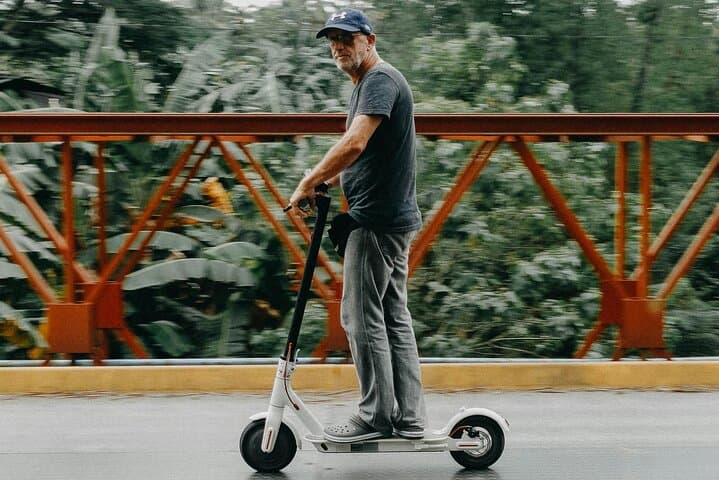
The Spree slips past metal bridges and graffiti-streaked walls as your group lines up behind a guide and the city unfolds at 20 km/h. You’ll roll from broad squares into quieter lanes, the scooter humming beneath you while carousel traffic and tram bells set the tempo. Rickshaws wait for those who prefer a seated view; everyone else steers through a mix of bike lanes and shared streets.
The Spree slips past metal bridges and graffiti-streaked walls as your group lines up behind a guide and the city unfolds at 20 km/h. You’ll roll from broad squares into quieter lanes, the scooter humming beneath you while carousel traffic and tram bells set the tempo. Rickshaws wait for those who prefer a seated view; everyone else steers through a mix of bike lanes and shared streets.
Berlin’s history is visible in layers: cobblestone fragments of Prussian planning, monumental 19th-century façades, scars of the Cold War along former borderlines, and contemporary street art that argues for the present. Geologically this is a low-lying glacial plain—flat, which makes steady scooting easy—and the Spree threads neighborhoods that grew from trade routes into modern cultural hubs.
Local culture favors curiosity: cafés fuel stops, markets pop up on weekends, and guides will point out lesser-known courtyards, memorials, and a lane of world-class murals. Practicalities matter: German rules cap e-scooters at 20 km/h, riders younger than 14 are generally restricted, and sidewalk riding is illegal — keep to bike lanes.
On a 3.5-hour circuit expect roughly 8–12 km of riding with frequent stops for photos and short walks. Carry water, wear closed-toe shoes, and be prepared to dismount for trams, pedestrian crossings, and narrow alleys. The pace is social yet active: enough motion to feel the city’s pulse, with steady opportunities to learn its past and present.