THE ADVENTURE COLLECTIVE® · Independent discovery and booking for outdoor travel

Ride the city’s history in a stretched Trabant and see Berlin’s Cold War landmarks, street art and UNESCO sites with a private guide. This 2.5-hour tour pairs quirky transport with tailored commentary — great for photographers and history buffs alike.
Ride the city’s history in a stretched Trabant and see Berlin’s Cold War landmarks, street art and UNESCO sites with a private guide. This 2.5-hour tour pairs quirky transport with tailored commentary — great for photographers and history buffs alike.
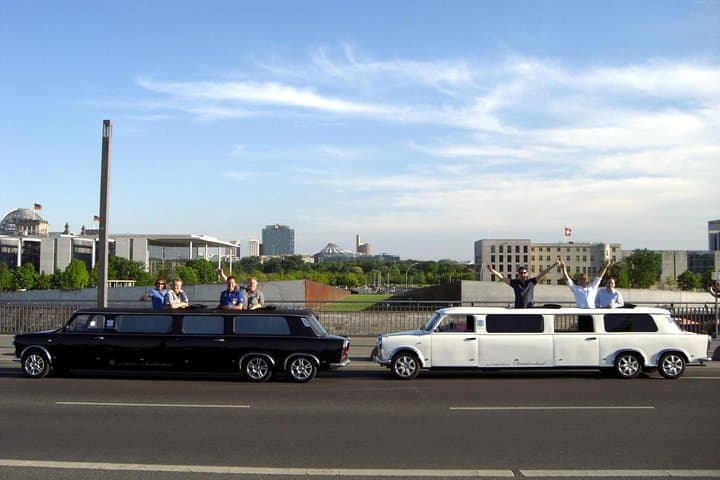
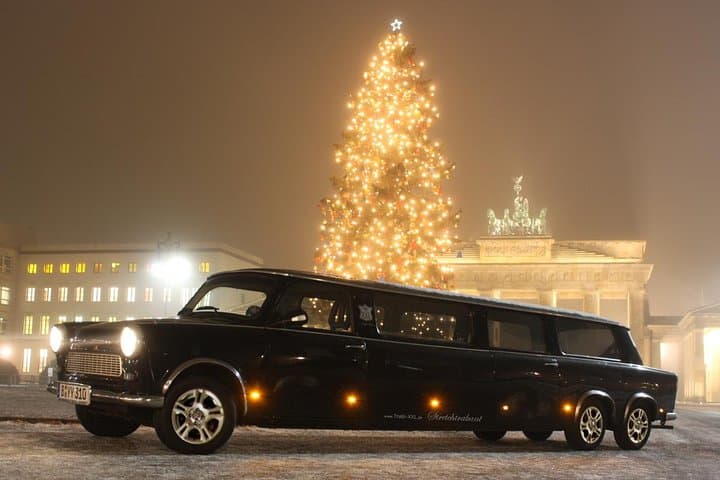
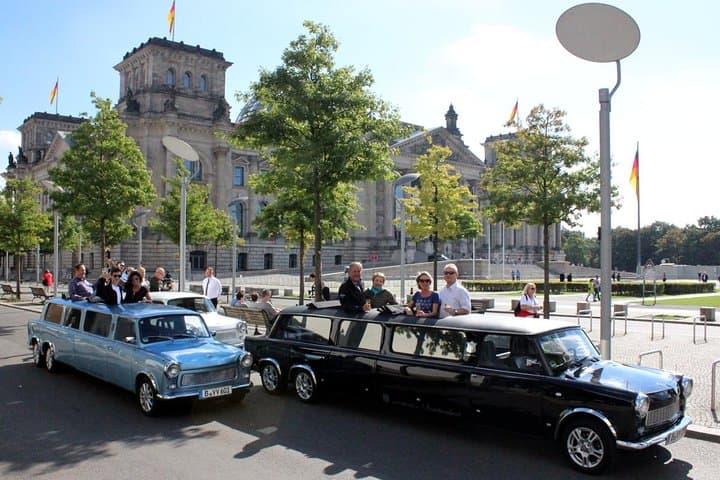
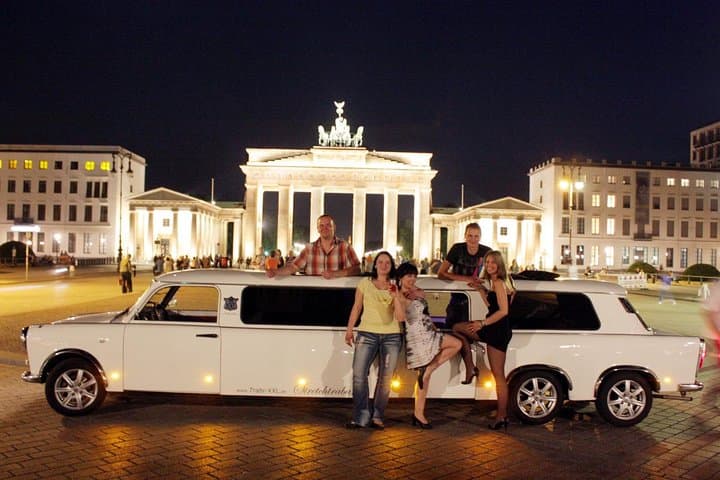
The engine hums in a friendly, mechanical voice as the stretch-Trabant parks at a cobblestone curb near the Fernsehturm. Through the long windows the Spree glints and the Brandenburg Gate stands quiet and monumental — the city unfolds like a map with stories written on every façade. The Trabant, an icon of the former GDR, becomes more than transport: it’s a mobile lens on Berlin’s past and present.
Verified experiences and guided adventures in the surrounding area.
Operated by Trabi-XXL · Berlin, Berlin
The engine hums in a friendly, mechanical voice as the stretch-Trabant parks at a cobblestone curb near the Fernsehturm. Through the long windows the Spree glints and the Brandenburg Gate stands quiet and monumental — the city unfolds like a map with stories written on every façade. The Trabant, an icon of the former GDR, becomes more than transport: it’s a mobile lens on Berlin’s past and present.
Originally built in duroplast during East Germany’s industrial era, the Trabant carries Cold War history in its compact frame; this stretched iteration adds comfort but keeps the car’s cheeky character. Berlin itself sits on the North European Plain, a low, glacial landscape braided by the Spree and dotted with green courtyards. On a tour you’ll pass Checkpoint Charlie, the Memorial to the Murdered Jews of Europe, Museum Island’s UNESCO silhouette, the East Side Gallery’s painted sections of wall and the government quarter where modern glass meets austere post-war blocks.
A private guide shapes the route to your interests — architecture, wartime history, street art or the city’s café culture. Expect narrative stops and photo opportunities rather than included museum admissions; entrances are at your expense. Practicalities matter: the vehicle requires a slight stoop to board, hotel pickup and drop-off are provided, and the roughly 2.5-hour tour fits neatly into a morning or late-afternoon slot for softer light. Bring a camera, a light jacket (Berlin’s weather shifts), comfortable shoes for brief on-foot stops, and a sense of curiosity — the city will do the rest, nudging you toward its contrasts and conversations.
easy.
2–3 hours.
Suitable for people of average mobility; short standing and stepping in/out of the vehicle required
No — entrance fees to museums or attractions and all food or drinks are at your own expense; the guide can advise on skip-the-line options.
The stretch-Trabant requires a slight stoop to enter and exit; the operator asks about mobility needs in advance to find solutions where possible.
The vehicle is configured for private groups; confirm maximum capacity when booking, but it’s designed for small private tours rather than large parties.
Yes — hotel pickup and drop-off are listed as included; specify your pickup point during booking to ensure a smooth start.
The Trabant was manufactured in East Germany and became a symbol of life behind the Iron Curtain; touring in one offers direct ties to Berlin’s divided past.
Berlin balances heritage tourism with urban green initiatives; stick to marked paths in parks and support local businesses to reduce impact.
Trabi-XXL operates guided outdoor trips and adventures with an emphasis on safety, stewardship, and memorable experiences.
The engine hums in a friendly, mechanical voice as the stretch-Trabant parks at a cobblestone curb near the Fernsehturm. Through the long windows the Spree glints and the Brandenburg Gate stands quiet and monumental — the city unfolds like a map with stories written on every façade. The Trabant, an icon of the former GDR, becomes more than transport: it’s a mobile lens on Berlin’s past and present.
The engine hums in a friendly, mechanical voice as the stretch-Trabant parks at a cobblestone curb near the Fernsehturm. Through the long windows the Spree glints and the Brandenburg Gate stands quiet and monumental — the city unfolds like a map with stories written on every façade. The Trabant, an icon of the former GDR, becomes more than transport: it’s a mobile lens on Berlin’s past and present.
Originally built in duroplast during East Germany’s industrial era, the Trabant carries Cold War history in its compact frame; this stretched iteration adds comfort but keeps the car’s cheeky character. Berlin itself sits on the North European Plain, a low, glacial landscape braided by the Spree and dotted with green courtyards. On a tour you’ll pass Checkpoint Charlie, the Memorial to the Murdered Jews of Europe, Museum Island’s UNESCO silhouette, the East Side Gallery’s painted sections of wall and the government quarter where modern glass meets austere post-war blocks.
A private guide shapes the route to your interests — architecture, wartime history, street art or the city’s café culture. Expect narrative stops and photo opportunities rather than included museum admissions; entrances are at your expense. Practicalities matter: the vehicle requires a slight stoop to board, hotel pickup and drop-off are provided, and the roughly 2.5-hour tour fits neatly into a morning or late-afternoon slot for softer light. Bring a camera, a light jacket (Berlin’s weather shifts), comfortable shoes for brief on-foot stops, and a sense of curiosity — the city will do the rest, nudging you toward its contrasts and conversations.