THE ADVENTURE COLLECTIVE® · Independent discovery and booking for outdoor travel

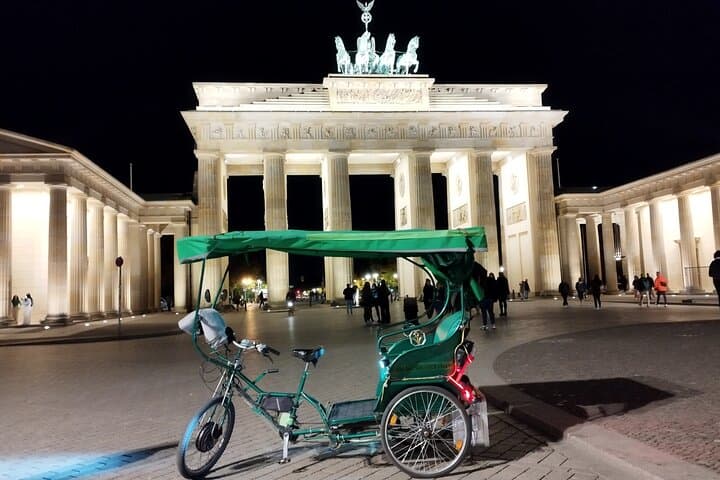
See Berlin’s famous squares and memorials lit after dusk on a private rickshaw tour. This two- to four-hour evening ride pairs close-up views with local history and flexible stops for photos.
See Berlin’s famous squares and memorials lit after dusk on a private rickshaw tour. This two- to four-hour evening ride pairs close-up views with local history and flexible stops for photos.
A cool evening wind moves along Unter den Linden as the rickshaw glides past the Fernsehturm's bright needle—Berlin by night feels open and direct, its lights carving the façades into new stories. Riders sit close to the pavement and the pulse of the city, watching squares, memorials, and museums change tone under electric glow.
Verified experiences and guided adventures in the surrounding area.
Operated by Berlin-Rickshaw / Berlin-Excursions · Berlin, Berlin
A cool evening wind moves along Unter den Linden as the rickshaw glides past the Fernsehturm's bright needle—Berlin by night feels open and direct, its lights carving the façades into new stories. Riders sit close to the pavement and the pulse of the city, watching squares, memorials, and museums change tone under electric glow.
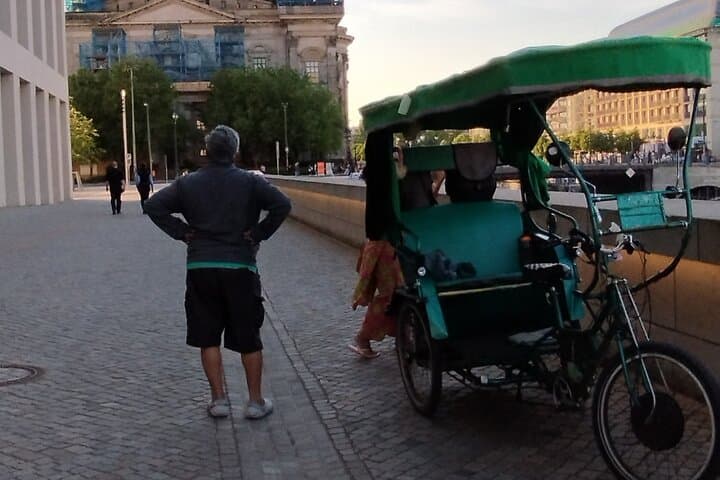
The route threads through layers of German history: the television tower that marks socialist-era modernity; Museum Island with its 19th-century stone museums; the Brandenburg Gate, rebuilt and reinterpreted since 1989; and checkpoints that recall a divided city. Geologically, the flat Spree floodplain has made Berlin a city of broad boulevards and low horizons, so light travels far and monuments read clearly at night.
Culturally, the tour places guests where Berlin stages memory—Holocaust memorial slabs, fragments of the Wall, and repurposed plazas speak to resilience and reinvention. Local guides add texture: anecdotes about postwar reconstruction, Cold War tensions, and the creative energy that animates Mitte after dark.
Practical notes: tours run two to four hours and can start from hotels or meeting points; rickshaws are low-impact and suitable for less-mobile visitors. Bottled water is usually provided; bring a windproof layer for evening chills, and a charged camera for low-light shots. Expect short on-foot stops to photograph façades or step closer to memorials. Tipping guides is customary. For the clearest lighting and fewer crowds, aim for a weekday evening between May and September.
easy.
2 hours (standard), 3–4 hours (extended).
Minimal fitness required; guests sit for most of the tour with brief photo stops.
Yes—private bookings allow flexible pickup and drop-off at hotels, restaurants, or agreed public meeting points within the central route area.
Yes—Rickshaws used on these tours are designed for easy entry with only a few steps; guides can accommodate reduced mobility when booked in advance.
No—this is a sightseeing ride with external views and short stops; entrances to museums are not included but can be arranged separately.
Tours typically operate into late evening depending on local regulations; Berlin is generally safe at night, and guides will avoid poorly lit areas and keep to main streets.
Berlin’s central boulevards were reshaped after World War II and again after reunification; many landmarks reflect layered political changes from Prussia to the Cold War and modern Germany.
Rickshaw tours are low-emission alternatives to buses; visitors are encouraged to stay on public paths, avoid littering memorial sites, and follow guide instructions to protect sensitive monuments.
Berlin-Rickshaw / Berlin-Excursions operates guided outdoor trips and adventures with an emphasis on safety, stewardship, and memorable experiences.
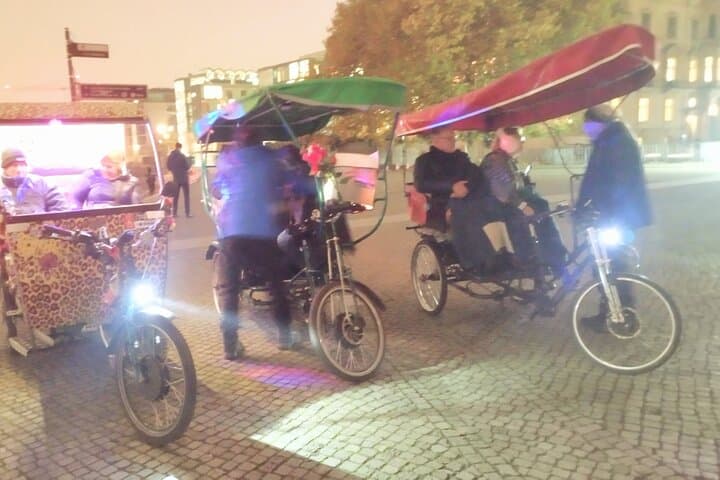
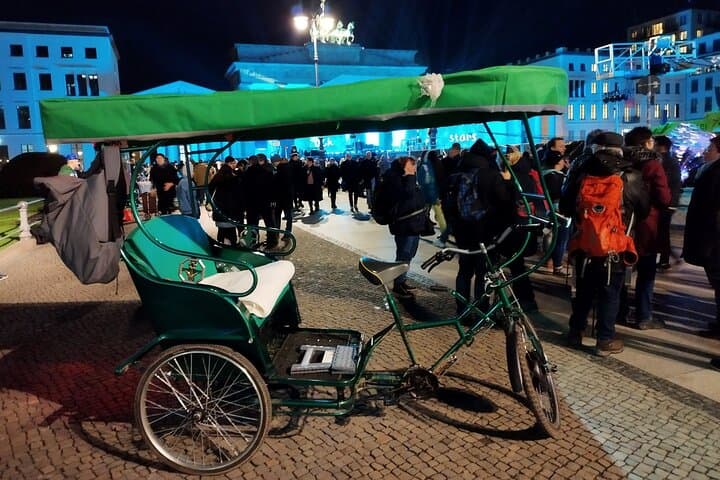
A cool evening wind moves along Unter den Linden as the rickshaw glides past the Fernsehturm's bright needle—Berlin by night feels open and direct, its lights carving the façades into new stories. Riders sit close to the pavement and the pulse of the city, watching squares, memorials, and museums change tone under electric glow.
A cool evening wind moves along Unter den Linden as the rickshaw glides past the Fernsehturm's bright needle—Berlin by night feels open and direct, its lights carving the façades into new stories. Riders sit close to the pavement and the pulse of the city, watching squares, memorials, and museums change tone under electric glow.
The route threads through layers of German history: the television tower that marks socialist-era modernity; Museum Island with its 19th-century stone museums; the Brandenburg Gate, rebuilt and reinterpreted since 1989; and checkpoints that recall a divided city. Geologically, the flat Spree floodplain has made Berlin a city of broad boulevards and low horizons, so light travels far and monuments read clearly at night.
Culturally, the tour places guests where Berlin stages memory—Holocaust memorial slabs, fragments of the Wall, and repurposed plazas speak to resilience and reinvention. Local guides add texture: anecdotes about postwar reconstruction, Cold War tensions, and the creative energy that animates Mitte after dark.
Practical notes: tours run two to four hours and can start from hotels or meeting points; rickshaws are low-impact and suitable for less-mobile visitors. Bottled water is usually provided; bring a windproof layer for evening chills, and a charged camera for low-light shots. Expect short on-foot stops to photograph façades or step closer to memorials. Tipping guides is customary. For the clearest lighting and fewer crowds, aim for a weekday evening between May and September.