THE ADVENTURE COLLECTIVE® · Independent discovery and booking for outdoor travel

Spend a day in the High Atlas: short mountain hikes, a camel ride, a visit to Berber households, and lunch at a family home. This accessible day trip from Marrakech combines cultural immersion with manageable outdoor time beneath Jbel Toubkal.
Spend a day in the High Atlas: short mountain hikes, a camel ride, a visit to Berber households, and lunch at a family home. This accessible day trip from Marrakech combines cultural immersion with manageable outdoor time beneath Jbel Toubkal.
The minivan peels away from Marrakech and the red city’s heat gives way to the dry, pine-creased slopes of the High Atlas. Within an hour the road drops into the Imlil valley — air cooler, a stream steadying its course — and the village paths open to views of Jbel Toubkal, North Africa’s highest summit rising to 4,167 m.
Verified experiences and guided adventures in the surrounding area.
Operated by Adrar Trips From Marrakech · Imlil, Marrakech-Safi
The minivan peels away from Marrakech and the red city’s heat gives way to the dry, pine-creased slopes of the High Atlas. Within an hour the road drops into the Imlil valley — air cooler, a stream steadying its course — and the village paths open to views of Jbel Toubkal, North Africa’s highest summit rising to 4,167 m.
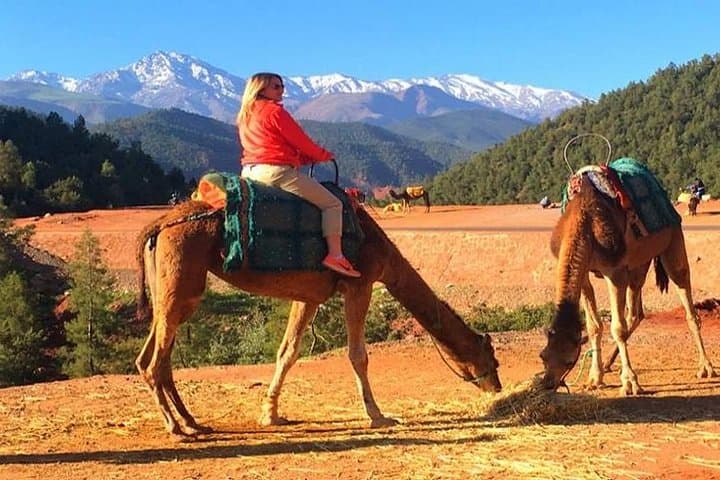
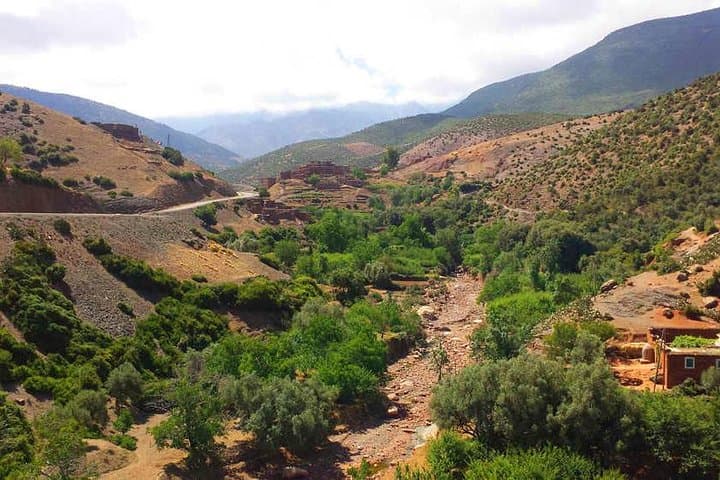
This full-day excursion blends easy mountain walking with cultural stops: a short guided, roughly hour-long round-trip to a local waterfall in the Imlil valley, time with Berber families over mint tea, and a camel ride that feels unexpectedly at home on the sun-baked terraces. Geologically, the Atlas is a folded, uplifted range of sedimentary and volcanic rock; trails move from river-polished stones to packed dirt and loose scree near higher paths.
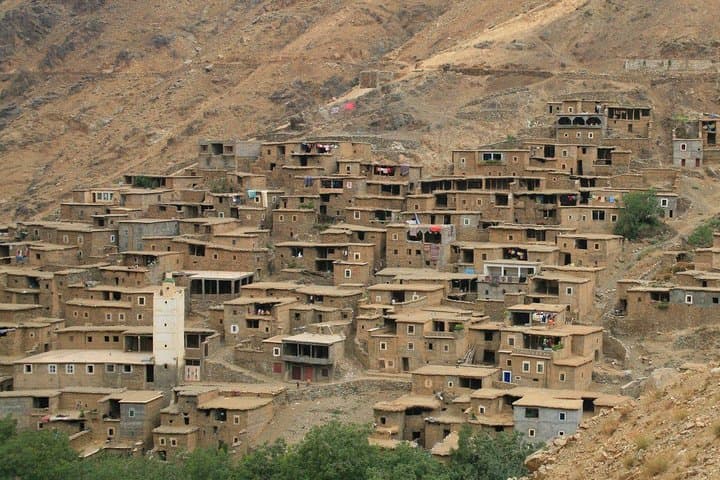
Berber (Amazigh) communities here maintain distinct crafts and livelihoods — argan oil pressing, small-scale farming, and guesthouse hospitality — practices influenced by centuries of mountain life and by the establishment of Toubkal National Park to protect the landscape.
Plan practically: expect 6–8 hours including transfers, basic trails and single-hour hikes that require steady shoes and a moderate fitness level; altitude is modest in Imlil (~1,700 m) but the landscape can be exposed. Bring layered clothing, sun protection, and a refillable water bottle. Lunch at a family home offers home-cooked tajine and a chance to ask about local life; tipping guides and hosts is customary.
The day is part cultural exchange, part accessible adventure — a compact way to stand beneath Toubkal’s shadow, practice low-impact travel, and walk paths that have carried Berber riders and shepherds for generations.
moderate.
6–8 hours.
Suitable for travelers with a moderate level of fitness who can manage an hour of walking on uneven terrain and short uphill sections.
Expect about a 1-hour drive each way, depending on traffic and exact pickup location in Marrakech.
The camel ride included is short and on relatively flat, well-managed terrain suitable for beginners; handlers guide the animals throughout.
Most activity stays around Imlil (~1,700 m), which requires no formal acclimatization, but take it easy if you are sensitive to altitude changes.
Yes — breakfast, lunch at a Berber family home, and an English-speaking mountain guide are included in the tour price.
The high valleys are home to Amazigh (Berber) communities with mountain agriculture and crafts dating back centuries; Jbel Toubkal dominates local identity as North Africa’s highest peak.
Toubkal National Park and local guides emphasize low-impact visits — stick to paths, avoid single-use plastic, and support village economies by buying local products.
Adrar Trips From Marrakech operates guided outdoor trips and adventures with an emphasis on safety, stewardship, and memorable experiences.
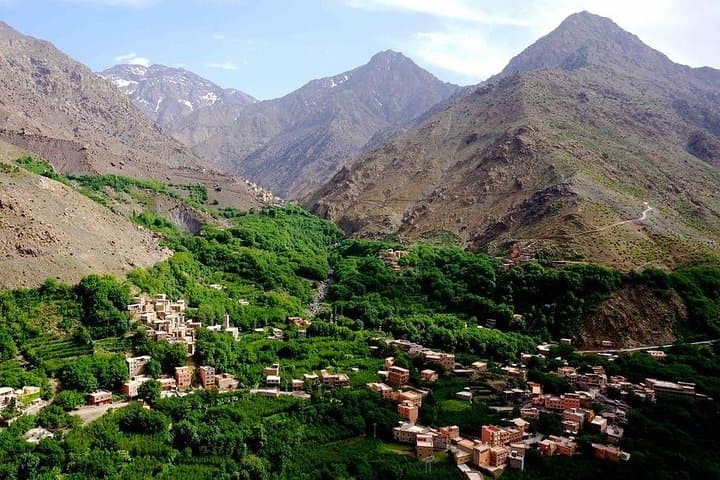
The minivan peels away from Marrakech and the red city’s heat gives way to the dry, pine-creased slopes of the High Atlas. Within an hour the road drops into the Imlil valley — air cooler, a stream steadying its course — and the village paths open to views of Jbel Toubkal, North Africa’s highest summit rising to 4,167 m.
The minivan peels away from Marrakech and the red city’s heat gives way to the dry, pine-creased slopes of the High Atlas. Within an hour the road drops into the Imlil valley — air cooler, a stream steadying its course — and the village paths open to views of Jbel Toubkal, North Africa’s highest summit rising to 4,167 m.
This full-day excursion blends easy mountain walking with cultural stops: a short guided, roughly hour-long round-trip to a local waterfall in the Imlil valley, time with Berber families over mint tea, and a camel ride that feels unexpectedly at home on the sun-baked terraces. Geologically, the Atlas is a folded, uplifted range of sedimentary and volcanic rock; trails move from river-polished stones to packed dirt and loose scree near higher paths.
Berber (Amazigh) communities here maintain distinct crafts and livelihoods — argan oil pressing, small-scale farming, and guesthouse hospitality — practices influenced by centuries of mountain life and by the establishment of Toubkal National Park to protect the landscape.
Plan practically: expect 6–8 hours including transfers, basic trails and single-hour hikes that require steady shoes and a moderate fitness level; altitude is modest in Imlil (~1,700 m) but the landscape can be exposed. Bring layered clothing, sun protection, and a refillable water bottle. Lunch at a family home offers home-cooked tajine and a chance to ask about local life; tipping guides and hosts is customary.
The day is part cultural exchange, part accessible adventure — a compact way to stand beneath Toubkal’s shadow, practice low-impact travel, and walk paths that have carried Berber riders and shepherds for generations.