THE ADVENTURE COLLECTIVE® · Independent discovery and booking for outdoor travel

Ride quiet mountain roads from Marrakech into the High Atlas on a three-day motorcycle escape that needs no license. Expect waterfalls, argan cooperatives, mountain lodges and a support vehicle while you explore Berber villages up close.
Ride quiet mountain roads from Marrakech into the High Atlas on a three-day motorcycle escape that needs no license. Expect waterfalls, argan cooperatives, mountain lodges and a support vehicle while you explore Berber villages up close.
A dust-scented morning in Marrakech, engines idling beside a line of low-capacity bikes, sets the tone: this is a trip that trades speed for close-up scenery. You leave the ochre city for a ribbon of asphalt that climbs into the High Atlas, where switchbacks reveal olive terraces, dry riverbeds and villages perched like slow-watchful hosts.
Verified experiences and guided adventures in the surrounding area.
Operated by Nomad Epic Ride · Marrakech, Marrakesh-Safi
A dust-scented morning in Marrakech, engines idling beside a line of low-capacity bikes, sets the tone: this is a trip that trades speed for close-up scenery. You leave the ochre city for a ribbon of asphalt that climbs into the High Atlas, where switchbacks reveal olive terraces, dry riverbeds and villages perched like slow-watchful hosts.
The route threads through Ourika and Setti Fatma — valleys shaped by the collision of African and Eurasian plates, where granite outcrops and river-cut gorges tell a geological story millions of years old. Culture is immediate: argan cooperatives, tea at a family home, the weekly market in Asni and multilingual Berber hospitality at small guesthouses and mountain lodges in Imlil. Setti Fatma’s waterfalls are an easy guided walk; Imlil sits at roughly 1,740 m, a common base for High Atlas routes.
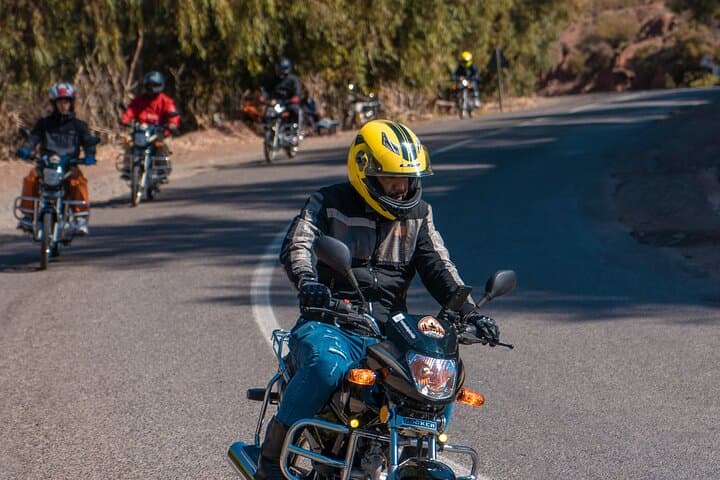
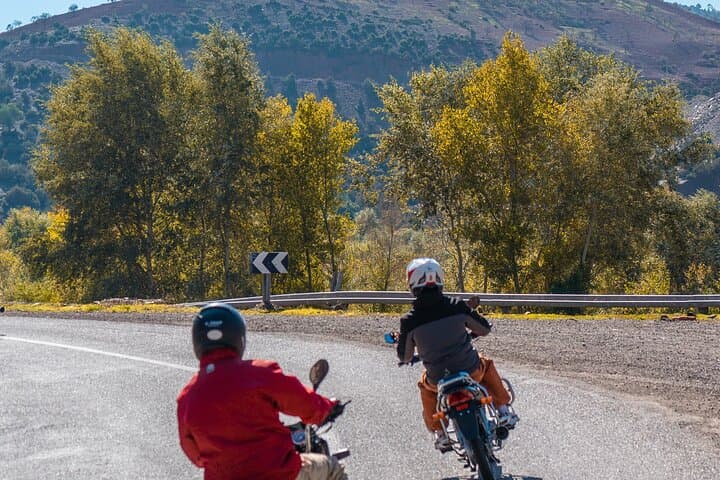
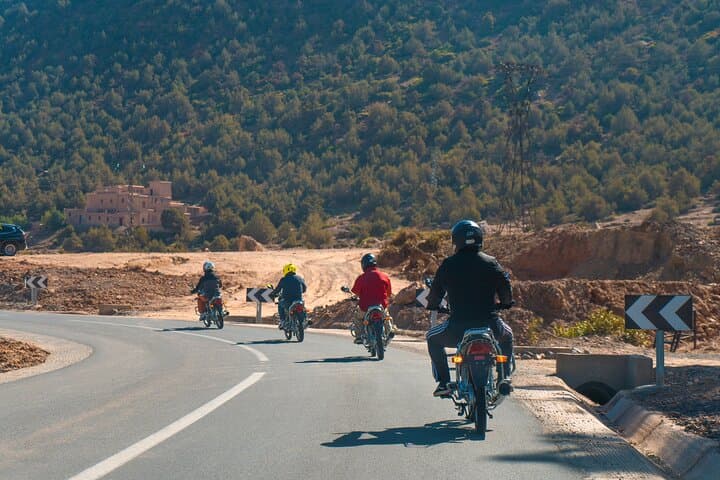
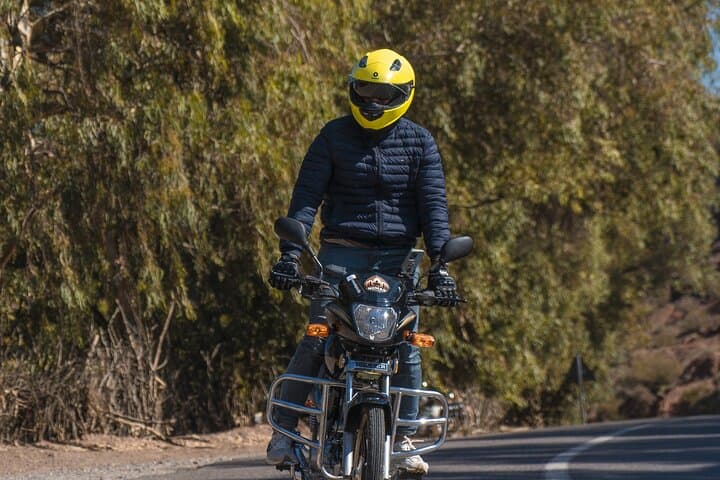
Practically, expect mostly paved, narrow mountain roads with occasional gravel shoulders and short walking sections. The tour uses 50cc motorcycles — forgiving in town but requiring attention on climbs and tight turns; a support vehicle carries water, fuel and gear. Daily riding is moderate: plan for multiple short stretches and stops rather than long continuous highway miles.
Pack layered clothing, closed-toe boots and a small daypack for walks. Hydrate early, ride conservatively on descents, and set expectations for simple, authentic lodging and local meals. The payoff is immediate: close contact with landscape and people, and a sunset camel ride back toward Marrakech to close the loop.
moderate.
3 days.
Suitable for people in reasonable health who can mount/dismount a light motorcycle and walk short trails; not physically demanding but requires balance and stamina for day rides.
No license is required for this specific tour; the bikes are low-capacity (50cc) and the operator provides a guide and support vehicle.
Roads are mostly paved but narrow and winding with occasional gravel shoulders—expect moderate technical demand, especially on descents and in traffic near villages.
Good general mobility is enough; you should be able to mount a light motorbike, stand for short walks and handle multiple short riding days.
An open-face helmet, gloves and neoprene elbow/knee protectors are provided, but bringing preferred personal gear (boots, jacket) is recommended.
The High Atlas has been home to Amazigh (Berber) communities for millennia; villages here preserve traditional agriculture, handicrafts and argan-oil cooperatives tied to local livelihoods.
Water is scarce in summer and the region benefits from low-impact tourism—stick to paths, avoid single-use plastics and support local cooperatives to sustain incomes.
Nomad Epic Ride operates guided outdoor trips and adventures with an emphasis on safety, stewardship, and memorable experiences.
A dust-scented morning in Marrakech, engines idling beside a line of low-capacity bikes, sets the tone: this is a trip that trades speed for close-up scenery. You leave the ochre city for a ribbon of asphalt that climbs into the High Atlas, where switchbacks reveal olive terraces, dry riverbeds and villages perched like slow-watchful hosts.
A dust-scented morning in Marrakech, engines idling beside a line of low-capacity bikes, sets the tone: this is a trip that trades speed for close-up scenery. You leave the ochre city for a ribbon of asphalt that climbs into the High Atlas, where switchbacks reveal olive terraces, dry riverbeds and villages perched like slow-watchful hosts.
The route threads through Ourika and Setti Fatma — valleys shaped by the collision of African and Eurasian plates, where granite outcrops and river-cut gorges tell a geological story millions of years old. Culture is immediate: argan cooperatives, tea at a family home, the weekly market in Asni and multilingual Berber hospitality at small guesthouses and mountain lodges in Imlil. Setti Fatma’s waterfalls are an easy guided walk; Imlil sits at roughly 1,740 m, a common base for High Atlas routes.
Practically, expect mostly paved, narrow mountain roads with occasional gravel shoulders and short walking sections. The tour uses 50cc motorcycles — forgiving in town but requiring attention on climbs and tight turns; a support vehicle carries water, fuel and gear. Daily riding is moderate: plan for multiple short stretches and stops rather than long continuous highway miles.
Pack layered clothing, closed-toe boots and a small daypack for walks. Hydrate early, ride conservatively on descents, and set expectations for simple, authentic lodging and local meals. The payoff is immediate: close contact with landscape and people, and a sunset camel ride back toward Marrakech to close the loop.