THE ADVENTURE COLLECTIVE® · Independent discovery and booking for outdoor travel

A half-day guided loop through Beppu’s famous “hells” — deep-blue Umi Jigoku, the quirky Kamado gardens, and the steam-laced alleys of Kannawa. Expect vivid geothermal displays, short walks on stone streets, and hands-on steam-cooking experiences.
A half-day guided loop through Beppu’s famous “hells” — deep-blue Umi Jigoku, the quirky Kamado gardens, and the steam-laced alleys of Kannawa. Expect vivid geothermal displays, short walks on stone streets, and hands-on steam-cooking experiences.
Steam rises through a stone-paved slope as you step off the bus — white ribbons curling between wooden inns and the scent of sulfur hanging low. This half-day tour threads three of Beppu’s most theatrical hot-spring sites: the cobalt pool of Umi Jigoku, the curious sculptures and signs of Kamado Jigoku, and the retro alleys of Kannawa where Ideyu-zaka’s footbaths punctuate narrow streets.
Verified experiences and guided adventures in the surrounding area.
Operated by H.I.S.Co., Ltd. · Beppu, Oita
Steam rises through a stone-paved slope as you step off the bus — white ribbons curling between wooden inns and the scent of sulfur hanging low. This half-day tour threads three of Beppu’s most theatrical hot-spring sites: the cobalt pool of Umi Jigoku, the curious sculptures and signs of Kamado Jigoku, and the retro alleys of Kannawa where Ideyu-zaka’s footbaths punctuate narrow streets.
Beppu’s “hells” (jigoku) are not bathing springs but geothermal displays long tied to the city’s onsen culture; they were catalogued in the Meiji era as curiosities and became attractions as rail travel expanded. Geologically, you’re walking a volcanic front — groundwater superheated by nearby magma vents creates vivid mineral pools and steam vents that define the landscape and local cuisine (steam-cooking is common here).
Culturally, Kannawa preserves early 20th-century ryokan architecture and community foot baths; Kamado’s playful signage reflects a local taste for quirky presentation. Expect short, flat walks and stairs, strong steam smells, and photography opportunities at every stop.
Practical guidance: the tour runs about four hours with admissions included, so wear closed shoes for uneven stone paths, bring a light layer for steam-cooled streets, and carry cash for optional steambox food. If you have cardiovascular issues, note high temperatures and steam exposure can be challenging. Meet at JR Beppu Station or Kannawa Bus Terminal and arrive 10 minutes early. Plan transport back to Beppu city center or Beppu Port if needed — a port pickup is possible by request but may incur extra fees.
easy.
4 hours.
Suitable for most travelers comfortable walking short distances and climbing some stairs; no special fitness required.
Yes—this tour includes admission to the listed Jigoku sites (Umi Jigoku, Kamado Jigoku); food is not included.
Infants up to 5 years may join free of charge, but be cautious around hot steam vents and pools.
You can choose JR Beppu Station or Kannawa Bus Terminal; pickup at Beppu Port is available on request but may incur extra transport fees.
It is not recommended for travelers with poor cardiovascular health due to exposure to high temperatures and steam.
Beppu’s jigoku were catalogued in the Meiji period and developed into tourist sites as rail access expanded; the city’s identity is tightly bound to onsen culture and geothermal industry.
Hot-spring habitats are fragile—stay on designated paths, avoid introducing soaps or food into springs, and support local businesses that practice sustainable onsen management.
H.I.S.Co., Ltd. operates guided outdoor trips and adventures with an emphasis on safety, stewardship, and memorable experiences.

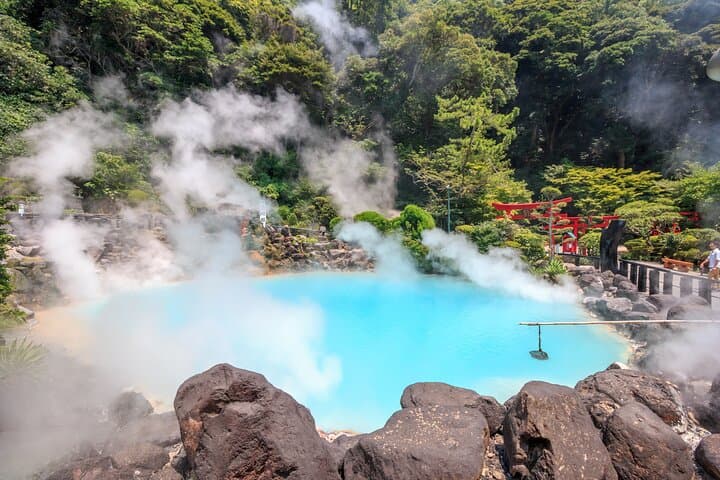

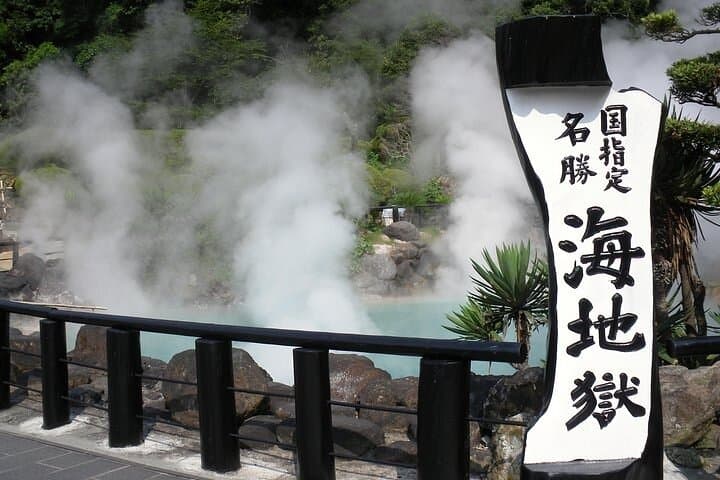
Steam rises through a stone-paved slope as you step off the bus — white ribbons curling between wooden inns and the scent of sulfur hanging low. This half-day tour threads three of Beppu’s most theatrical hot-spring sites: the cobalt pool of Umi Jigoku, the curious sculptures and signs of Kamado Jigoku, and the retro alleys of Kannawa where Ideyu-zaka’s footbaths punctuate narrow streets.
Steam rises through a stone-paved slope as you step off the bus — white ribbons curling between wooden inns and the scent of sulfur hanging low. This half-day tour threads three of Beppu’s most theatrical hot-spring sites: the cobalt pool of Umi Jigoku, the curious sculptures and signs of Kamado Jigoku, and the retro alleys of Kannawa where Ideyu-zaka’s footbaths punctuate narrow streets.
Beppu’s “hells” (jigoku) are not bathing springs but geothermal displays long tied to the city’s onsen culture; they were catalogued in the Meiji era as curiosities and became attractions as rail travel expanded. Geologically, you’re walking a volcanic front — groundwater superheated by nearby magma vents creates vivid mineral pools and steam vents that define the landscape and local cuisine (steam-cooking is common here).
Culturally, Kannawa preserves early 20th-century ryokan architecture and community foot baths; Kamado’s playful signage reflects a local taste for quirky presentation. Expect short, flat walks and stairs, strong steam smells, and photography opportunities at every stop.
Practical guidance: the tour runs about four hours with admissions included, so wear closed shoes for uneven stone paths, bring a light layer for steam-cooled streets, and carry cash for optional steambox food. If you have cardiovascular issues, note high temperatures and steam exposure can be challenging. Meet at JR Beppu Station or Kannawa Bus Terminal and arrive 10 minutes early. Plan transport back to Beppu city center or Beppu Port if needed — a port pickup is possible by request but may incur extra fees.