THE ADVENTURE COLLECTIVE® · Independent discovery and booking for outdoor travel

A moderate 3–4 hour trek through Benog Wildlife Sanctuary offering dense oak and pine forests, Himalayan panoramas, and birdwatching opportunities. Ideal for fit beginners seeking a quieter Mussoorie wilderness experience.
A moderate 3–4 hour trek through Benog Wildlife Sanctuary offering dense oak and pine forests, Himalayan panoramas, and birdwatching opportunities. Ideal for fit beginners seeking a quieter Mussoorie wilderness experience.
Morning light filters through tall oaks and chirping warblers as the Benog Trail climbs away from Mussoorie, the town shrinking into a ribbon of roofs below.
Verified experiences and guided adventures in the surrounding area.
Operated by walking tour · Mussoorie, Uttarakhand
Morning light filters through tall oaks and chirping warblers as the Benog Trail climbs away from Mussoorie, the town shrinking into a ribbon of roofs below.
The route threads 3–4 hours through mixed oak and pine, opening at ridgelines with panoramic views of Chaukhamba and Bandarpoonch. The sanctuary’s slopes are old growth in places, shaped by uplifted Himalayan geology—ancient sedimentary bands tilted by tectonic forces—and dotted with small shrines that tell of local pilgrimage routes and colonial-era hill station history.
Culturally, Benog sits on the fringe of Mussoorie’s tourism belt: villagers still tend terraced fields below and temple maintenance reflects decades of local stewardship. Birdlife dominates the soundtrack; guides point out elusive Himalayan monal and warblers, while langurs survey from branches.
Practicalities are straightforward. The trail is moderate: expect uneven footpaths, short steep sections and loose scree near the ridge. Bring 1–1.5 liters of water, sturdy boots and a wind layer—weather can change quickly at higher exposure. Start early to catch clear mountain light and avoid afternoon cloud build-up.
Guides accompany trekkers inside the sanctuary, offering natural-history insights and route guidance; snacks are typically provided. The walk suits travelers with reasonable fitness rather than technical skills, and permits/access are managed locally to protect habitat.
Respect seasonal closures, stay on marked trails, and pack out waste. When the forest quiets at the end of the loop, the raw presence of the Himalaya is immediate: rock and sky daring you to look farther.
moderate.
3–4 hours.
Moderate fitness: able to handle sustained uphill sections and uneven terrain for several hours
The route is a 3–4 hour round trip classified as moderate—suitable for beginners with reasonable fitness due to some sustained uphill and uneven terrain.
A guide is provided and recommended for sanctuary access and local knowledge; park access is regulated and guides help ensure compliance.
Expect diverse Himalayan birdlife (including pheasants and warblers) and occasional sightings of Indian grey langurs; larger mammals are rare and shy.
Wear hiking boots and layered clothing, bring 1–1.5 L water, snacks, rain protection, and basic first-aid—weather can change quickly at higher elevations.
Benog lies on forested ridges historically used by local communities for pilgrimage and grazing; the area became a protected sanctuary to conserve its birdlife and forest cover.
Access is managed to limit disturbance; stick to trails, avoid loud noise, and pack out all waste to protect nesting birds and understorey flora.
walking tour operates guided outdoor trips and adventures with an emphasis on safety, stewardship, and memorable experiences.
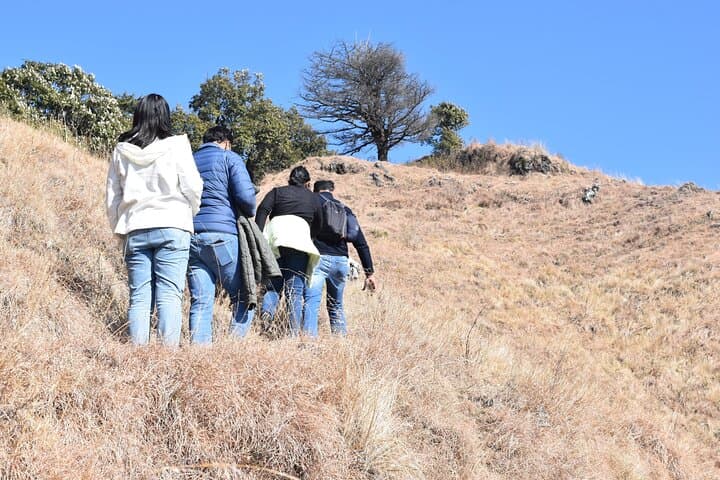
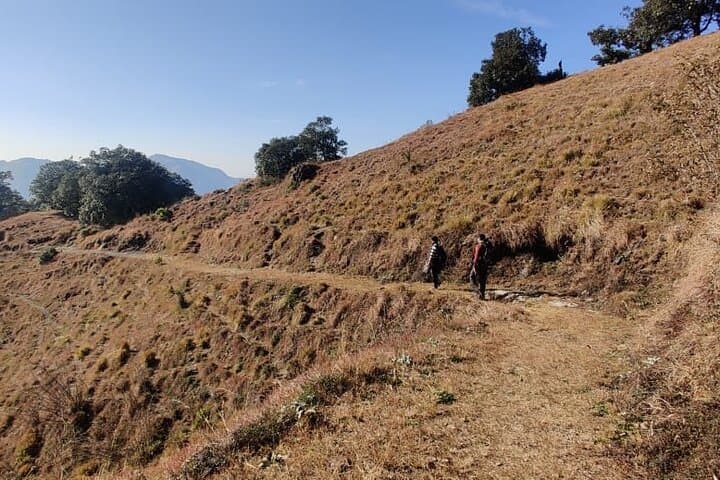
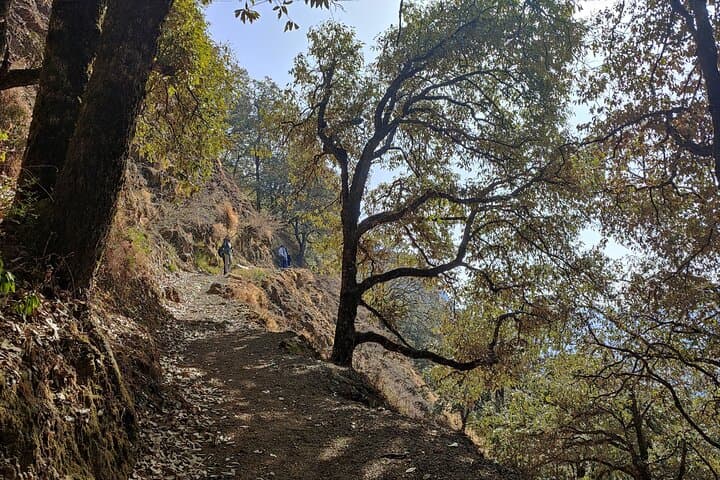
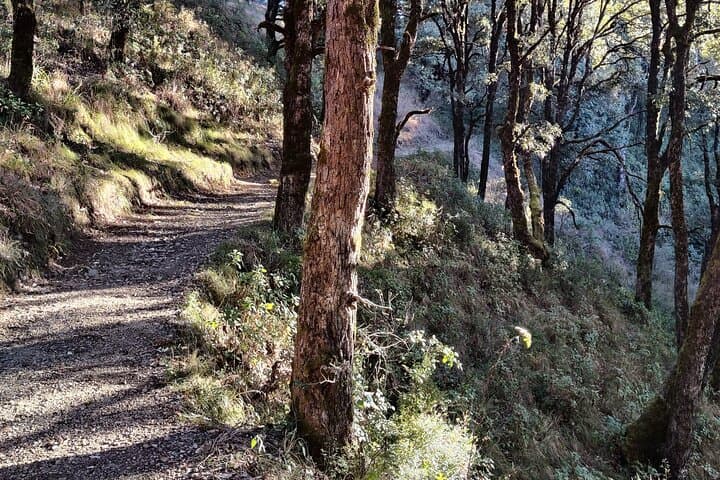
Morning light filters through tall oaks and chirping warblers as the Benog Trail climbs away from Mussoorie, the town shrinking into a ribbon of roofs below.
Morning light filters through tall oaks and chirping warblers as the Benog Trail climbs away from Mussoorie, the town shrinking into a ribbon of roofs below.
The route threads 3–4 hours through mixed oak and pine, opening at ridgelines with panoramic views of Chaukhamba and Bandarpoonch. The sanctuary’s slopes are old growth in places, shaped by uplifted Himalayan geology—ancient sedimentary bands tilted by tectonic forces—and dotted with small shrines that tell of local pilgrimage routes and colonial-era hill station history.
Culturally, Benog sits on the fringe of Mussoorie’s tourism belt: villagers still tend terraced fields below and temple maintenance reflects decades of local stewardship. Birdlife dominates the soundtrack; guides point out elusive Himalayan monal and warblers, while langurs survey from branches.
Practicalities are straightforward. The trail is moderate: expect uneven footpaths, short steep sections and loose scree near the ridge. Bring 1–1.5 liters of water, sturdy boots and a wind layer—weather can change quickly at higher exposure. Start early to catch clear mountain light and avoid afternoon cloud build-up.
Guides accompany trekkers inside the sanctuary, offering natural-history insights and route guidance; snacks are typically provided. The walk suits travelers with reasonable fitness rather than technical skills, and permits/access are managed locally to protect habitat.
Respect seasonal closures, stay on marked trails, and pack out waste. When the forest quiets at the end of the loop, the raw presence of the Himalaya is immediate: rock and sky daring you to look farther.