THE ADVENTURE COLLECTIVE® · Independent discovery and booking for outdoor travel

Walk the streets Benjamin Franklin knew: printing houses, taverns, St. Paul’s and the only surviving Franklin residence on Craven Street. This 2–3 hour guided exploration blends scientific anecdotes, diplomatic drama and hidden legal precincts.
Walk the streets Benjamin Franklin knew: printing houses, taverns, St. Paul’s and the only surviving Franklin residence on Craven Street. This 2–3 hour guided exploration blends scientific anecdotes, diplomatic drama and hidden legal precincts.
The tour starts on a rain-polished morning by the River Thames, where the city’s stone and glass lean in as if to listen. Participants step off the main thoroughfares into narrow lanes that still carry the cadence of 18th-century London—cobbles that remember the press runs, tavern corners that kept gossip and politics in equal measure.
Verified experiences and guided adventures in the surrounding area.
Operated by Richards Tours · London, England
The tour starts on a rain-polished morning by the River Thames, where the city’s stone and glass lean in as if to listen. Participants step off the main thoroughfares into narrow lanes that still carry the cadence of 18th-century London—cobbles that remember the press runs, tavern corners that kept gossip and politics in equal measure.
Over two to three hours the guide threads Franklin’s London together: the printing neighborhood where the young Franklin learned his trade; the pubs and clubs that shaped his social experiments; St. Paul’s and the riverbanks where he tested lightning conductors and argued science in public squares. Geologically the walk crosses the Thames’ historic floodplain—expect firm, paved streets rather than natural trails—but the city’s layers of history are palpable in building stone, ironwork and tucked-away courts.
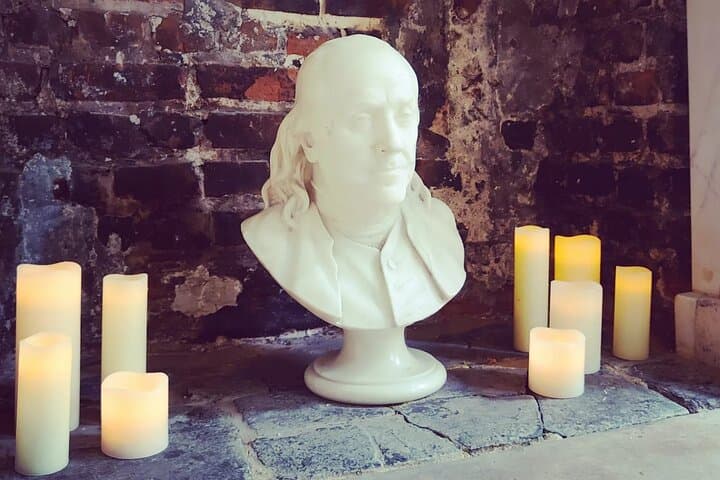
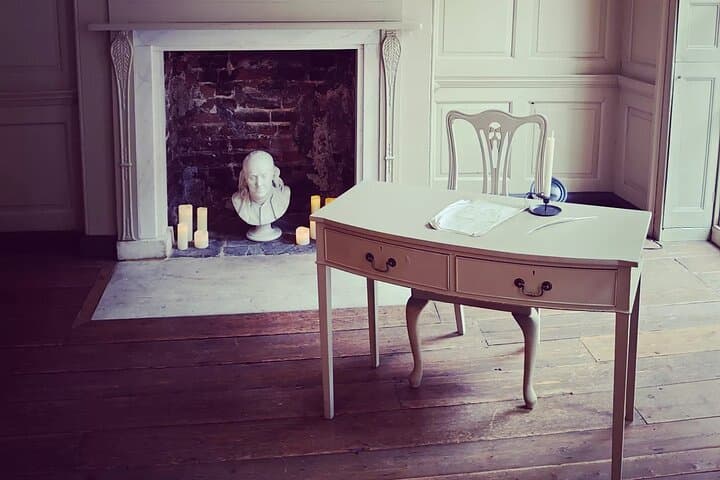
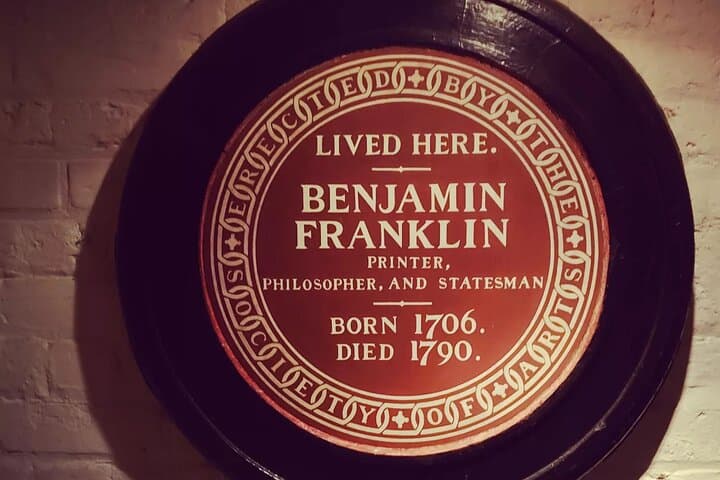
Culturally the route exposes the City’s legal precincts and Masonic links that intersected with Franklin’s diplomatic life. Craven Street’s preserved house is the highlight—the only surviving home of Franklin in the world—and a concrete touchpoint for Revolutionary-era stories.
Practical guidance: plan for roughly 2–3 hours with about 1–2 miles of walking at an easy pace; bring a rain jacket and comfortable shoes; public transport access is excellent (Embankment/Charing Cross). If you want to enter Benjamin Franklin House, book a Friday–Sunday tour in advance. Smaller groups make for better conversation and easier access to narrow courts.
easy.
2–3 hours.
Suitable for most fitness levels; requires continuous standing and 1–2 miles of walking on paved surfaces
Yes—Friday–Sunday tours include entry to the house; weekday tours usually finish outside only, so check the tour date before booking.
Start locations vary but are usually near Embankment or Charing Cross; the tour finishes on or near Craven Street at Benjamin Franklin House.
Yes; the pace is gentle and public transport can shorten walking segments—notify the operator of mobility needs when booking.
Most tours are in English; private or specialized language tours may be arranged on request—ask the operator in advance.
Franklin lived in London in two long periods totaling nearly 20 years; his time here shaped his scientific experiments and diplomatic evolution toward independence.
This area balances heavy visitor use with conservation of listed buildings—stick to marked paths and avoid touching fragile interiors to help protect historic fabric.
Richards Tours operates guided outdoor trips and adventures with an emphasis on safety, stewardship, and memorable experiences.

The tour starts on a rain-polished morning by the River Thames, where the city’s stone and glass lean in as if to listen. Participants step off the main thoroughfares into narrow lanes that still carry the cadence of 18th-century London—cobbles that remember the press runs, tavern corners that kept gossip and politics in equal measure.
The tour starts on a rain-polished morning by the River Thames, where the city’s stone and glass lean in as if to listen. Participants step off the main thoroughfares into narrow lanes that still carry the cadence of 18th-century London—cobbles that remember the press runs, tavern corners that kept gossip and politics in equal measure.
Over two to three hours the guide threads Franklin’s London together: the printing neighborhood where the young Franklin learned his trade; the pubs and clubs that shaped his social experiments; St. Paul’s and the riverbanks where he tested lightning conductors and argued science in public squares. Geologically the walk crosses the Thames’ historic floodplain—expect firm, paved streets rather than natural trails—but the city’s layers of history are palpable in building stone, ironwork and tucked-away courts.
Culturally the route exposes the City’s legal precincts and Masonic links that intersected with Franklin’s diplomatic life. Craven Street’s preserved house is the highlight—the only surviving home of Franklin in the world—and a concrete touchpoint for Revolutionary-era stories.
Practical guidance: plan for roughly 2–3 hours with about 1–2 miles of walking at an easy pace; bring a rain jacket and comfortable shoes; public transport access is excellent (Embankment/Charing Cross). If you want to enter Benjamin Franklin House, book a Friday–Sunday tour in advance. Smaller groups make for better conversation and easier access to narrow courts.