THE ADVENTURE COLLECTIVE® · Independent discovery and booking for outdoor travel

Venture off the main Angkor circuit to Beng Mealea—a partially reclaimed temple that invites scrambling, quiet discoveries, and a stop at Artisans Angkor to see modern Khmer craft. This one‑day tour blends forested ruins with cultural insight.
Venture off the main Angkor circuit to Beng Mealea—a partially reclaimed temple that invites scrambling, quiet discoveries, and a stop at Artisans Angkor to see modern Khmer craft. This one‑day tour blends forested ruins with cultural insight.
You step out of an air‑conditioned van and the forest answers—roots threading over cracked sandstone, vines tugging at lintels as if trying to pull the temple back into the earth. At Beng Mealea the path is part boardwalk and part scramble; wooden planks guide you where conservation allows, while other corridors dare you to pick your own line across piled stones.
Verified experiences and guided adventures in the surrounding area.
Operated by Angkor Daily Trip · Siem Reap, Siem Reap Province
You step out of an air‑conditioned van and the forest answers—roots threading over cracked sandstone, vines tugging at lintels as if trying to pull the temple back into the earth. At Beng Mealea the path is part boardwalk and part scramble; wooden planks guide you where conservation allows, while other corridors dare you to pick your own line across piled stones.
Built in the 12th century in a style related to Angkor Wat, Beng Mealea and the nearby Roluos group (Lolei, Preah Ko, Bakong) trace the Khmer Empire’s move from early Hindu temples to the great Angkorian complexes. The stones here bear both carving and erosion—each lintel a record of human craft and tropical weathering.
Culturally, the site offers a quieter rhythm than central Angkor: local guides relate old building rites, and a stop at Artisans Angkor reveals contemporary Khmer craftsmanship and restoration skills that feed back into conservation and livelihoods.
Practical guidance: expect uneven ground, low walls, and occasional mud after rain. The drive from Siem Reap is roughly 40 km and can take 1–2 hours on rural roads; plan half to a full day when you include Lolei, Preah Ko, Bakong, and an artisan workshop. Wear grippy shoes and a sun hat, carry water, and allow time for slow photography and quiet exploration.
This isn’t a polished museum visit: it’s an active, tactile encounter with history where the jungle still has a say. Respect restricted areas, follow your guide, and leave no trace—these stones are both fragile and stubborn.
moderate.
6–8 hours.
Suitable for travelers with basic mobility; requires balance for uneven ground and short scrambles.
Beng Mealea is about 40 km east of Siem Reap; travel time is typically 1–2 hours depending on road conditions.
Yes for many—paths are uneven and some scrambling is required, so supervise children and consider mobility limits for older travelers.
This tour description notes admission may not be included for some stops; confirm with the operator whether park tickets are covered in your booking.
Yes—typical full‑day itineraries link Beng Mealea with Lolei, Preah Ko, Bakong, and a stop at Artisans Angkor in Siem Reap.
Beng Mealea was built in a classical Khmer style related to Angkor Wat and later fell into a semi‑wild state; the Roluos temples (Lolei, Preah Ko, Bakong) date to late 9th century Khmer kingdom beginnings.
Site management balances visitor access with stabilization work; stick to marked paths and avoid climbing fragile masonry to reduce erosion and damage.
Angkor Daily Trip operates guided outdoor trips and adventures with an emphasis on safety, stewardship, and memorable experiences.
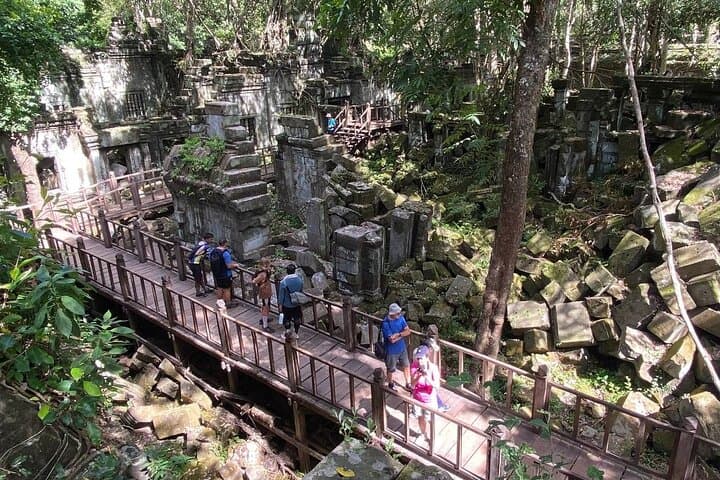
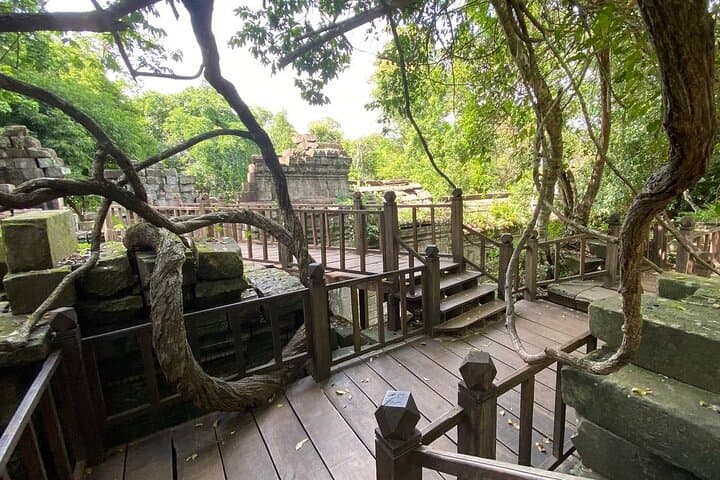
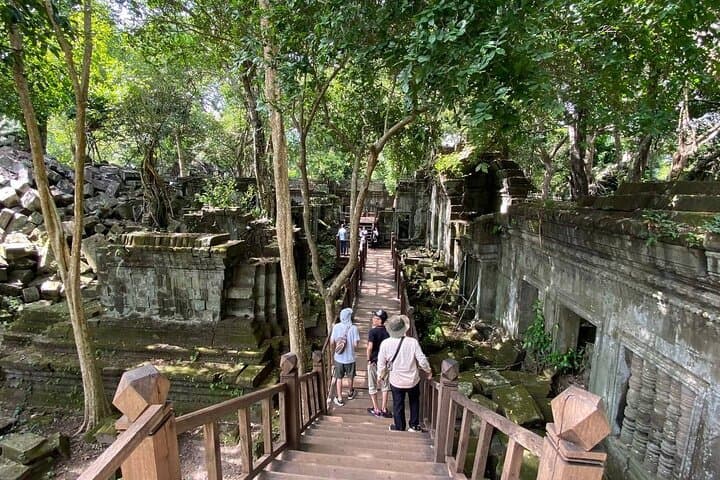
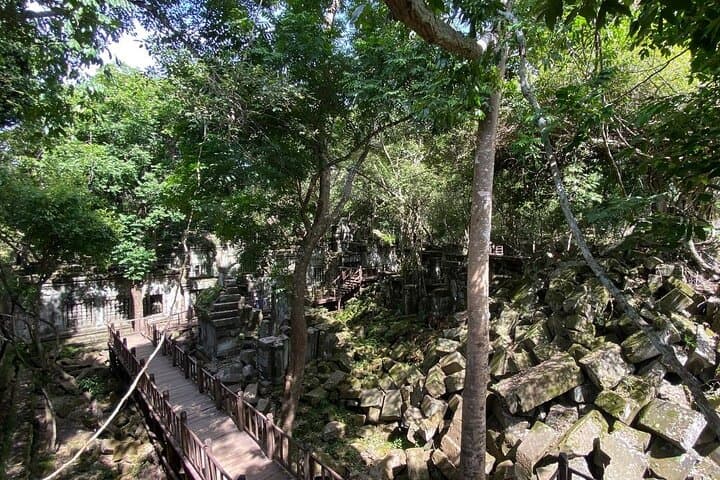
You step out of an air‑conditioned van and the forest answers—roots threading over cracked sandstone, vines tugging at lintels as if trying to pull the temple back into the earth. At Beng Mealea the path is part boardwalk and part scramble; wooden planks guide you where conservation allows, while other corridors dare you to pick your own line across piled stones.
You step out of an air‑conditioned van and the forest answers—roots threading over cracked sandstone, vines tugging at lintels as if trying to pull the temple back into the earth. At Beng Mealea the path is part boardwalk and part scramble; wooden planks guide you where conservation allows, while other corridors dare you to pick your own line across piled stones.
Built in the 12th century in a style related to Angkor Wat, Beng Mealea and the nearby Roluos group (Lolei, Preah Ko, Bakong) trace the Khmer Empire’s move from early Hindu temples to the great Angkorian complexes. The stones here bear both carving and erosion—each lintel a record of human craft and tropical weathering.
Culturally, the site offers a quieter rhythm than central Angkor: local guides relate old building rites, and a stop at Artisans Angkor reveals contemporary Khmer craftsmanship and restoration skills that feed back into conservation and livelihoods.
Practical guidance: expect uneven ground, low walls, and occasional mud after rain. The drive from Siem Reap is roughly 40 km and can take 1–2 hours on rural roads; plan half to a full day when you include Lolei, Preah Ko, Bakong, and an artisan workshop. Wear grippy shoes and a sun hat, carry water, and allow time for slow photography and quiet exploration.
This isn’t a polished museum visit: it’s an active, tactile encounter with history where the jungle still has a say. Respect restricted areas, follow your guide, and leave no trace—these stones are both fragile and stubborn.