
Beng Mealea & Kompong Khleang: One-Day Jungle Temple and Floating Village from Siem Reap
A full-day loop from Siem Reap that pairs the dramatic, unrestored ruins of Beng Mealea with the seasonal, waterbound life of Kompong Khleang. Expect jungle-clad masonry in the morning and a quietly dynamic floating village in the afternoon.
An Adventure In Siem Reap.
A full-day loop from Siem Reap that pairs the dramatic, unrestored ruins of Beng Mealea with the seasonal, waterbound life of Kompong Khleang. Expect jungle-clad masonry in the morning and a quietly dynamic floating village in the afternoon.
Read the full experience
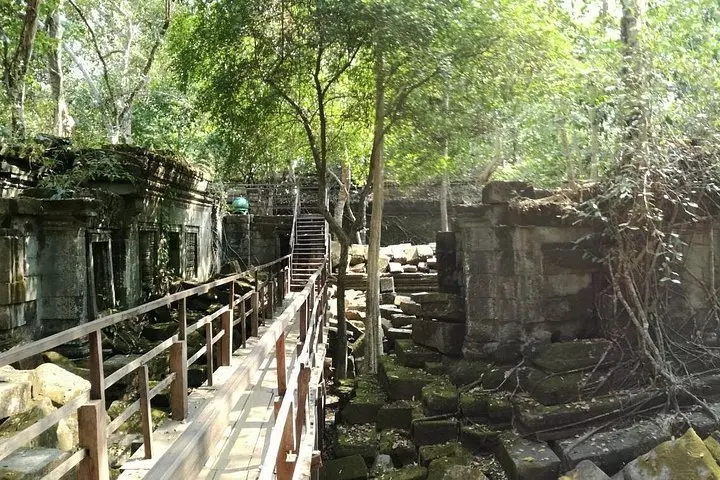
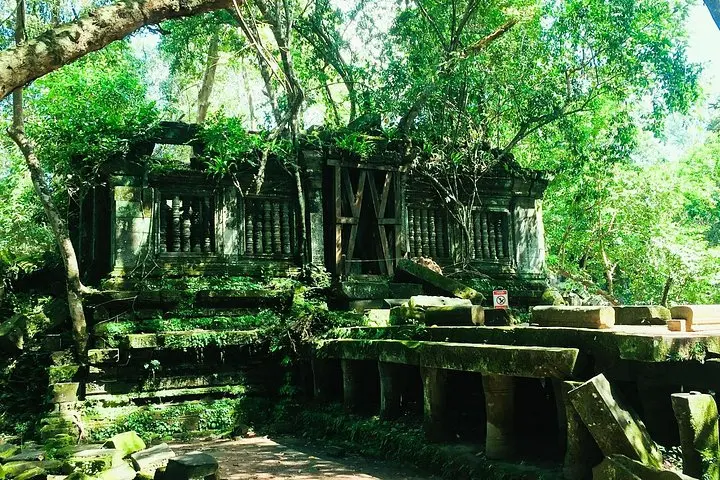
You step out of the minivan into a clearing of cracked sandstone and humid air; vines tug at carved lintels and sunlight slices through a canopy that seems intent on reclaiming the stones. Beng Mealea—the so-called jungle temple—crowns the morning with ruined galleries, toppled blocks and bas-reliefs half-hidden by moss. The place moves at its own slow tempo, stones settling and streams nudging the forest floor.
You step out of the minivan into a clearing of cracked sandstone and humid air; vines tug at carved lintels and sunlight slices through a canopy that seems intent on reclaiming the stones. Beng Mealea—the so-called jungle temple—crowns the morning with ruined galleries, toppled blocks and bas-reliefs half-hidden by moss. The place moves at its own slow tempo, stones settling and streams nudging the forest floor.
Built in the 12th century during the Angkor-era expansion, Beng Mealea was constructed of massive sandstone blocks with Hindu and Buddhist iconography and left largely unrestored, giving visitors a rare sense of archaeological entropy. Geologically, the temple sits on weathered sandstone that fractures and shifts; nearby floodplain soils feed the Tonle Sap system and support the seasonal rhythms of Kompong Khleang.
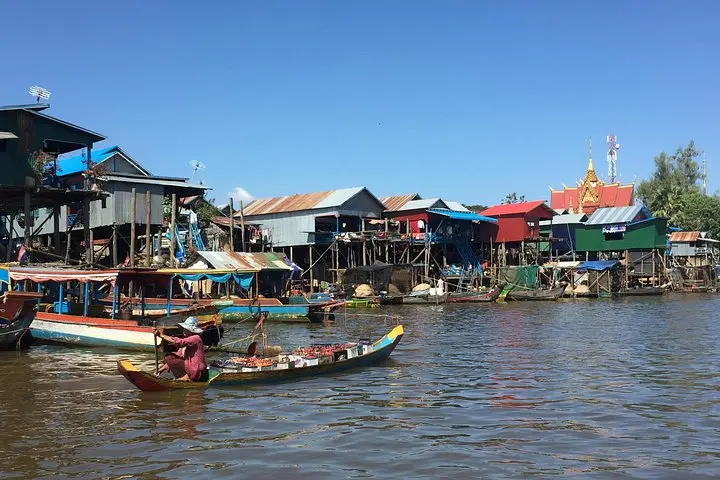
By afternoon you cross into the lake-edge world of Kompong Khleang. During the wet season, stilted houses and flooded rice fields float like a village-sized raft; in dry months the same homes perch meters above exposed, fertile ground. Local life is visible and immediate—fishermen, floating markets and small farms that follow the lake's pulse.
Practical guidance: tours depart from Siem Reap and run 7–8 hours; bring sun protection, insect repellent and respect temple dress codes (shoulders and knees covered). Temple entrance fee is typically paid separately (around $5 for a single-day ticket). Expect uneven, sometimes muddy terrain at both sites; comfortable closed-toe shoes and a reusable water bottle will keep the day moving. Travel early in the day to avoid heat and long afternoons on the water when bugs rise with dusk.
Frequently asked questions
No—most operators expect you to buy the temple ticket locally (around $5 for a single-day entry). Bring small cash.
Boat access depends on the season—during the wet months the village is navigable by boat; in the dry season you’ll see stilted homes and exposed farmland from the shore.
Expect 1–2 hours of walking across uneven, sometimes steep and unstable temple ruins—it's not a long hike but requires care and mobility.
Yes—this private tour typically includes pickup and drop-off in Siem Reap; confirm exact pickup point and time when booking.
About This Experience
Peacock Asia Tours operates guided outdoor trips and adventures with an emphasis on safety, stewardship, and memorable experiences.
Adventure tips
Recommended gear
- Closed-toe hiking shoes: Protects feet on broken masonry and slippery village paths.
- Light long-sleeve shirt and quick-dry pants: Keeps you covered for temple entry and reduces sun and insect exposure.
- Reusable water bottle (1–2 L): Hot, humid conditions demand regular hydration throughout the day.
- Insect repellent and sunscreen: Mosquitoes near water and strong sun on open sections make these must-haves.
Photos of the experience
Related adventures & guides
Read the full experience
You step out of the minivan into a clearing of cracked sandstone and humid air; vines tug at carved lintels and sunlight slices through a canopy that seems intent on reclaiming the stones. Beng Mealea—the so-called jungle temple—crowns the morning with ruined galleries, toppled blocks and bas-reliefs half-hidden by moss. The place moves at its own slow tempo, stones settling and streams nudging the forest floor.
You step out of the minivan into a clearing of cracked sandstone and humid air; vines tug at carved lintels and sunlight slices through a canopy that seems intent on reclaiming the stones. Beng Mealea—the so-called jungle temple—crowns the morning with ruined galleries, toppled blocks and bas-reliefs half-hidden by moss. The place moves at its own slow tempo, stones settling and streams nudging the forest floor.
Built in the 12th century during the Angkor-era expansion, Beng Mealea was constructed of massive sandstone blocks with Hindu and Buddhist iconography and left largely unrestored, giving visitors a rare sense of archaeological entropy. Geologically, the temple sits on weathered sandstone that fractures and shifts; nearby floodplain soils feed the Tonle Sap system and support the seasonal rhythms of Kompong Khleang.
By afternoon you cross into the lake-edge world of Kompong Khleang. During the wet season, stilted houses and flooded rice fields float like a village-sized raft; in dry months the same homes perch meters above exposed, fertile ground. Local life is visible and immediate—fishermen, floating markets and small farms that follow the lake's pulse.
Practical guidance: tours depart from Siem Reap and run 7–8 hours; bring sun protection, insect repellent and respect temple dress codes (shoulders and knees covered). Temple entrance fee is typically paid separately (around $5 for a single-day ticket). Expect uneven, sometimes muddy terrain at both sites; comfortable closed-toe shoes and a reusable water bottle will keep the day moving. Travel early in the day to avoid heat and long afternoons on the water when bugs rise with dusk.
Make a day of it nearby.
Verified experiences and guided adventures in the surrounding area.