THE ADVENTURE COLLECTIVE® · Independent discovery and booking for outdoor travel

Explore Beng Mealea on a private half-day transfer that doubles as an arrival or departure adventure from Siem Reap. Expect largely unrestored jungle-covered ruins, uneven stonework, and a vivid slice of rural Cambodia.
Explore Beng Mealea on a private half-day transfer that doubles as an arrival or departure adventure from Siem Reap. Expect largely unrestored jungle-covered ruins, uneven stonework, and a vivid slice of rural Cambodia.
You pull up in an air-conditioned minivan, the door opens and the forest seems to lean forward—fig roots threading through collapsed lintels, humid air pushing against your jacket. Beng Mealea greets you as a place still being reclaimed by the jungle: corridors half-filled with stone, courtyards split by massive fallen blocks, sunlight breaking through a leafy canopy to spotlight carvings worn by time.
Verified experiences and guided adventures in the surrounding area.
Operated by Angkor Guide Sarak · Siem Reap, Siem Reap Province
You pull up in an air-conditioned minivan, the door opens and the forest seems to lean forward—fig roots threading through collapsed lintels, humid air pushing against your jacket. Beng Mealea greets you as a place still being reclaimed by the jungle: corridors half-filled with stone, courtyards split by massive fallen blocks, sunlight breaking through a leafy canopy to spotlight carvings worn by time.
Built in the early 12th century during the reign of Suryavarman II, Beng Mealea shares the same sandstone architecture and iconography as Angkor Wat but remains largely unrestored, offering a rawer, closer-to-nature feel. The temple sits on sandstone and laterite foundations, its massifs shifted by centuries of root growth and seasonal swelling. The road there threads rice paddies and stilted villages, giving a clear view of rural Khmer life and the rhythm of Tonlé Sap’s fisheries if you extend the visit.
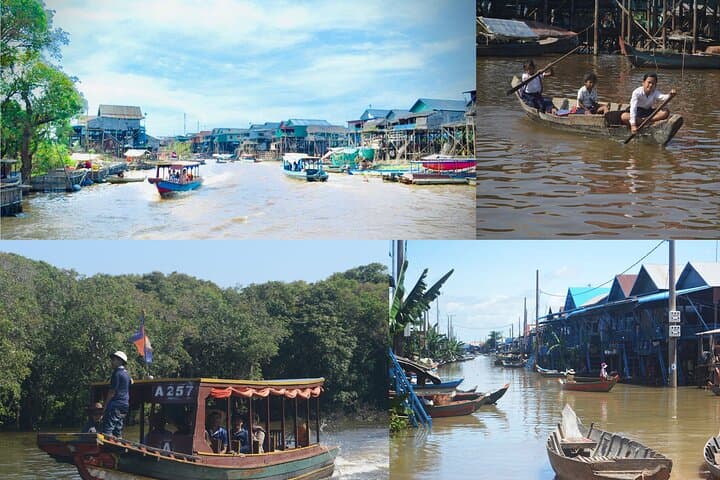
Practical guidance: plan a half-day window—this private tour typically runs 5–6 hours including transfers—so you can explore for about 90 minutes without rushing. Early morning or late afternoon brings cooler light and fewer crowds; mid-day is hot and humid. Wear grippy closed shoes for uneven, often slippery stone and tree roots. Bring insect repellent, a refillable water bottle, and a light rain layer in monsoon months. Admission is paid at the gate and can vary; your driver-guide will handle logistics on a private transfer. Combining Beng Mealea with a Tonlé Sap stilt-village visit makes for a balanced day of history and local life before or after your flight.
easy.
5–6 hours.
Suitable for most travelers who can walk 1–2 hours on uneven terrain; minimal climbing required.
The drive typically takes about 45–60 minutes from central Siem Reap depending on traffic and your hotel location.
Yes—admission is paid at the temple gate and is a small fee that can change seasonally; private tours usually handle payment for convenience.
Generally yes, but surfaces are uneven and require careful walking; bring mobility assistance if needed and avoid steep sections.
Yes—many itineraries extend to Kampong Phluk on Tonlé Sap for a boat visit to stilted villages, weather permitting.
Beng Mealea dates to the reign of Suryavarman II in the early 12th century and uses the same iconography and sandstone construction as Angkor Wat but was left largely unrestored, giving it a ruinous, exploratory character.
The site’s unrestored state means conservation focuses on stabilizing structures and limiting visitor impact; stick to marked paths and avoid disturbing vegetation to help preserve the ruins.
Angkor Guide Sarak operates guided outdoor trips and adventures with an emphasis on safety, stewardship, and memorable experiences.
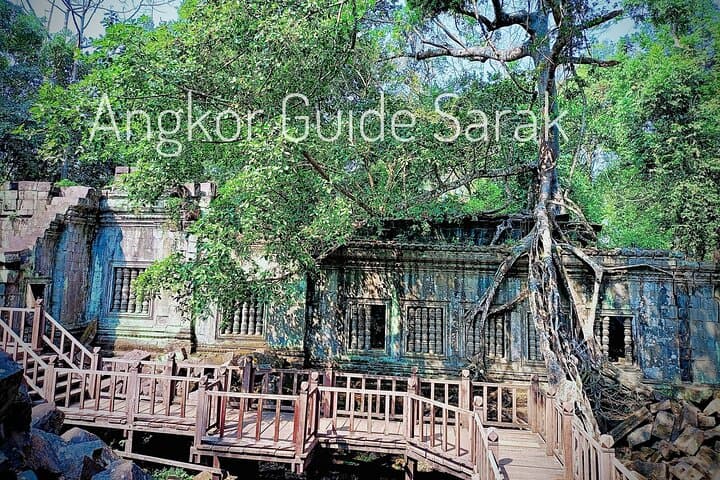
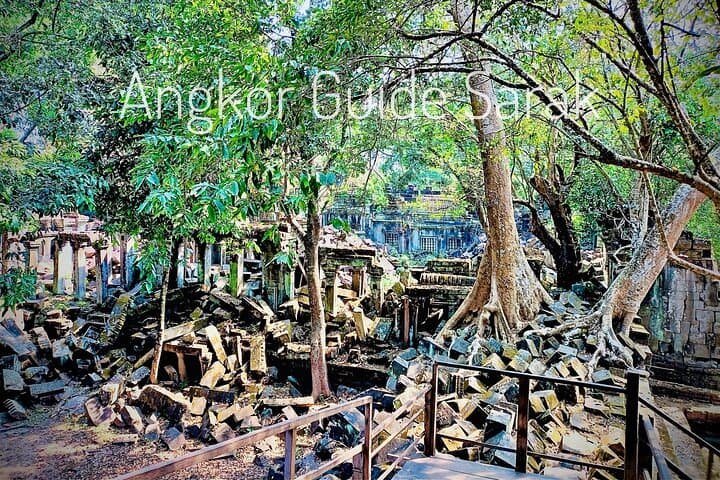
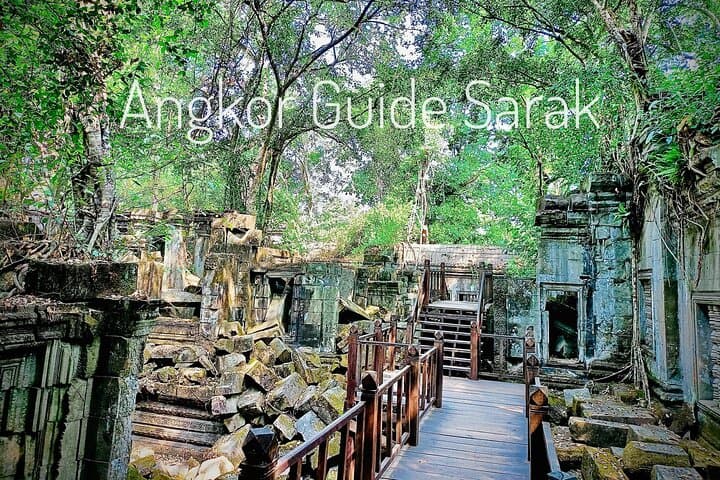
You pull up in an air-conditioned minivan, the door opens and the forest seems to lean forward—fig roots threading through collapsed lintels, humid air pushing against your jacket. Beng Mealea greets you as a place still being reclaimed by the jungle: corridors half-filled with stone, courtyards split by massive fallen blocks, sunlight breaking through a leafy canopy to spotlight carvings worn by time.
You pull up in an air-conditioned minivan, the door opens and the forest seems to lean forward—fig roots threading through collapsed lintels, humid air pushing against your jacket. Beng Mealea greets you as a place still being reclaimed by the jungle: corridors half-filled with stone, courtyards split by massive fallen blocks, sunlight breaking through a leafy canopy to spotlight carvings worn by time.
Built in the early 12th century during the reign of Suryavarman II, Beng Mealea shares the same sandstone architecture and iconography as Angkor Wat but remains largely unrestored, offering a rawer, closer-to-nature feel. The temple sits on sandstone and laterite foundations, its massifs shifted by centuries of root growth and seasonal swelling. The road there threads rice paddies and stilted villages, giving a clear view of rural Khmer life and the rhythm of Tonlé Sap’s fisheries if you extend the visit.
Practical guidance: plan a half-day window—this private tour typically runs 5–6 hours including transfers—so you can explore for about 90 minutes without rushing. Early morning or late afternoon brings cooler light and fewer crowds; mid-day is hot and humid. Wear grippy closed shoes for uneven, often slippery stone and tree roots. Bring insect repellent, a refillable water bottle, and a light rain layer in monsoon months. Admission is paid at the gate and can vary; your driver-guide will handle logistics on a private transfer. Combining Beng Mealea with a Tonlé Sap stilt-village visit makes for a balanced day of history and local life before or after your flight.