THE ADVENTURE COLLECTIVE® · Independent discovery and booking for outdoor travel

A full-day guided walk from the Cairngorm Ski Centre across the Arctic-like plateau to Ben Macdui—Scotland’s second-highest peak. Expect wide views, glacial corries, and variable conditions that demand solid navigation and layered gear.
A full-day guided walk from the Cairngorm Ski Centre across the Arctic-like plateau to Ben Macdui—Scotland’s second-highest peak. Expect wide views, glacial corries, and variable conditions that demand solid navigation and layered gear.
The wind on the Cairngorm plateau has a way of announcing itself—cold, thin, and unrelenting. You step away from the parking area by the ski centre, past the picnic benches and into a bleached landscape where the horizon flattens and the sky feels nearer. The route climbs steadily and then opens onto tundra-like ground: wide, stony, and at times boggy. Ben Macdui’s summit sits like a blunt shoulder above the plateau, and as you approach you can see the deep, fluted edges of the northern corries cut into the massif.
Verified experiences and guided adventures in the surrounding area.
Operated by Lost Sheep Guiding · Aviemore, Scotland
The wind on the Cairngorm plateau has a way of announcing itself—cold, thin, and unrelenting. You step away from the parking area by the ski centre, past the picnic benches and into a bleached landscape where the horizon flattens and the sky feels nearer. The route climbs steadily and then opens onto tundra-like ground: wide, stony, and at times boggy. Ben Macdui’s summit sits like a blunt shoulder above the plateau, and as you approach you can see the deep, fluted edges of the northern corries cut into the massif.
This is highland country shaped by ice. The Cairngorms are a plateau rather than a single peak chain—an upland of ancient metamorphic rocks scoured by glaciation that left broad basins, steep corries and scattered lochans. People have walked this ground for centuries: crofting families, hunters, and wartime pilots whose wreckage can still be found off the beaten line. Gaelic place names map a history of land use and legend; guides here often share local folklore about weather and vanished settlements as readily as they read the map.
The natural story is visible underfoot—peat and heather giving way to blockfields, then to the short, wind-pruned plants that cling to the summit. Wildlife is sparse but persistent: ptarmigan slip between rocks, and red deer patrol the lower glens. In summer the plateau hums with gnats and the bright mosses that tell where spring thaw has been recent.
Practically, this private guided hike from the Cairngorm Ski Centre is a full-day undertaking: expect roughly 12–16 km round-trip with about 700–900 m of ascent, and 7–8 hours on the hill depending on conditions and stops. The path can be faint in places across the plateau; good navigation and a steady pace keep you safe. In summer the route is largely a long walk over firm turf, peaty stretches and occasional boulder gardens. Between November and April, snow and rime are common—your guide will likely fit crampons and an ice axe and teach basic winter techniques.
Bring layered clothing for sudden wind and sun, waterproof boots with ankle support, and enough food and water for a full day. Plan for limited shelter—group emergency gear is carried by the leader, but your personal kit matters. Start early for clearer weather and wider views; on a good day the summit reveals Glenmore forest, Loch Morlich, and in the far distance the bulk of Ben Nevis.
This is not just a Munro to be ticked off: it is a lesson in mountain weather, landscape reading and the quiet rewards of a remote summit. Walk with respect for fragile vegetation and wildlife here, and the plateau will give you one of Scotland’s clearest, most elemental mountain days.
challenging.
7–8 hours.
Good aerobic fitness with experience on long hill days; able to sustain steady uphill walking for several hours.
You should be comfortable with sustained uphill walking and be able to manage 7–8 hours on mixed terrain; guides set a pace that suits the group but prior hillwalking experience helps.
If you’re hiking between November and April, crampons and an ice axe are frequently needed—your guide will inform you at booking and may supply them or advise rental options.
This is a private walking tour—group size is set by your booking, usually kept small to ensure safety and flexibility on the route.
Meet at the picnic benches outside the Cairngorm Ski Centre café; the route returns to the same meeting point by vehicle or on foot depending on conditions.
Participants should have at least a moderate level of fitness; specific age restrictions depend on the operator—disclose any mobility issues at booking so leaders can advise.
Yes—look for ptarmigan, red deer and alpine plants; wildlife sightings aren’t guaranteed but early morning or late day increases chances.
The Cairngorm plateau preserves traces of past uses from wartime aircraft crashes to traditional upland grazing; Gaelic place names reflect centuries of human interaction with this harsh landscape.
Cairngorms National Park emphasizes low-impact travel—stick to durable ground where possible, avoid fragile vegetation, and follow Leave No Trace principles to protect rare upland habitats.
Lost Sheep Guiding operates guided outdoor trips and adventures with an emphasis on safety, stewardship, and memorable experiences.
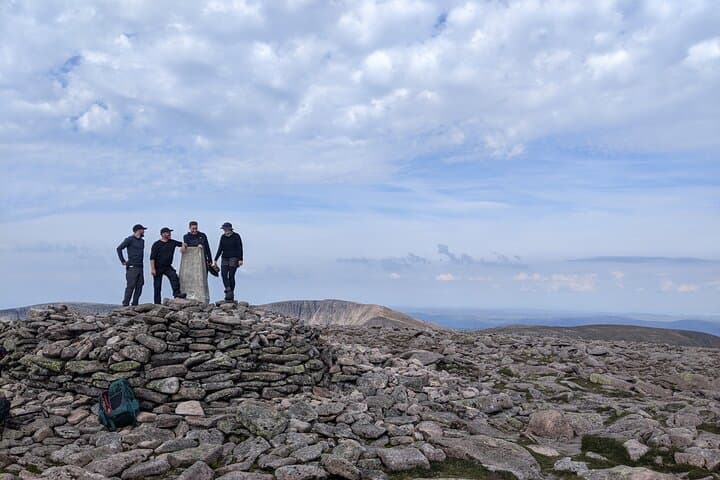
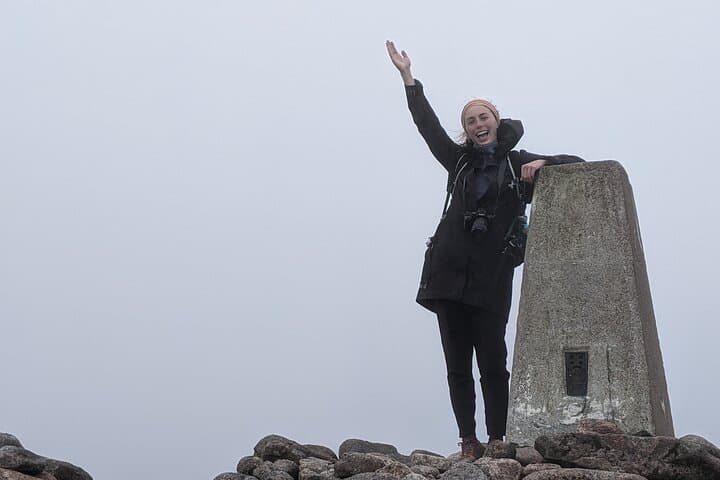
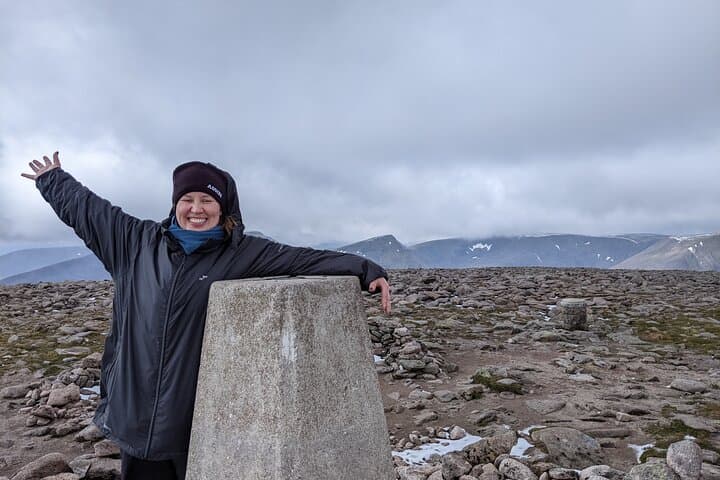
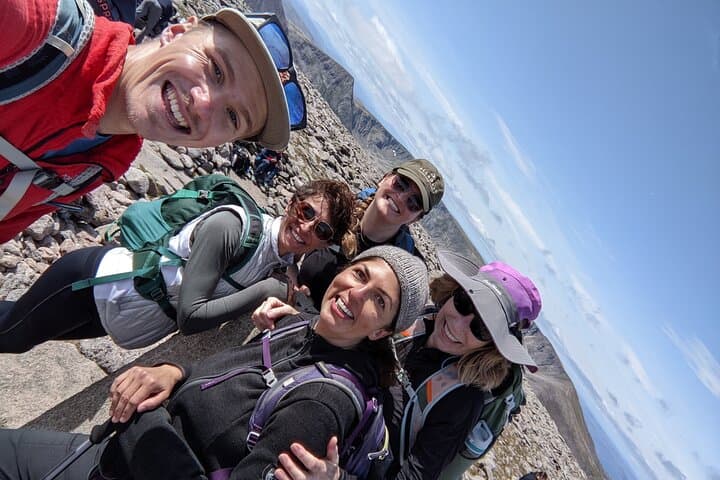
The wind on the Cairngorm plateau has a way of announcing itself—cold, thin, and unrelenting. You step away from the parking area by the ski centre, past the picnic benches and into a bleached landscape where the horizon flattens and the sky feels nearer. The route climbs steadily and then opens onto tundra-like ground: wide, stony, and at times boggy. Ben Macdui’s summit sits like a blunt shoulder above the plateau, and as you approach you can see the deep, fluted edges of the northern corries cut into the massif.
The wind on the Cairngorm plateau has a way of announcing itself—cold, thin, and unrelenting. You step away from the parking area by the ski centre, past the picnic benches and into a bleached landscape where the horizon flattens and the sky feels nearer. The route climbs steadily and then opens onto tundra-like ground: wide, stony, and at times boggy. Ben Macdui’s summit sits like a blunt shoulder above the plateau, and as you approach you can see the deep, fluted edges of the northern corries cut into the massif.
This is highland country shaped by ice. The Cairngorms are a plateau rather than a single peak chain—an upland of ancient metamorphic rocks scoured by glaciation that left broad basins, steep corries and scattered lochans. People have walked this ground for centuries: crofting families, hunters, and wartime pilots whose wreckage can still be found off the beaten line. Gaelic place names map a history of land use and legend; guides here often share local folklore about weather and vanished settlements as readily as they read the map.
The natural story is visible underfoot—peat and heather giving way to blockfields, then to the short, wind-pruned plants that cling to the summit. Wildlife is sparse but persistent: ptarmigan slip between rocks, and red deer patrol the lower glens. In summer the plateau hums with gnats and the bright mosses that tell where spring thaw has been recent.
Practically, this private guided hike from the Cairngorm Ski Centre is a full-day undertaking: expect roughly 12–16 km round-trip with about 700–900 m of ascent, and 7–8 hours on the hill depending on conditions and stops. The path can be faint in places across the plateau; good navigation and a steady pace keep you safe. In summer the route is largely a long walk over firm turf, peaty stretches and occasional boulder gardens. Between November and April, snow and rime are common—your guide will likely fit crampons and an ice axe and teach basic winter techniques.
Bring layered clothing for sudden wind and sun, waterproof boots with ankle support, and enough food and water for a full day. Plan for limited shelter—group emergency gear is carried by the leader, but your personal kit matters. Start early for clearer weather and wider views; on a good day the summit reveals Glenmore forest, Loch Morlich, and in the far distance the bulk of Ben Nevis.
This is not just a Munro to be ticked off: it is a lesson in mountain weather, landscape reading and the quiet rewards of a remote summit. Walk with respect for fragile vegetation and wildlife here, and the plateau will give you one of Scotland’s clearest, most elemental mountain days.