THE ADVENTURE COLLECTIVE® · Independent discovery and booking for outdoor travel

This full-day loop from Mangalore visits two of Karnataka’s finest Hoysala temples—Chennakeshava at Belur and Hoysaleswara at Halebeedu—offering close-up stone carving, short walks on uneven platforms, and a long scenic drive across the Deccan landscape.
This full-day loop from Mangalore visits two of Karnataka’s finest Hoysala temples—Chennakeshava at Belur and Hoysaleswara at Halebeedu—offering close-up stone carving, short walks on uneven platforms, and a long scenic drive across the Deccan landscape.
A dawn pick-up in Mangalore and a long ribbon of road set the tone: rice paddies give way to scrub and then the ordered stone of Hoysala temples rising out of the plains. By late morning the Chennakeshava Temple at Belur fills the windshield, its black stone carvings sharp against the sky; by midafternoon the low-slung mass of Hoysaleswara at Halebeedu commands attention with crowded friezes and weathered gods.
Verified experiences and guided adventures in the surrounding area.
Operated by Agora Voyages Pvt. Ltd. · Belur, Karnataka
A dawn pick-up in Mangalore and a long ribbon of road set the tone: rice paddies give way to scrub and then the ordered stone of Hoysala temples rising out of the plains. By late morning the Chennakeshava Temple at Belur fills the windshield, its black stone carvings sharp against the sky; by midafternoon the low-slung mass of Hoysaleswara at Halebeedu commands attention with crowded friezes and weathered gods.
These sites date to the 12th century, built under Hoysala patronage when local craftsmen carved chloritic schist (soapstone) with minute detail—friezes of elephants, dancers and mythic animals wrap the walls in continuous narrative. Halebeedu’s Jain basadis nearby reflect the plural faith landscape of medieval Karnataka.
Geology here matters: the soft soapstone allowed deep relief but also makes the carvings sensitive to moisture and touch; the Archaeological Survey of India manages access and conservation.
Practical guidance: this is a full-day, predominantly seated-and-short-walk tour—expect vehicle transfers of several hours and 45–90 minutes of walking at each temple over uneven stone platforms. Dress modestly for temple entry; wear closed-toe shoes with good grip for climbing low steps. Carry water, a hat and sun protection; photography is welcome but be mindful of restricted zones. Lunch is typically at a local restaurant in Belur—plan for a simple South Indian meal. If you have limited mobility, notify the operator ahead so pickup/drop logistics can be adjusted.
moderate.
10–12 hours.
Basic fitness for several short walks, climbing low temple steps, and tolerating long seated periods in a vehicle.
Expect roughly a 3.5–4 hour drive one way depending on traffic—operators schedule early pickups to maximize sightseeing time.
Entrance fees may be optional depending on the booking choice—confirm with the operator or be prepared to purchase tickets on-site.
Yes—walking is limited but there are uneven steps; inform the operator of mobility needs and they can arrange closer drop-offs if possible.
You can visit independently, but a local guide adds context to sculptures, iconography and history; some bookings include an English-speaking guide as an option.
Built in the 12th century under Hoysala rulers, these temples showcase the period’s unique star-plan layouts and dense narrative friezes carved from soapstone.
Many sculptures are weather-sensitive; avoid touching carved surfaces, follow ASI signage, and support local conservation by using authorized guides.
Agora Voyages Pvt. Ltd. operates guided outdoor trips and adventures with an emphasis on safety, stewardship, and memorable experiences.
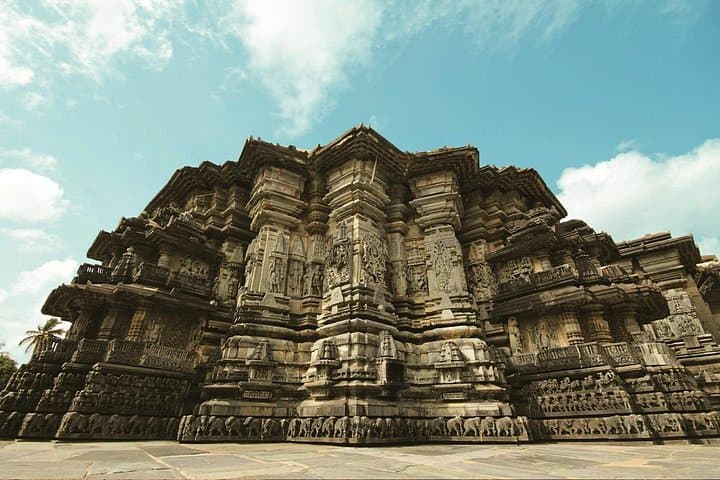
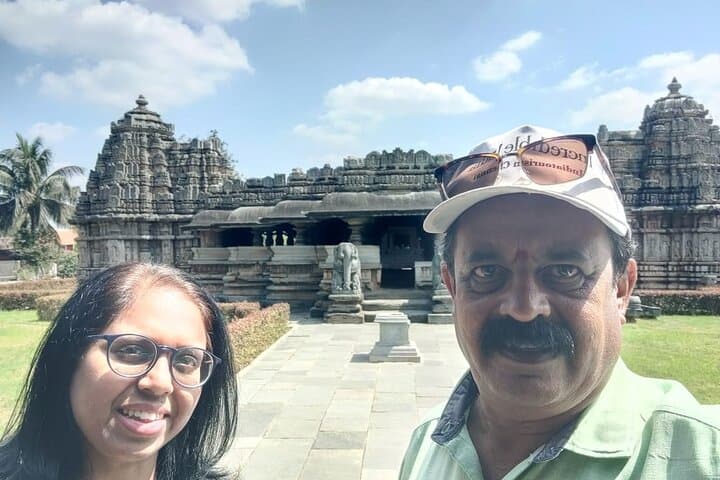
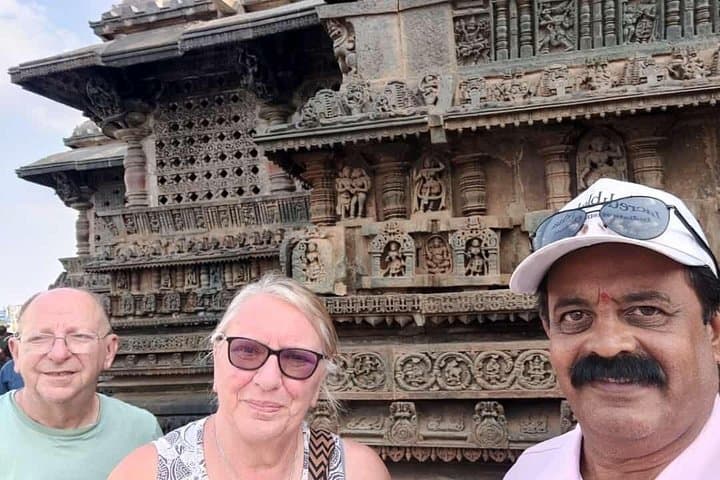
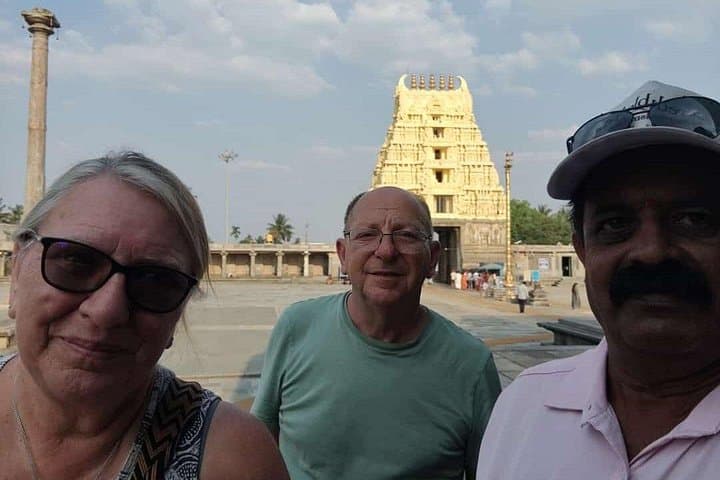
A dawn pick-up in Mangalore and a long ribbon of road set the tone: rice paddies give way to scrub and then the ordered stone of Hoysala temples rising out of the plains. By late morning the Chennakeshava Temple at Belur fills the windshield, its black stone carvings sharp against the sky; by midafternoon the low-slung mass of Hoysaleswara at Halebeedu commands attention with crowded friezes and weathered gods.
A dawn pick-up in Mangalore and a long ribbon of road set the tone: rice paddies give way to scrub and then the ordered stone of Hoysala temples rising out of the plains. By late morning the Chennakeshava Temple at Belur fills the windshield, its black stone carvings sharp against the sky; by midafternoon the low-slung mass of Hoysaleswara at Halebeedu commands attention with crowded friezes and weathered gods.
These sites date to the 12th century, built under Hoysala patronage when local craftsmen carved chloritic schist (soapstone) with minute detail—friezes of elephants, dancers and mythic animals wrap the walls in continuous narrative. Halebeedu’s Jain basadis nearby reflect the plural faith landscape of medieval Karnataka.
Geology here matters: the soft soapstone allowed deep relief but also makes the carvings sensitive to moisture and touch; the Archaeological Survey of India manages access and conservation.
Practical guidance: this is a full-day, predominantly seated-and-short-walk tour—expect vehicle transfers of several hours and 45–90 minutes of walking at each temple over uneven stone platforms. Dress modestly for temple entry; wear closed-toe shoes with good grip for climbing low steps. Carry water, a hat and sun protection; photography is welcome but be mindful of restricted zones. Lunch is typically at a local restaurant in Belur—plan for a simple South Indian meal. If you have limited mobility, notify the operator ahead so pickup/drop logistics can be adjusted.