THE ADVENTURE COLLECTIVE® · Independent discovery and booking for outdoor travel

Climb the Vradeto stone steps, stand on the Beloi balcony and peer into Vikos Gorge on a day hike that blends rugged geology with traditional Zagorian stonework. This practical guide covers what to expect and how to prepare.
Climb the Vradeto stone steps, stand on the Beloi balcony and peer into Vikos Gorge on a day hike that blends rugged geology with traditional Zagorian stonework. This practical guide covers what to expect and how to prepare.
You step out of the minivan in Kapesovo with mountain air pressing cool against your face and the stone stairway of Vradeto rising like a challenge before you.
Verified experiences and guided adventures in the surrounding area.
Operated by Epirus Traveller · Vradeto, Epirus
You step out of the minivan in Kapesovo with mountain air pressing cool against your face and the stone stairway of Vradeto rising like a challenge before you.
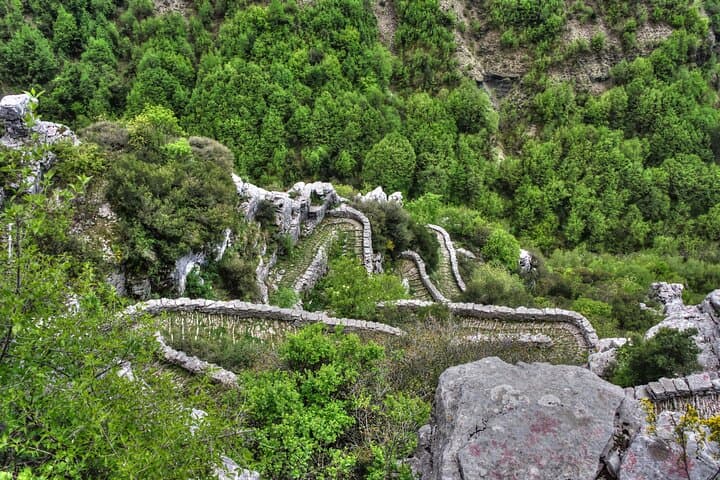
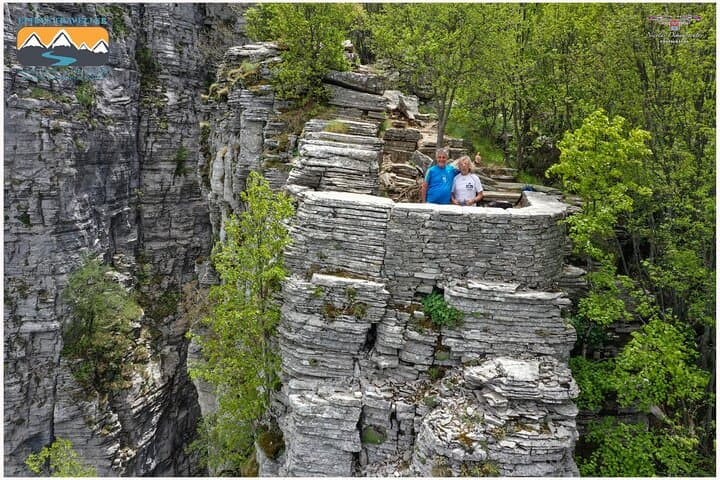
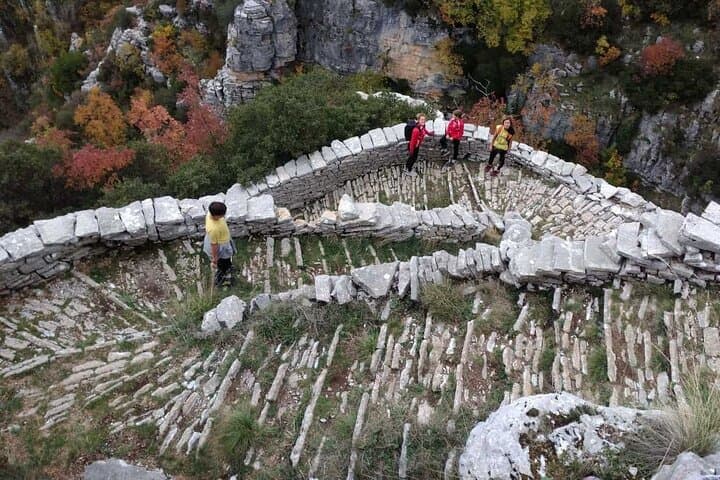
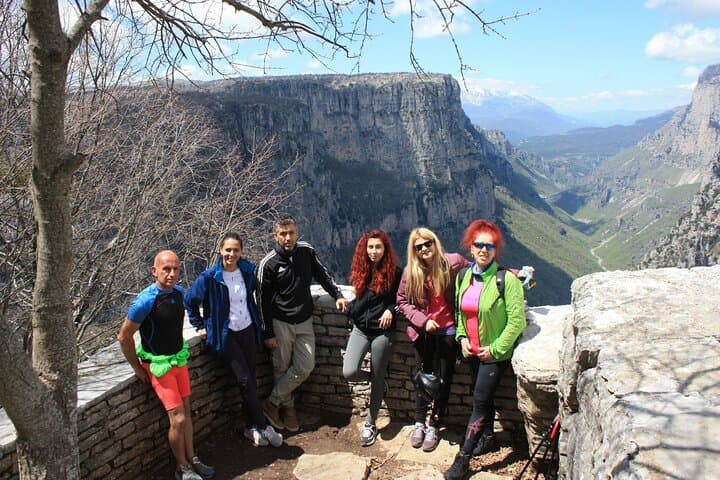
The route climbs roughly 1,500 carved steps through 39 turns — a living corridor of local stonework that once linked Zagori’s villages. Mid-ascent the trail breathes out onto Vradeto, whose 17th‑century houses and the small church of Saint Athanasios mark the highest village in the area. From there, a short, easy ridge walk leads to Beloi viewpoint (approx. 1,400 m), a wide ledge that gives you a commanding look into the Vikos Gorge and the slate-gray cliffs opposite.
Geologically, Vikos is a classic limestone canyon carved by water and time; cliffs plunge hundreds of meters while karst formations sculpt ledges and narrow chutes. Culturally, the stone bridges and stepped paths speak to centuries of rural connectivity — many structures date to the Ottoman era and reflect Zagori’s stone‑masonry tradition.
Expect wild lilies in spring, stony terraces underfoot, and the gorge’s wind to feel like it’s nudging you out over the drop. The outing typically runs 4–6 hours with moderate ascents and mostly single-track or stone-step terrain.
Practical guidance: wear sturdy hiking shoes, carry 1–1.5 L water, and plan for rapid weather shifts — a waterproof layer is essential. The route is best done in daylight; allow time for a coffee stop in Vradeto and a short visit to the historic Kokkoris single‑arched bridge on the return.
moderate.
4–6 hours.
Moderate fitness; comfortable with sustained uphill on uneven stone steps and short ridge walks.
The guided itinerary is 4–6 hours total with moderate exertion — steep stone steps but short distance; suitable for hikers with moderate fitness.
Children accustomed to hiking can do it with supervision; travelers with spinal, heart, or pregnancy constraints are not recommended.
The tour includes bottled water and snacks; there’s also a planned stop in Vradeto for coffee or refreshments and a tasting of local recipes later.
No technical climbing gear is required for the Beloi viewpoint route; basic hiking equipment and stable footwear are sufficient.
The Vradeto steps and Zagori stone bridges reflect centuries of local masonry; many trails were the only links between villages until modern roads arrived in the 20th century.
Vikos‑Aoös National Park regulations aim to protect fragile karst and endemic flora; stick to marked trails, pack out waste, and avoid disturbing rare spring blooms.
Epirus Traveller operates guided outdoor trips and adventures with an emphasis on safety, stewardship, and memorable experiences.
You step out of the minivan in Kapesovo with mountain air pressing cool against your face and the stone stairway of Vradeto rising like a challenge before you.
You step out of the minivan in Kapesovo with mountain air pressing cool against your face and the stone stairway of Vradeto rising like a challenge before you.
The route climbs roughly 1,500 carved steps through 39 turns — a living corridor of local stonework that once linked Zagori’s villages. Mid-ascent the trail breathes out onto Vradeto, whose 17th‑century houses and the small church of Saint Athanasios mark the highest village in the area. From there, a short, easy ridge walk leads to Beloi viewpoint (approx. 1,400 m), a wide ledge that gives you a commanding look into the Vikos Gorge and the slate-gray cliffs opposite.
Geologically, Vikos is a classic limestone canyon carved by water and time; cliffs plunge hundreds of meters while karst formations sculpt ledges and narrow chutes. Culturally, the stone bridges and stepped paths speak to centuries of rural connectivity — many structures date to the Ottoman era and reflect Zagori’s stone‑masonry tradition.
Expect wild lilies in spring, stony terraces underfoot, and the gorge’s wind to feel like it’s nudging you out over the drop. The outing typically runs 4–6 hours with moderate ascents and mostly single-track or stone-step terrain.
Practical guidance: wear sturdy hiking shoes, carry 1–1.5 L water, and plan for rapid weather shifts — a waterproof layer is essential. The route is best done in daylight; allow time for a coffee stop in Vradeto and a short visit to the historic Kokkoris single‑arched bridge on the return.