THE ADVENTURE COLLECTIVE® · Independent discovery and booking for outdoor travel

Walk the streets where history is painted on brick. This 2.5-hour guided tour navigates West Belfast’s murals, memorials and the Peace Wall, offering balanced context on the Troubles and the city’s slow move toward peace.
Walk the streets where history is painted on brick. This 2.5-hour guided tour navigates West Belfast’s murals, memorials and the Peace Wall, offering balanced context on the Troubles and the city’s slow move toward peace.
A cold wind from the River Lagan lifts the edges of a painted flag as you stand beneath Queen Victoria’s statue at Belfast City Hall. The city is awake with voices—local accents, the scrape of shoes on cobbles, and the steady cadence of a guide who knows how to read stone as easily as a map. Over the next 2.5 hours you cross neighborhoods where walls speak louder than signs and every mural carries a story.
Verified experiences and guided adventures in the surrounding area.
Operated by Dr Tom's Tours · Belfast, Northern Ireland
A cold wind from the River Lagan lifts the edges of a painted flag as you stand beneath Queen Victoria’s statue at Belfast City Hall. The city is awake with voices—local accents, the scrape of shoes on cobbles, and the steady cadence of a guide who knows how to read stone as easily as a map. Over the next 2.5 hours you cross neighborhoods where walls speak louder than signs and every mural carries a story.
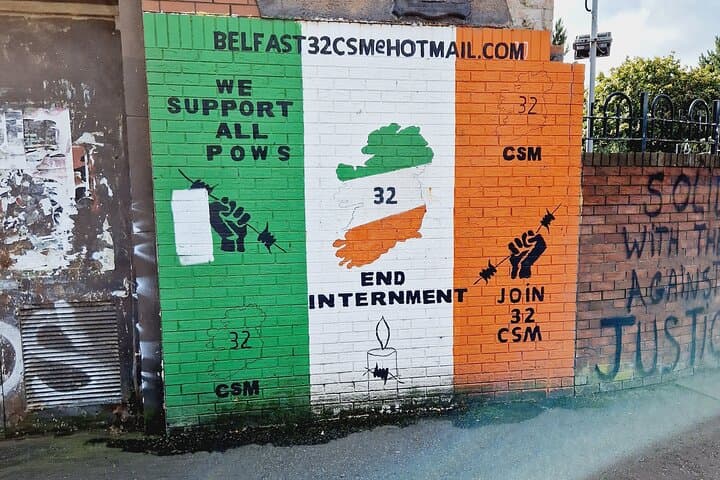
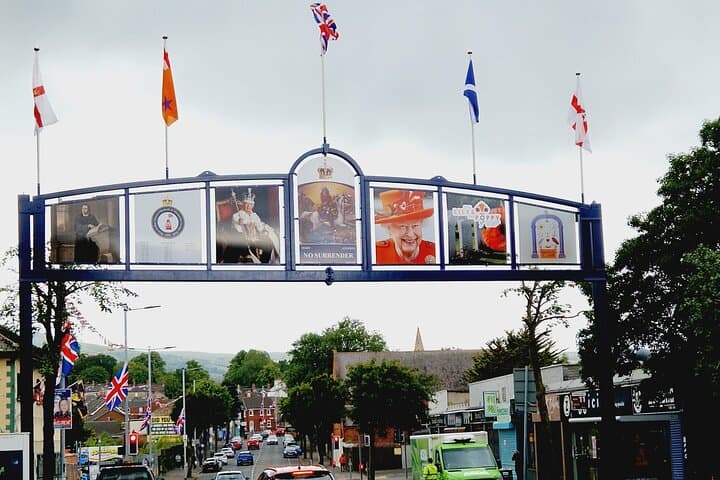
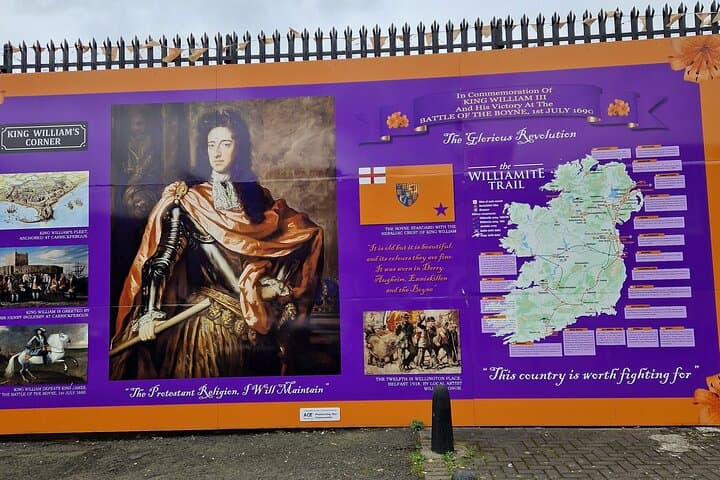
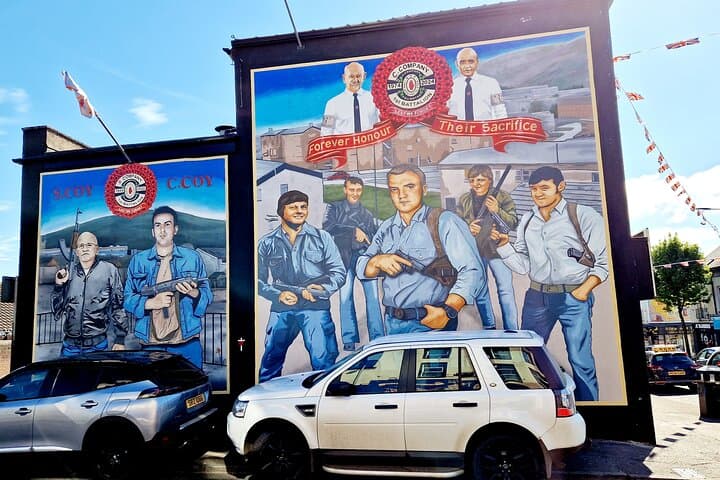
West Belfast’s streets are geography and memory. The Shankill and Falls Roads chart decades of political fault lines; the Peace Wall still closes at night, its gates a practical reminder of past division and present progress. The tour threads through murals commemorating hunger strikers and paramilitary history, and points to quieter memorial gardens and plaques that mark individual lives lost. While not geological in the traditional sense, the urban landscape shows layers of social change—industrial shipyards, Victorian civic architecture, and post-industrial murals reshaping public space.
Locals balance pride and practicality: you’ll hear questions about legacy, redevelopment, and where reconciliation actually happens day to day. Guides aim for neutrality, framing narratives from both unionist and nationalist perspectives.
Practical notes: the route covers 4–5 miles on paved streets with some gradients; expect city walking conditions and urban traffic crossings. Tours meet at the Queen Victoria statue—arrive 10 minutes early. Wear sturdy walking shoes and a waterproof layer, and bring a camera and an open, respectful attitude. Groups cap at 15 for conversation and safety; mobility assistance is available but notify the operator in advance.
moderate.
2–3 hours.
Moderate fitness for 4–5 miles of urban walking with occasional short hills; comfortable pace with stops.
Meet at Belfast City Hall under the statue of Queen Victoria; guides will be there 10 minutes before departure.
Yes—this tour notes wheelchair and stroller accessibility, but please indicate needs at booking so the guide can plan the route and pacing.
Guides aim to present balanced, contextual perspectives from both Protestant/Unionist and Catholic/Nationalist communities; the focus is historical interpretation rather than advocacy.
Full refund available if you cancel at least 24 hours before departure; check your booking confirmation for exact terms.
The Troubles were a late-20th-century ethno-political conflict with roots in centuries of Irish and British history; the Good Friday Agreement of 1998 marked a major step toward political peace in Northern Ireland.
Murals and memorials are community-managed and sensitive; visitors are encouraged to observe respectfully, support local businesses, and avoid tagging or touching artwork.
Dr Tom's Tours operates guided outdoor trips and adventures with an emphasis on safety, stewardship, and memorable experiences.
A cold wind from the River Lagan lifts the edges of a painted flag as you stand beneath Queen Victoria’s statue at Belfast City Hall. The city is awake with voices—local accents, the scrape of shoes on cobbles, and the steady cadence of a guide who knows how to read stone as easily as a map. Over the next 2.5 hours you cross neighborhoods where walls speak louder than signs and every mural carries a story.
A cold wind from the River Lagan lifts the edges of a painted flag as you stand beneath Queen Victoria’s statue at Belfast City Hall. The city is awake with voices—local accents, the scrape of shoes on cobbles, and the steady cadence of a guide who knows how to read stone as easily as a map. Over the next 2.5 hours you cross neighborhoods where walls speak louder than signs and every mural carries a story.
West Belfast’s streets are geography and memory. The Shankill and Falls Roads chart decades of political fault lines; the Peace Wall still closes at night, its gates a practical reminder of past division and present progress. The tour threads through murals commemorating hunger strikers and paramilitary history, and points to quieter memorial gardens and plaques that mark individual lives lost. While not geological in the traditional sense, the urban landscape shows layers of social change—industrial shipyards, Victorian civic architecture, and post-industrial murals reshaping public space.
Locals balance pride and practicality: you’ll hear questions about legacy, redevelopment, and where reconciliation actually happens day to day. Guides aim for neutrality, framing narratives from both unionist and nationalist perspectives.
Practical notes: the route covers 4–5 miles on paved streets with some gradients; expect city walking conditions and urban traffic crossings. Tours meet at the Queen Victoria statue—arrive 10 minutes early. Wear sturdy walking shoes and a waterproof layer, and bring a camera and an open, respectful attitude. Groups cap at 15 for conversation and safety; mobility assistance is available but notify the operator in advance.