THE ADVENTURE COLLECTIVE® · Independent discovery and booking for outdoor travel

Walk Belfast’s city centre with a conflict historian and trace the arc from the Troubles to today’s fragile peace. This 2½‑hour, 1.5‑mile tour combines factual history with on-the-ground stories at the sites that shaped modern Northern Ireland.
Walk Belfast’s city centre with a conflict historian and trace the arc from the Troubles to today’s fragile peace. This 2½‑hour, 1.5‑mile tour combines factual history with on-the-ground stories at the sites that shaped modern Northern Ireland.
You step out of the damp city air into the open space before Belfast City Hall. The river Lagan glints a short walk away and the stone facades around you still hold the marks of a city that rebuilt itself — the guide's voice cuts through the bustle, patient and precise, drawing a line from narrow 19th‑century streets to the barricades and checkpoints of the 1970s.
Verified experiences and guided adventures in the surrounding area.
Operated by DC Tours · Belfast, Northern Ireland
You step out of the damp city air into the open space before Belfast City Hall. The river Lagan glints a short walk away and the stone facades around you still hold the marks of a city that rebuilt itself — the guide's voice cuts through the bustle, patient and precise, drawing a line from narrow 19th‑century streets to the barricades and checkpoints of the 1970s.
This 2½‑hour, 1.5‑mile walk threads key sites from the Troubles: a nightclub bomb site, the Ring of Steel, the large police station, and the Cathedral Quarter where murals and regeneration sit alongside stories of loss and resistance. Your guide is a conflict historian who pairs archival context — sectarian tensions, civil rights protests, and the eventual Good Friday Agreement — with personal recollections that make the politics human.
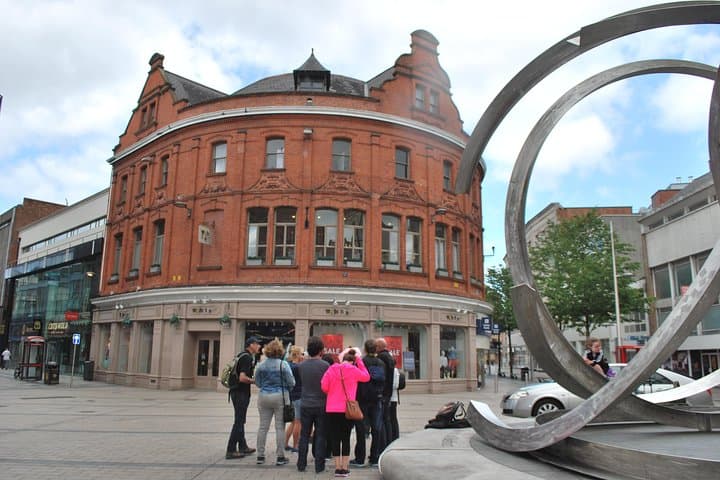
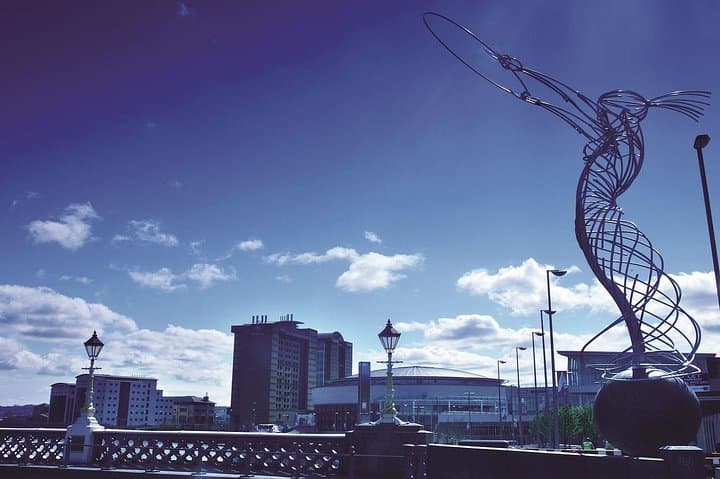
Geology here is urban: reclaimed quays, the granite and sandstone of civic buildings, and the river corridor that shaped the port economy that once divided neighborhoods. Culture is alive in street art, pub memory, and public sculpture: the Spirit of Belfast and the Beacon of Hope bookend the narrative of decline and renewal.
Practically: the route is flat and wheelchair accessible, but expect continuous walking for 150 minutes. Wear sturdy shoes and a weatherproof layer, arrive early to hear the introduction at City Hall, and bring respect — street memorials and living communities remain sensitive topics. The tour runs rain or shine and is best paired with a later visit to the Cathedral Quarter for food and music.
easy.
2–2.5 hours.
Suitable for most fitness levels; requires walking for the full duration but no steep terrain.
Yes — the route is flat and accessible; guides note that all surfaces and transportation options are wheelchair friendly.
Minimum age is 12 years; the subject matter can be intense and may not be suitable for younger children.
Yes, the tour operates rain or shine. Guides recommend checking the forecast and dressing appropriately; cancellations for severe weather follow the operator's policy.
The tour starts at Belfast City Hall and finishes on the River Lagan waterfront by the Beacon of Hope sculpture.
The Troubles escalated from late 1960s civil rights tensions into decades of conflict; the Good Friday Agreement of 1998 marked a turning point toward political reconciliation.
Visitors are encouraged to respect memorials and street art, support local businesses in regenerated areas, and avoid leaving litter in public spaces to help sustain the city's recovery.
DC Tours operates guided outdoor trips and adventures with an emphasis on safety, stewardship, and memorable experiences.
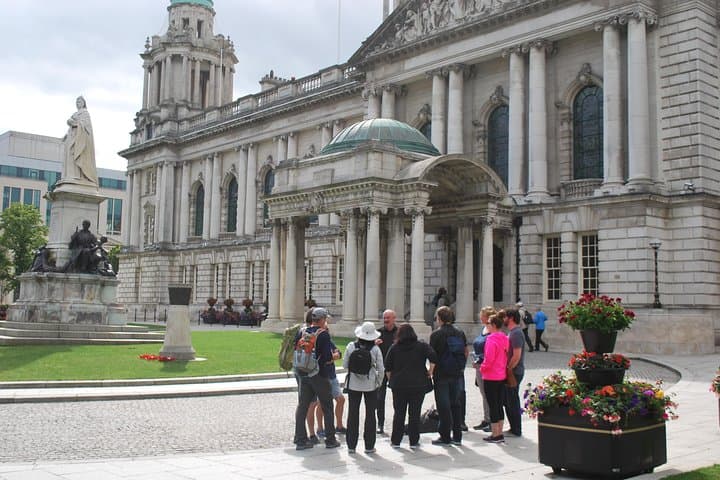
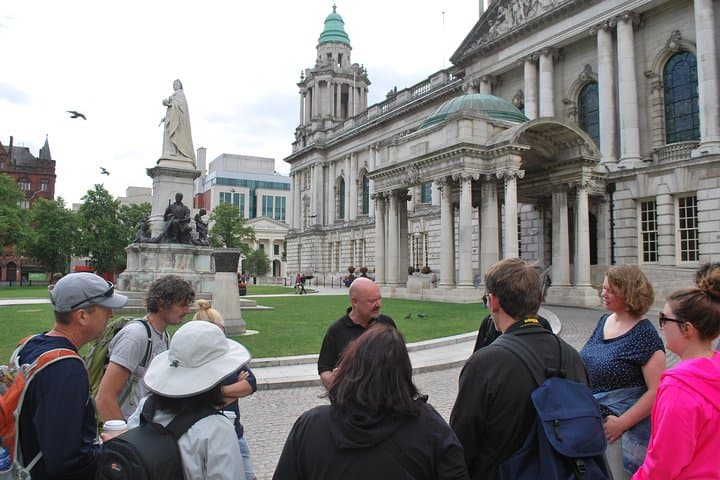
You step out of the damp city air into the open space before Belfast City Hall. The river Lagan glints a short walk away and the stone facades around you still hold the marks of a city that rebuilt itself — the guide's voice cuts through the bustle, patient and precise, drawing a line from narrow 19th‑century streets to the barricades and checkpoints of the 1970s.
You step out of the damp city air into the open space before Belfast City Hall. The river Lagan glints a short walk away and the stone facades around you still hold the marks of a city that rebuilt itself — the guide's voice cuts through the bustle, patient and precise, drawing a line from narrow 19th‑century streets to the barricades and checkpoints of the 1970s.
This 2½‑hour, 1.5‑mile walk threads key sites from the Troubles: a nightclub bomb site, the Ring of Steel, the large police station, and the Cathedral Quarter where murals and regeneration sit alongside stories of loss and resistance. Your guide is a conflict historian who pairs archival context — sectarian tensions, civil rights protests, and the eventual Good Friday Agreement — with personal recollections that make the politics human.
Geology here is urban: reclaimed quays, the granite and sandstone of civic buildings, and the river corridor that shaped the port economy that once divided neighborhoods. Culture is alive in street art, pub memory, and public sculpture: the Spirit of Belfast and the Beacon of Hope bookend the narrative of decline and renewal.
Practically: the route is flat and wheelchair accessible, but expect continuous walking for 150 minutes. Wear sturdy shoes and a weatherproof layer, arrive early to hear the introduction at City Hall, and bring respect — street memorials and living communities remain sensitive topics. The tour runs rain or shine and is best paired with a later visit to the Cathedral Quarter for food and music.