THE ADVENTURE COLLECTIVE® · Independent discovery and booking for outdoor travel

Explore Belfast’s industrial heart and contested streets on a private full-day tour that combines the Titanic Quarter with Cathedral and Queen’s Quarters, murals, and Stormont. Expect guided city driving punctuated by short walks, historical context, and local recommendations for food and further exploration.
Explore Belfast’s industrial heart and contested streets on a private full-day tour that combines the Titanic Quarter with Cathedral and Queen’s Quarters, murals, and Stormont. Expect guided city driving punctuated by short walks, historical context, and local recommendations for food and further exploration.
You start on a gray morning at the quays, the lapping of the Lagan nudging the hulls as the Titanic Quarter rises ahead — redbrick slipways, cranes like retired giants. Your private guide eases you through streets where Victorian stone meets wartime scars, pulling into tight lanes to point out murals that still argue with each other across painted metal and concrete.
Verified experiences and guided adventures in the surrounding area.
Operated by Uopera tours · Belfast, Northern Ireland
You start on a gray morning at the quays, the lapping of the Lagan nudging the hulls as the Titanic Quarter rises ahead — redbrick slipways, cranes like retired giants. Your private guide eases you through streets where Victorian stone meets wartime scars, pulling into tight lanes to point out murals that still argue with each other across painted metal and concrete.
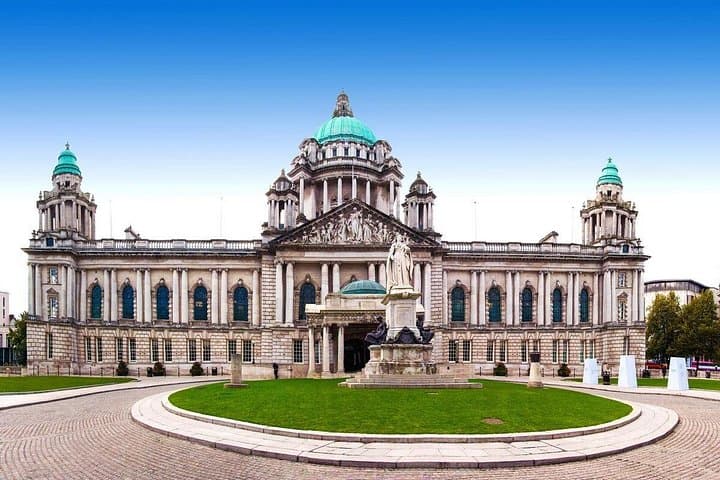
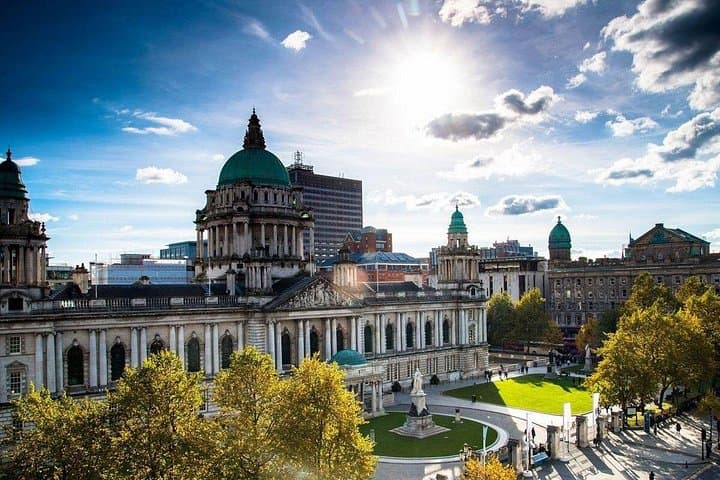
Belfast’s story is industrial and political. Once a global shipbuilding capital, its yards built liners like RMS Titanic at Harland & Wolff; its Victorian civic buildings and Stormont’s neoclassical facade record an era of ambition and governance. The city’s geology is quiet but present — the basalt ridges of Cave Hill watch over Belfast Lough, and the river’s mouth shaped the docks that made the city.
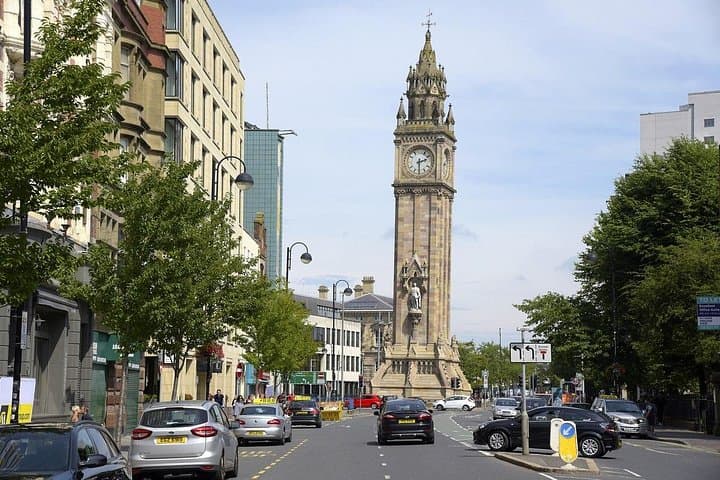
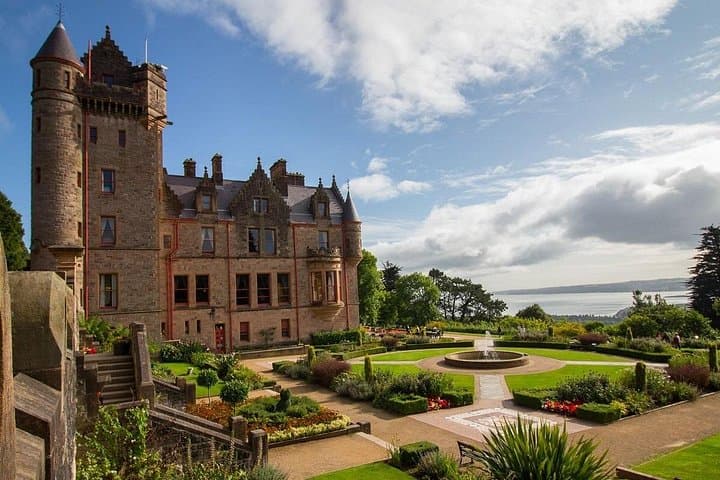
On the drive you'll see Parliament Buildings, Albert Clock, Queen’s University and the Ulster Museum, then cross into neighborhoods where peace walls and murals catalogue conflict and reconciliation. Stop for lunch at Belfast Castle or a market stall; hear local cadences and the blunt humor that threads through everyday life here.
Practical guidance: this is a low-impact, full-day private tour — expect multiple short walks up to 20–30 minutes, repeated stops for photos, and time in a comfortable vehicle between points. Wear waterproof layers and sturdy walking shoes, keep a small daypack with snacks and ID for museum entries, and plan for unpredictable weather and city traffic. Bring curiosity and respectful questions; much of the city’s interest is in the stories people tell.
easy.
8 hours.
Light activity; suitable for most fitness levels but requires standing and short walks on uneven pavement.
Yes — the tour is rated easy and primarily uses a vehicle between short walks; notify the operator of mobility needs for tailored pick-up and routing.
Not unless you select the option that includes tickets; the standard tour includes driving and guided commentary, with optional drop-off at attractions.
Yes — the tour includes pick-up and drop-off from hotels or the cruise terminal; provide your arrival details when booking.
Many stops are vehicle-accessible, but some sites have cobbles, steps, or uneven surfaces; contact the operator in advance to confirm accessibility for specific attractions.
Belfast expanded rapidly in the 19th century on shipbuilding and linen; Harland & Wolff’s slipways launched ocean liners that connected the city to global trade and migration.
Respecting murals and local neighborhoods supports community-led peace and tourism; choose local eateries and vendors to keep economic benefits in-region and avoid littering historic sites.
Uopera tours operates guided outdoor trips and adventures with an emphasis on safety, stewardship, and memorable experiences.
You start on a gray morning at the quays, the lapping of the Lagan nudging the hulls as the Titanic Quarter rises ahead — redbrick slipways, cranes like retired giants. Your private guide eases you through streets where Victorian stone meets wartime scars, pulling into tight lanes to point out murals that still argue with each other across painted metal and concrete.
You start on a gray morning at the quays, the lapping of the Lagan nudging the hulls as the Titanic Quarter rises ahead — redbrick slipways, cranes like retired giants. Your private guide eases you through streets where Victorian stone meets wartime scars, pulling into tight lanes to point out murals that still argue with each other across painted metal and concrete.
Belfast’s story is industrial and political. Once a global shipbuilding capital, its yards built liners like RMS Titanic at Harland & Wolff; its Victorian civic buildings and Stormont’s neoclassical facade record an era of ambition and governance. The city’s geology is quiet but present — the basalt ridges of Cave Hill watch over Belfast Lough, and the river’s mouth shaped the docks that made the city.
On the drive you'll see Parliament Buildings, Albert Clock, Queen’s University and the Ulster Museum, then cross into neighborhoods where peace walls and murals catalogue conflict and reconciliation. Stop for lunch at Belfast Castle or a market stall; hear local cadences and the blunt humor that threads through everyday life here.
Practical guidance: this is a low-impact, full-day private tour — expect multiple short walks up to 20–30 minutes, repeated stops for photos, and time in a comfortable vehicle between points. Wear waterproof layers and sturdy walking shoes, keep a small daypack with snacks and ID for museum entries, and plan for unpredictable weather and city traffic. Bring curiosity and respectful questions; much of the city’s interest is in the stories people tell.