THE ADVENTURE COLLECTIVE® · Independent discovery and booking for outdoor travel

Ride in an authentic Belfast black cab with a driver who lived the Troubles—two hours that weave murals, peace walls, and local testimony into a compact political history. Expect close-up stories, short photo stops, and practical insights for respectful touring.
Ride in an authentic Belfast black cab with a driver who lived the Troubles—two hours that weave murals, peace walls, and local testimony into a compact political history. Expect close-up stories, short photo stops, and practical insights for respectful touring.
You slide into the back of a classic black cab and the city outside shifts from glass-fronted redevelopment to narrow streets painted with stories. The driver—your guide, a local who lived the headlines—turns the meter into a timeline and Belfast begins to speak: murals pointing like open books, a peace wall that still takes the measure of neighborhoods, and streets where ordinary doors hide intense memories.
Verified experiences and guided adventures in the surrounding area.
Operated by Belfast famous black taxi tours · Belfast, Northern Ireland
You slide into the back of a classic black cab and the city outside shifts from glass-fronted redevelopment to narrow streets painted with stories. The driver—your guide, a local who lived the headlines—turns the meter into a timeline and Belfast begins to speak: murals pointing like open books, a peace wall that still takes the measure of neighborhoods, and streets where ordinary doors hide intense memories.
The tour threads present-day Belfast with the political geography carved out during the Troubles (late 1960s–1998). Murals commemorate hunger strikers and community identity; peace walls mark literal borders that have existed for decades despite the Good Friday Agreement. Geology here is understated but present: the city sits where the River Lagan meets Belfast Lough, a coastal inlet whose tide once powered mills and shaped working-class neighborhoods.
Culturally, this is a city rebuilding its narrative—music venues, markets, and community arts sit beside sites that recall conflict. Guides are often former residents of the communities they drive through; their firsthand accounts offer nuance that textbooks miss.
Practical guidance: the tour is private and two hours long, suitable for most mobility levels since travel is by vehicle with short, supervised stops for photos and explanations. Bring a charged camera, respect local sensitivities when photographing people or murals, and ask questions—guides expect them. Expect light urban walking at stops, possible rain, and straightforward pickup/drop-off near central hotels. This ride is less about adrenaline and more about listening: it’s a close, human-scale way to understand how cities change when history keeps speaking.
easy.
2 hours.
Minimal fitness required—short, supervised photo stops with mostly in-vehicle travel
Yes—children are welcome but must be accompanied by an adult; content covers recent political history and may require parental context.
Yes—drivers aim to present local perspectives and will discuss both republican and loyalist areas with context from lived experience.
Pickup and drop-off are provided near central hotels, typically within 1 km of Belfast City Hall; confirm exact point when booking.
You can photograph murals and public walls, but be mindful of residents and follow your guide’s advice at sensitive locations.
The Troubles (late 1960s–1998) reshaped Belfast’s neighborhoods; murals and peace walls reflect identities and events from that conflict through local lenses.
Support local guides and community-run mural projects; avoid adding graffiti or taking items, and consider donating to neighborhood arts initiatives.
Belfast famous black taxi tours operates guided outdoor trips and adventures with an emphasis on safety, stewardship, and memorable experiences.
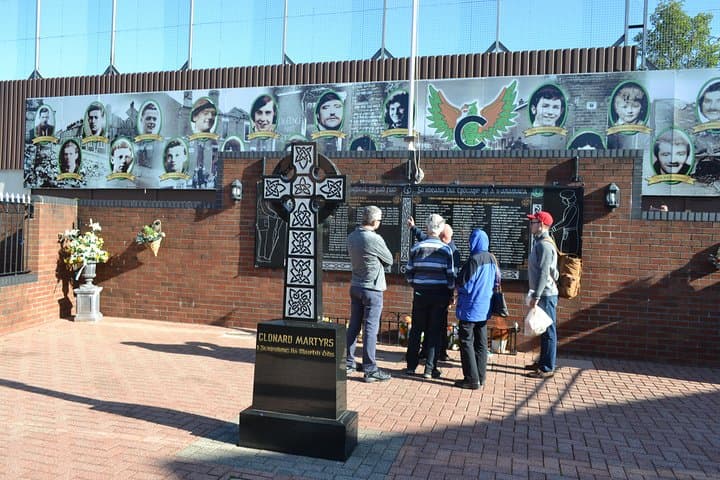


You slide into the back of a classic black cab and the city outside shifts from glass-fronted redevelopment to narrow streets painted with stories. The driver—your guide, a local who lived the headlines—turns the meter into a timeline and Belfast begins to speak: murals pointing like open books, a peace wall that still takes the measure of neighborhoods, and streets where ordinary doors hide intense memories.
You slide into the back of a classic black cab and the city outside shifts from glass-fronted redevelopment to narrow streets painted with stories. The driver—your guide, a local who lived the headlines—turns the meter into a timeline and Belfast begins to speak: murals pointing like open books, a peace wall that still takes the measure of neighborhoods, and streets where ordinary doors hide intense memories.
The tour threads present-day Belfast with the political geography carved out during the Troubles (late 1960s–1998). Murals commemorate hunger strikers and community identity; peace walls mark literal borders that have existed for decades despite the Good Friday Agreement. Geology here is understated but present: the city sits where the River Lagan meets Belfast Lough, a coastal inlet whose tide once powered mills and shaped working-class neighborhoods.
Culturally, this is a city rebuilding its narrative—music venues, markets, and community arts sit beside sites that recall conflict. Guides are often former residents of the communities they drive through; their firsthand accounts offer nuance that textbooks miss.
Practical guidance: the tour is private and two hours long, suitable for most mobility levels since travel is by vehicle with short, supervised stops for photos and explanations. Bring a charged camera, respect local sensitivities when photographing people or murals, and ask questions—guides expect them. Expect light urban walking at stops, possible rain, and straightforward pickup/drop-off near central hotels. This ride is less about adrenaline and more about listening: it’s a close, human-scale way to understand how cities change when history keeps speaking.