THE ADVENTURE COLLECTIVE® · Independent discovery and booking for outdoor travel

Escape Beirut for a half-day private excursion to Jeita Grotto, Lebanon’s most famous cave system. Expect cool caverns, boated underground rivers, and guided interpretation that brings the region’s geology and history to life.
Escape Beirut for a half-day private excursion to Jeita Grotto, Lebanon’s most famous cave system. Expect cool caverns, boated underground rivers, and guided interpretation that brings the region’s geology and history to life.
A low rumble of traffic falls away as the road climbs north from Beirut and the Mediterranean light shifts to limestone gray. Within an hour a cool, echoing mouth of stone opens: Jeita Grotto, a two-tier karst cave system that rewards a short, private transfer with underground rivers and dense crystal growth.
Verified experiences and guided adventures in the surrounding area.
Operated by Beirut Trip · Jeita, Mount Lebanon
A low rumble of traffic falls away as the road climbs north from Beirut and the Mediterranean light shifts to limestone gray. Within an hour a cool, echoing mouth of stone opens: Jeita Grotto, a two-tier karst cave system that rewards a short, private transfer with underground rivers and dense crystal growth.
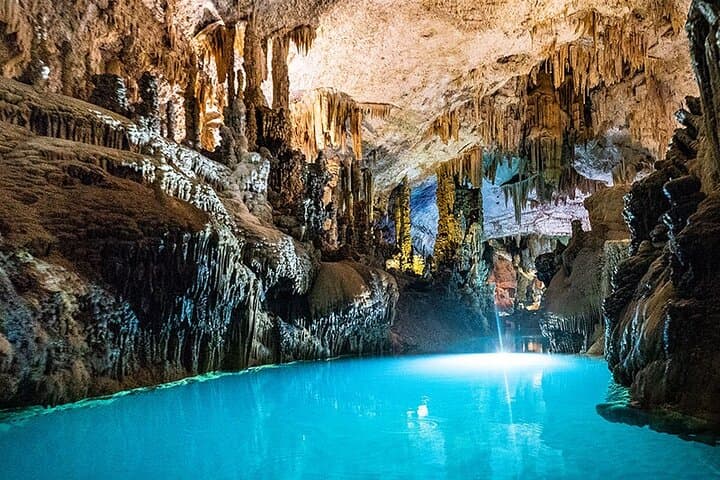
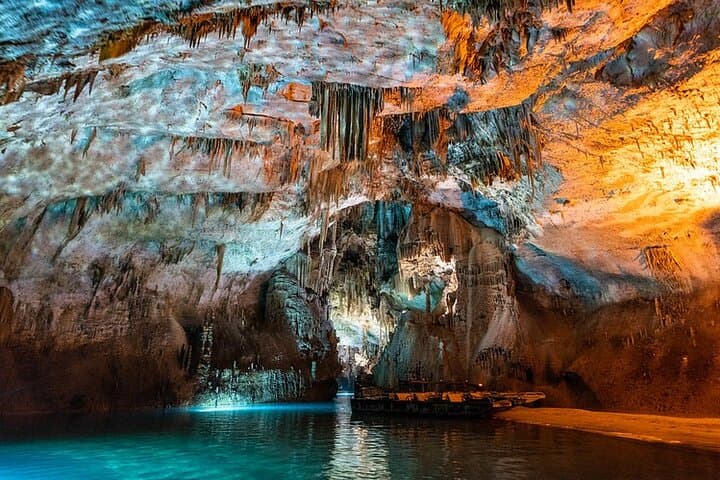
Formed over millions of years, the upper gallery stretches roughly 2,130 metres and the lower gallery extends about 6,200 metres, with the system sitting near 300 metres above sea level and a height difference of about 305 metres between extremes. Visitors encounter stalactites, stalagmites, curtains and draperies in compact chambers; the lower level is threaded by a smooth subterranean river that once shaped the passages explorers now traverse by boat and boardwalk.
The grotto sits in Mount Lebanon, near villages with deep roots in Phoenician and Ottoman eras; the site became a national attraction in the 20th century and remains an important symbol of Lebanon’s natural heritage. Guides point out local geology and cultural references while emphasizing preservation.
Practically: a private, air-conditioned pickup from Beirut makes this a half-day outing (about four hours total). The walkways inside are developed but include steps and narrow sections; wear sturdy shoes and bring a light jacket — cave temperatures stay cool year-round. Admission is usually paid on-site; confirm inclusion when booking. Tip your guide if they share extra local context, and plan the visit mid-morning or late afternoon to avoid peak coach arrivals. For travelers seeking a short, dramatic encounter with subterranean geology, Jeita delivers clear, accessible wonder without a long trek.
easy.
3–4 hours.
Suitable for most fitness levels; requires standing, short walks and negotiating stairs and narrow passages.
Not always—many bookings provide transport and a guide while cave entrance is paid at the site; confirm inclusion when you book.
Sections include stairs and narrow paths; the grotto has limited accessibility — contact the operator in advance to discuss accommodations.
Guided visits through the upper and lower areas typically last 60–90 minutes depending on routing and boat availability.
Yes; the site is family-friendly but requires supervision near water and on steps; infant seats are often available for transfers.
Jeita became a celebrated national site in the 20th century and has been developed for public access while remaining a prominent example of Lebanon’s karst geology.
The site limits access and uses boardwalks and controlled routes to protect fragile formations; visitors should avoid touching formations and follow guide instructions to minimize impact.
Beirut Trip operates guided outdoor trips and adventures with an emphasis on safety, stewardship, and memorable experiences.
A low rumble of traffic falls away as the road climbs north from Beirut and the Mediterranean light shifts to limestone gray. Within an hour a cool, echoing mouth of stone opens: Jeita Grotto, a two-tier karst cave system that rewards a short, private transfer with underground rivers and dense crystal growth.
A low rumble of traffic falls away as the road climbs north from Beirut and the Mediterranean light shifts to limestone gray. Within an hour a cool, echoing mouth of stone opens: Jeita Grotto, a two-tier karst cave system that rewards a short, private transfer with underground rivers and dense crystal growth.
Formed over millions of years, the upper gallery stretches roughly 2,130 metres and the lower gallery extends about 6,200 metres, with the system sitting near 300 metres above sea level and a height difference of about 305 metres between extremes. Visitors encounter stalactites, stalagmites, curtains and draperies in compact chambers; the lower level is threaded by a smooth subterranean river that once shaped the passages explorers now traverse by boat and boardwalk.
The grotto sits in Mount Lebanon, near villages with deep roots in Phoenician and Ottoman eras; the site became a national attraction in the 20th century and remains an important symbol of Lebanon’s natural heritage. Guides point out local geology and cultural references while emphasizing preservation.
Practically: a private, air-conditioned pickup from Beirut makes this a half-day outing (about four hours total). The walkways inside are developed but include steps and narrow sections; wear sturdy shoes and bring a light jacket — cave temperatures stay cool year-round. Admission is usually paid on-site; confirm inclusion when booking. Tip your guide if they share extra local context, and plan the visit mid-morning or late afternoon to avoid peak coach arrivals. For travelers seeking a short, dramatic encounter with subterranean geology, Jeita delivers clear, accessible wonder without a long trek.