THE ADVENTURE COLLECTIVE® · Independent discovery and booking for outdoor travel

Take a full-day bullet-train excursion from Beijing to Chengde to explore the UNESCO-listed Mountain Resort, the Small Potala Palace and the outer temples. Fast travel, concentrated sightseeing and a clear taste of Qing-era architecture make this a high-value cultural day trip.
Take a full-day bullet-train excursion from Beijing to Chengde to explore the UNESCO-listed Mountain Resort, the Small Potala Palace and the outer temples. Fast travel, concentrated sightseeing and a clear taste of Qing-era architecture make this a high-value cultural day trip.
You step off a high-speed train and the air shifts: Chengde's plain opens up, wind moving through pines and the low sweep of distant hills that once cooled Qing emperors. The town's approach feels deliberate — trains hurry the distance, but the resort invites you to slow down, climb stone terraces and listen to lacquered roofs creak in a mountain breeze.
Verified experiences and guided adventures in the surrounding area.
Operated by Beijing Meitu Travel Agency Co., Ltd. · Chengde, Hebei
You step off a high-speed train and the air shifts: Chengde's plain opens up, wind moving through pines and the low sweep of distant hills that once cooled Qing emperors. The town's approach feels deliberate — trains hurry the distance, but the resort invites you to slow down, climb stone terraces and listen to lacquered roofs creak in a mountain breeze.
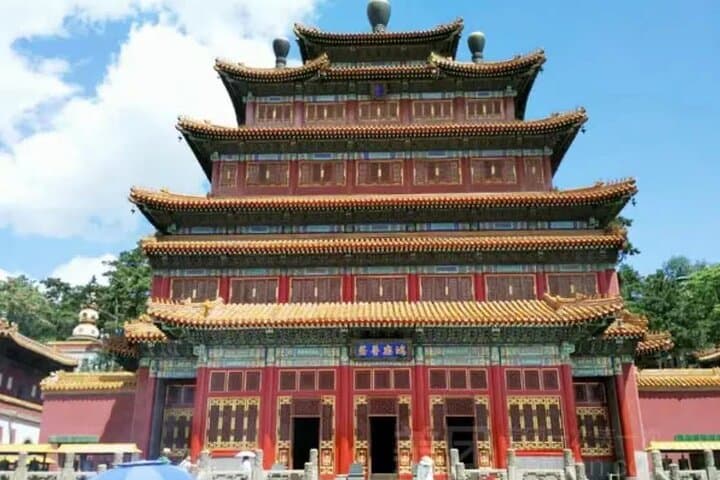
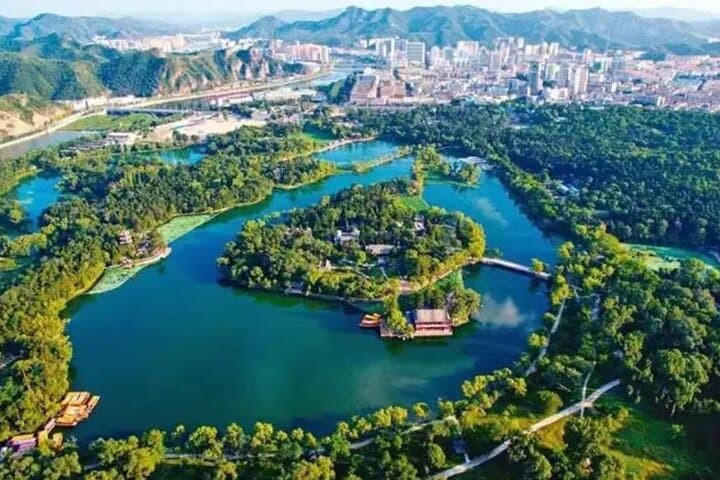
Built across decades of the 18th century, the Chengde Mountain Resort served as an imperial retreat and statework venue for the Qing court. Geologically the area sits on a plateau of metamorphic bedrock framed by low ridges; the palace lakes were shaped by engineered channels that mirror both Han and Tibetan landscape aesthetics. Puning and Pule temples illustrate that cultural cross‑pollination: Han courtyards lead to Tibetan-style gompas and a 27-meter wooden Bodhisattva carved in lacquered gold.
Expect guided walks across palace courtyards, steep stair climbs at the Small Potala imitation and wide garden paths that run beside ponds. The day is long — round-trip bullet train and transfers compress travel into a 12–13 hour schedule, so plan for concentrated sightseeing rather than a relaxed pace.
Practical guidance: carry your passport for train verification, wear supportive shoes for stairs and uneven stone, bring a light jacket for gusty evenings and a refillable water bottle. Visit early to avoid the largest tour groups and allow time to linger at temple terraces for views back toward the surrounding pines.
moderate.
12–13 hours.
Suitable for most fitness levels but includes several flights of stairs and sustained walking; expect a long day.
The total outing runs about 12–13 hours door-to-door, with roughly one hour each way on bullet trains and most of the day spent at Chengde sites.
Yes — the tour includes round-trip bullet train tickets, transfers, and entrance fees listed in the itinerary.
The tour is labeled physically easy overall, but many temple areas have steep steps and terraces that may be difficult for those with mobility issues.
A professional English-speaking guide meets you in Chengde according to the tour details; confirm language needs at booking.
Constructed across the Qianlong reign, Chengde Mountain Resort functioned as an imperial summer palace and a venue for court diplomacy; surrounding temples expressed Qing relations with Tibetan and Mongolian regions.
The resort is a UNESCO World Heritage site with managed visitor routes to protect historic wooden structures and landscaped water features; keep to paths and avoid touching carved surfaces.
Beijing Meitu Travel Agency Co., Ltd. operates guided outdoor trips and adventures with an emphasis on safety, stewardship, and memorable experiences.


You step off a high-speed train and the air shifts: Chengde's plain opens up, wind moving through pines and the low sweep of distant hills that once cooled Qing emperors. The town's approach feels deliberate — trains hurry the distance, but the resort invites you to slow down, climb stone terraces and listen to lacquered roofs creak in a mountain breeze.
You step off a high-speed train and the air shifts: Chengde's plain opens up, wind moving through pines and the low sweep of distant hills that once cooled Qing emperors. The town's approach feels deliberate — trains hurry the distance, but the resort invites you to slow down, climb stone terraces and listen to lacquered roofs creak in a mountain breeze.
Built across decades of the 18th century, the Chengde Mountain Resort served as an imperial retreat and statework venue for the Qing court. Geologically the area sits on a plateau of metamorphic bedrock framed by low ridges; the palace lakes were shaped by engineered channels that mirror both Han and Tibetan landscape aesthetics. Puning and Pule temples illustrate that cultural cross‑pollination: Han courtyards lead to Tibetan-style gompas and a 27-meter wooden Bodhisattva carved in lacquered gold.
Expect guided walks across palace courtyards, steep stair climbs at the Small Potala imitation and wide garden paths that run beside ponds. The day is long — round-trip bullet train and transfers compress travel into a 12–13 hour schedule, so plan for concentrated sightseeing rather than a relaxed pace.
Practical guidance: carry your passport for train verification, wear supportive shoes for stairs and uneven stone, bring a light jacket for gusty evenings and a refillable water bottle. Visit early to avoid the largest tour groups and allow time to linger at temple terraces for views back toward the surrounding pines.