THE ADVENTURE COLLECTIVE® · Independent discovery and booking for outdoor travel

Turn a long layover into an outdoor highlight: this private day tour pairs the Mutianyu section of the Great Wall with a stop at Beijing’s Olympic Park and includes round-trip airport transfer. Expect walking on restored ramparts, cable-car access, and efficient logistics for tight schedules.
Turn a long layover into an outdoor highlight: this private day tour pairs the Mutianyu section of the Great Wall with a stop at Beijing’s Olympic Park and includes round-trip airport transfer. Expect walking on restored ramparts, cable-car access, and efficient logistics for tight schedules.
You step out of the airport and into a chill that carries stone and pine—Beijing unfurls quickly on this layover tour, with a private vehicle cutting through suburbs toward the rising ridgeline of Mutianyu.
Verified experiences and guided adventures in the surrounding area.
You step out of the airport and into a chill that carries stone and pine—Beijing unfurls quickly on this layover tour, with a private vehicle cutting through suburbs toward the rising ridgeline of Mutianyu.
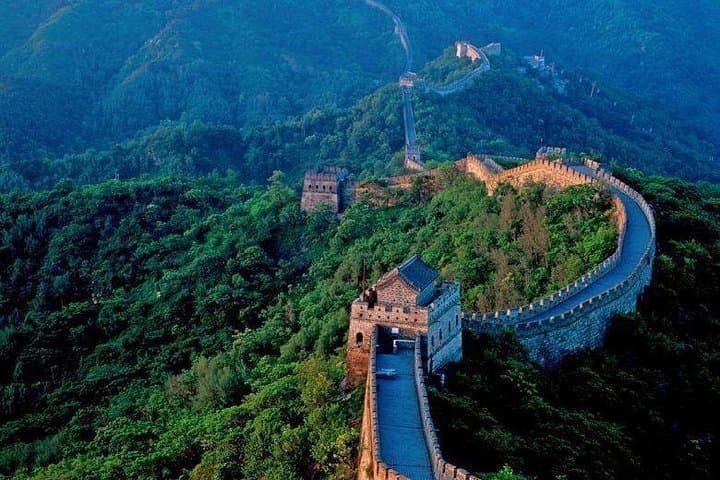
The wall here threads across forested slopes and cut limestone ridges. Mutianyu’s broad, restored parapets and closely spaced watchtowers reflect heavy Ming-era rebuilding (14th–17th centuries) layered over earlier defenses; underfoot the stones are weathered but intentionally placed, engineered to resist erosion and siege alike. The nearby Olympic Park, built for 2008, offers a modern contrast—steel lattices and water features that speak to China’s recent urban ambitions.
Local culture appears in small ways: vendors selling jujube and roasted chestnuts near the car park, guides pointing out inscriptions on tower stones, and the faint cadence of Mandarin carried by the wind along the ramparts. Geologically, the wall follows ridgelines of compacted sandstone and gravelly soil; expect steep, uneven steps and exposed sections where the wind cuts through.
Practical guidance: the tour usually includes a Mutianyu cable car up and a toboggan or cable down to save time and knees. Wear supportive shoes with good traction and bring water—shade is intermittent on exposed sections. Plan for 3–4 hours at the wall if you want a comfortable walk and photos; shorter stops are possible if runway windows are tight. Traffic to and from Beijing Capital can vary—build buffer time for airport return. For sustainable travel, stay on marked paths, carry out trash, and avoid removing stones or writing on masonry.
moderate.
9–10 hours.
Moderate fitness required: comfortable walking on uneven ground and stairs for several hours
Yes — the tour includes round-trip private transport between Beijing Capital Airport (or central hotels) and the Mutianyu/Olympic Park itinerary.
Yes — the standard tour package usually includes a cable car up and the toboggan (or cable) down at Mutianyu to save time and energy.
Expect roughly 2–4 hours at Mutianyu depending on traffic and the tour pacing; confirm with the operator if you need a specific turnaround time for your flight.
The section has many steps and uneven surfaces; the cable car and toboggan make it accessible for many, but those with limited mobility should plan carefully and notify the operator.
Mutianyu was fortified in the Northern Qi and extensively rebuilt by the Ming dynasty; its broad battlements were designed for defensive troop movement and cannon emplacement.
Visit responsibly: stick to marked paths, avoid removing stones or defacing masonry, and pack out any trash to help preserve the restored sections.
You step out of the airport and into a chill that carries stone and pine—Beijing unfurls quickly on this layover tour, with a private vehicle cutting through suburbs toward the rising ridgeline of Mutianyu.
You step out of the airport and into a chill that carries stone and pine—Beijing unfurls quickly on this layover tour, with a private vehicle cutting through suburbs toward the rising ridgeline of Mutianyu.
The wall here threads across forested slopes and cut limestone ridges. Mutianyu’s broad, restored parapets and closely spaced watchtowers reflect heavy Ming-era rebuilding (14th–17th centuries) layered over earlier defenses; underfoot the stones are weathered but intentionally placed, engineered to resist erosion and siege alike. The nearby Olympic Park, built for 2008, offers a modern contrast—steel lattices and water features that speak to China’s recent urban ambitions.
Local culture appears in small ways: vendors selling jujube and roasted chestnuts near the car park, guides pointing out inscriptions on tower stones, and the faint cadence of Mandarin carried by the wind along the ramparts. Geologically, the wall follows ridgelines of compacted sandstone and gravelly soil; expect steep, uneven steps and exposed sections where the wind cuts through.
Practical guidance: the tour usually includes a Mutianyu cable car up and a toboggan or cable down to save time and knees. Wear supportive shoes with good traction and bring water—shade is intermittent on exposed sections. Plan for 3–4 hours at the wall if you want a comfortable walk and photos; shorter stops are possible if runway windows are tight. Traffic to and from Beijing Capital can vary—build buffer time for airport return. For sustainable travel, stay on marked paths, carry out trash, and avoid removing stones or writing on masonry.