THE ADVENTURE COLLECTIVE® · Independent discovery and booking for outdoor travel

Walk 700-year-old hutongs with a private guide, pop into artisan shops, and sample Beijing’s famed Peking duck in a two-hour city stroll. This compact tour pairs cultural context with hands-on tastes and local insights.
Walk 700-year-old hutongs with a private guide, pop into artisan shops, and sample Beijing’s famed Peking duck in a two-hour city stroll. This compact tour pairs cultural context with hands-on tastes and local insights.
Step off the main avenue and into a lane that seems to pull time inward. Narrow cobbles press between low gray walls; courtyards (siheyuan) open like small theaters of daily life. The guide threads you through 700-year-old hutongs toward a lively stretch of Dashilan where silk shops, tea stalls and lacquered signs crowd the street and the smell of roasting duck drifts from a backroom kitchen.
Verified experiences and guided adventures in the surrounding area.
Operated by Hutong Calligraphy Class · Beijing, Beijing
Step off the main avenue and into a lane that seems to pull time inward. Narrow cobbles press between low gray walls; courtyards (siheyuan) open like small theaters of daily life. The guide threads you through 700-year-old hutongs toward a lively stretch of Dashilan where silk shops, tea stalls and lacquered signs crowd the street and the smell of roasting duck drifts from a backroom kitchen.
These alleyways grew with Beijing under the Yuan and Ming dynasties, laid out around courtyard homes and communal wells. The architecture is straightforward — brick, wooden beams and tiled eaves — but the details tell social history: carved doorways mark status, and small side alleys reveal family shrines and neighborhood teahouses. Hutongs are living neighborhoods; expect bicycles, small markets and occasional scooters weaving politely through pedestrians.
Practically, this is a short, city-paced walk with cultural payoff: a private English-speaking guide, stops at artisan shops to see ink stones or pottery, and a tasting of Beijing’s signature dish, Peking duck. You’ll move on flat ground, mostly on paved lanes, so good walking shoes and sun protection matter more than technical gear. Bring a little cash for small purchases and be mindful of residents — photography is allowed but ask before shooting inside courtyards. The tour ends with the guide helping you back to your central hotel; taxi or subway fares are at your own expense.
Timing matters: mornings and late afternoons have more favorable light and cooler temperatures. This two-hour slice of urban life gives a compact, sensory introduction to Beijing’s oldest neighborhoods and their food culture.
easy.
2 hours.
Light — suitable for most fitness levels; involves walking on flat, paved lanes for about 1–2 miles total.
Yes — the itinerary includes a Peking duck tasting as described; bottled water or one beer is typically provided.
The guide meets you in the lobby of a central hotel and returns you there; taxi or subway fares are at your own expense.
Infants must sit on laps; the walk is on flat lanes but narrow passages and uneven cobbles can be challenging — not recommended for travelers with severe back, heart, or pregnancy-related restrictions.
This listing specifies a private English-speaking guide; service animals are allowed according to the operator’s policy.
Hutongs originated during the Yuan dynasty and expanded through the Ming—arranged around siheyuan courtyard homes that shaped Beijing’s neighborhood life for centuries.
These residential lanes face pressure from tourism and redevelopment; travel respectfully, support family-run shops and avoid disrupting daily life to help preserve the neighborhood fabric.
Hutong Calligraphy Class operates guided outdoor trips and adventures with an emphasis on safety, stewardship, and memorable experiences.
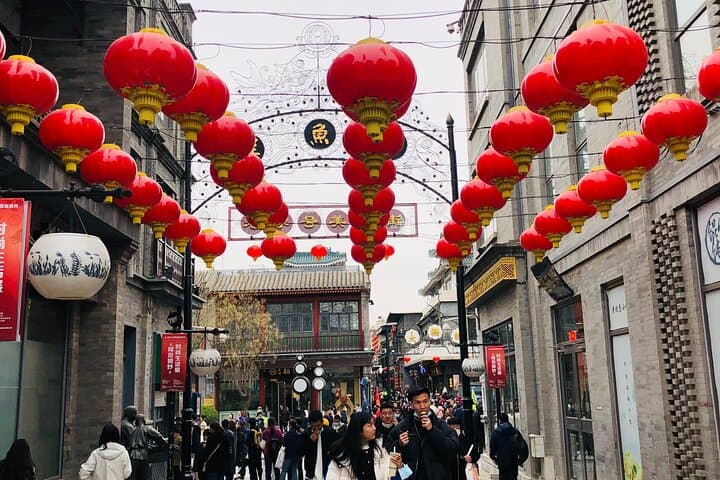
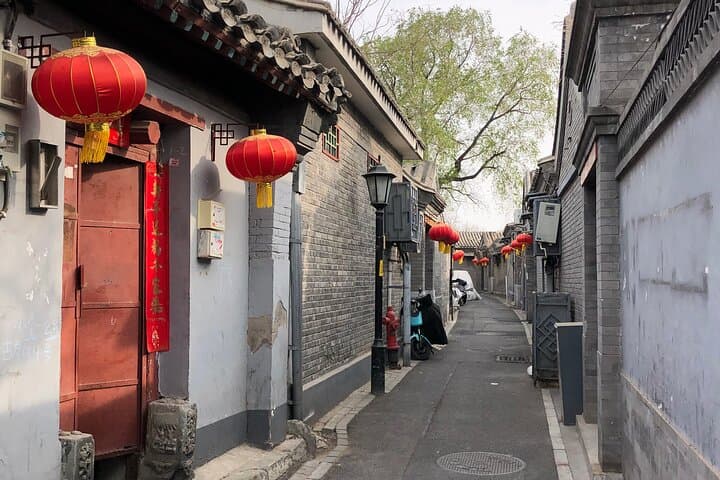
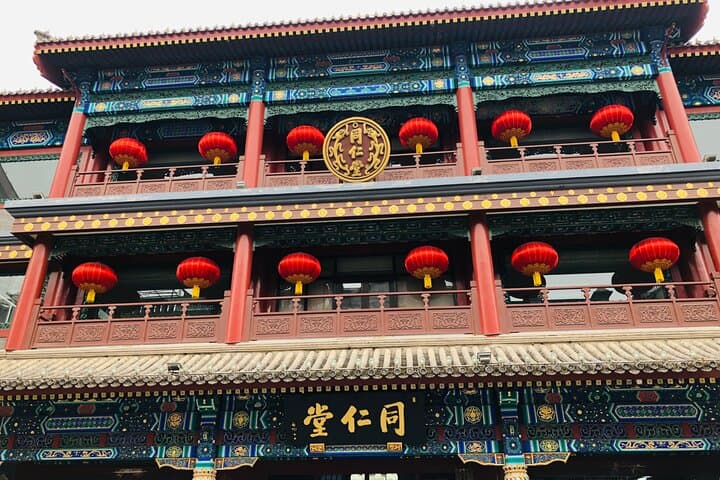
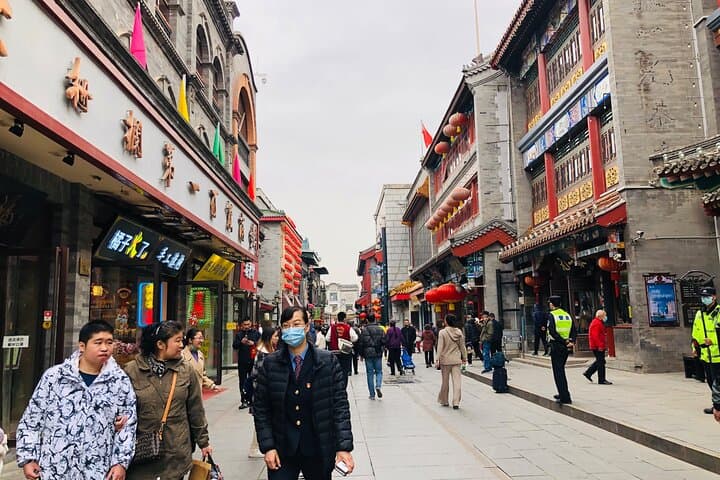
Step off the main avenue and into a lane that seems to pull time inward. Narrow cobbles press between low gray walls; courtyards (siheyuan) open like small theaters of daily life. The guide threads you through 700-year-old hutongs toward a lively stretch of Dashilan where silk shops, tea stalls and lacquered signs crowd the street and the smell of roasting duck drifts from a backroom kitchen.
Step off the main avenue and into a lane that seems to pull time inward. Narrow cobbles press between low gray walls; courtyards (siheyuan) open like small theaters of daily life. The guide threads you through 700-year-old hutongs toward a lively stretch of Dashilan where silk shops, tea stalls and lacquered signs crowd the street and the smell of roasting duck drifts from a backroom kitchen.
These alleyways grew with Beijing under the Yuan and Ming dynasties, laid out around courtyard homes and communal wells. The architecture is straightforward — brick, wooden beams and tiled eaves — but the details tell social history: carved doorways mark status, and small side alleys reveal family shrines and neighborhood teahouses. Hutongs are living neighborhoods; expect bicycles, small markets and occasional scooters weaving politely through pedestrians.
Practically, this is a short, city-paced walk with cultural payoff: a private English-speaking guide, stops at artisan shops to see ink stones or pottery, and a tasting of Beijing’s signature dish, Peking duck. You’ll move on flat ground, mostly on paved lanes, so good walking shoes and sun protection matter more than technical gear. Bring a little cash for small purchases and be mindful of residents — photography is allowed but ask before shooting inside courtyards. The tour ends with the guide helping you back to your central hotel; taxi or subway fares are at your own expense.
Timing matters: mornings and late afternoons have more favorable light and cooler temperatures. This two-hour slice of urban life gives a compact, sensory introduction to Beijing’s oldest neighborhoods and their food culture.