THE ADVENTURE COLLECTIVE® · Independent discovery and booking for outdoor travel

Step behind the front doors of Sitka Sound Science Center for a two-hour hands-on aquarist experience. Help prepare food, observe behavior, and assist with basic animal care while learning how coastal currents and local culture shape Alaska's nearshore ecosystems.
Step behind the front doors of Sitka Sound Science Center for a two-hour hands-on aquarist experience. Help prepare food, observe behavior, and assist with basic animal care while learning how coastal currents and local culture shape Alaska's nearshore ecosystems.
The white clapboard building on Sitka’s waterfront opens like a backstage door to the northern Pacific. Inside, the smell of salt and damp rock hits first; tanks hum, lights wash the water in cool blues, and a small team moves with deliberate calm. Participants join an aquarist for two hours of hands-on stewardship—measuring feed, observing behavior, and sometimes assisting with simple medical checks—while jellyfish and tidepool creatures glide and cling nearby.
Verified experiences and guided adventures in the surrounding area.
Operated by Sitka Sound Science Center · Sitka, Alaska
The white clapboard building on Sitka’s waterfront opens like a backstage door to the northern Pacific. Inside, the smell of salt and damp rock hits first; tanks hum, lights wash the water in cool blues, and a small team moves with deliberate calm. Participants join an aquarist for two hours of hands-on stewardship—measuring feed, observing behavior, and sometimes assisting with simple medical checks—while jellyfish and tidepool creatures glide and cling nearby.
The Science Center occupies a working waterfront in a town shaped by Tlingit history, Russian settlement, and a maritime economy. Geologically, Sitka sits where steep coastal mountains plunge into the Pacific, feeding nutrient-rich currents that sustain the rich nearshore life the aquarium displays. The center doubles as a local research hub and community classroom; its programming links traditional seafood knowledge with contemporary marine science.
Expect a practical, tactile session rather than a theatrical show: staff set tasks to meet animal needs, and activities shift with daily animal care priorities. The experience emphasizes observation skills, safe handling practices, and basic lab work appropriate for ages 8 and up.
For planning, wear closed-toed shoes and clothes that can get wet or dirty, and be prepared to climb stairs and stand for two hours. Cameras are usually allowed but follow staff instructions around animals. Morning sessions are cooler and quieter; summer brings more tidepool species to study, while shoulder seasons focus more on lab work. This program is intimate—groups are small—so come ready to learn, ask questions, and leave knowing a little more about the sea that shapes Sitka.
moderate.
2 hours.
Participants should be comfortable standing and climbing stairs for the duration; suitable for reasonably active children (8+) and adults.
Recommended for ages 8 and up; children under 14 must be accompanied by an adult.
Due to the historic building's layout, the facility is not fully ADA accessible and requires stair use and standing.
Photography is generally allowed, but guests must follow staff directions to avoid stressing animals or contaminating exhibits.
Closed-toed shoes and clothes that can get wet or dirty; avoid loose scents and remove hats if asked during handling.
The Sitka Sound Science Center functions as a community research and education hub on Sitka’s waterfront, linking local maritime tradition and contemporary marine science.
The center focuses on rehabilitation, research, and public education to reduce local impacts on nearshore ecosystems; visitors are asked to minimize disturbance and follow biosecurity rules.
Sitka Sound Science Center operates guided outdoor trips and adventures with an emphasis on safety, stewardship, and memorable experiences.


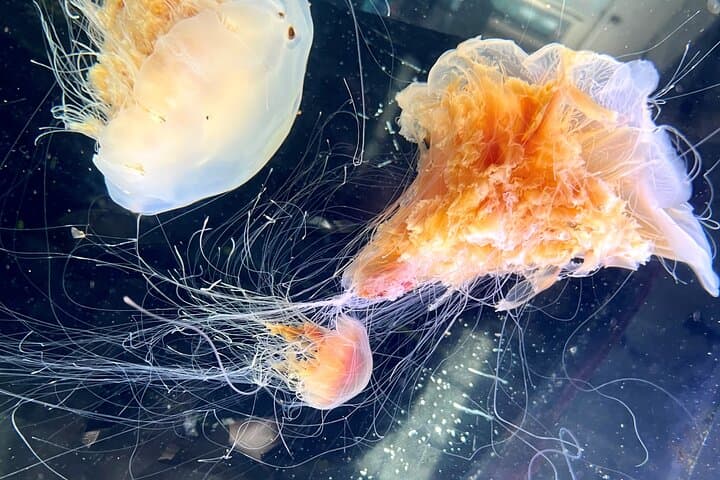

The white clapboard building on Sitka’s waterfront opens like a backstage door to the northern Pacific. Inside, the smell of salt and damp rock hits first; tanks hum, lights wash the water in cool blues, and a small team moves with deliberate calm. Participants join an aquarist for two hours of hands-on stewardship—measuring feed, observing behavior, and sometimes assisting with simple medical checks—while jellyfish and tidepool creatures glide and cling nearby.
The white clapboard building on Sitka’s waterfront opens like a backstage door to the northern Pacific. Inside, the smell of salt and damp rock hits first; tanks hum, lights wash the water in cool blues, and a small team moves with deliberate calm. Participants join an aquarist for two hours of hands-on stewardship—measuring feed, observing behavior, and sometimes assisting with simple medical checks—while jellyfish and tidepool creatures glide and cling nearby.
The Science Center occupies a working waterfront in a town shaped by Tlingit history, Russian settlement, and a maritime economy. Geologically, Sitka sits where steep coastal mountains plunge into the Pacific, feeding nutrient-rich currents that sustain the rich nearshore life the aquarium displays. The center doubles as a local research hub and community classroom; its programming links traditional seafood knowledge with contemporary marine science.
Expect a practical, tactile session rather than a theatrical show: staff set tasks to meet animal needs, and activities shift with daily animal care priorities. The experience emphasizes observation skills, safe handling practices, and basic lab work appropriate for ages 8 and up.
For planning, wear closed-toed shoes and clothes that can get wet or dirty, and be prepared to climb stairs and stand for two hours. Cameras are usually allowed but follow staff instructions around animals. Morning sessions are cooler and quieter; summer brings more tidepool species to study, while shoulder seasons focus more on lab work. This program is intimate—groups are small—so come ready to learn, ask questions, and leave knowing a little more about the sea that shapes Sitka.