THE ADVENTURE COLLECTIVE® · Independent discovery and booking for outdoor travel

Learn windsurfing on the sheltered lagoon at El Cotillo with a four‑hour beginner course. Expect onshore breezes, small swell, hands‑on instruction, and wetsuit and boots provided.
Learn windsurfing on the sheltered lagoon at El Cotillo with a four‑hour beginner course. Expect onshore breezes, small swell, hands‑on instruction, and wetsuit and boots provided.
The lagoon at El Cotillo dares you to step onto its glassy surface: shallow, protected water framed by black volcanic rock and pale sand where steady trade winds riffle the surface. A minivan from Puerto del Rosario or nearby resorts eases you along the coast, depositing you at a lagoon chosen for its flat water and predictable onshore breeze — the quiet side of the island that teaches first-time sailors the basics without being pushed into open swell.
Verified experiences and guided adventures in the surrounding area.
Operated by Flag Beach · El Cotillo, Las Palmas
The lagoon at El Cotillo dares you to step onto its glassy surface: shallow, protected water framed by black volcanic rock and pale sand where steady trade winds riffle the surface. A minivan from Puerto del Rosario or nearby resorts eases you along the coast, depositing you at a lagoon chosen for its flat water and predictable onshore breeze — the quiet side of the island that teaches first-time sailors the basics without being pushed into open swell.
Geology and history are visible in the shore: wind-polished lava fields slope toward tidal flats shaped by Atlantic swells and the prevailing northeasterly winds that make Fuerteventura a wind sports hotspot. Local fishing villages like El Cotillo grew around sheltered coves; today they balance small-scale tourism with traditional livelihoods, and windsurf schools operate with low-impact principles to protect the fragile lagoon ecosystem.
Practical guidance: expect a four-hour lesson including a short theory session, rigging practice, and progressive water time. Water is shallow with sandy bottom and some rocks at the edge; barefoot movement or neoprene boots are useful. Typical wind ranges 10–20 knots in summer and slightly lighter in spring/fall; instructors adapt drills to conditions and provide wetsuits and boots. Bring layered clothing for cool mornings, a windproof shell for the return, sunscreen, and a refillable water bottle. The lesson is suitable for most fitness levels but not recommended for serious cardiovascular or spinal conditions. Timing lessons for mid-morning avoids strongest afternoon gusts and gives calmer learning windows for first steps on the board.
easy.
4 hours.
Light to moderate fitness; able to stand, balance and paddle for short intervals
No—this course is designed for first‑time windsurfers; lessons start with basic theory, rigging and on‑land practice before getting on the water.
Yes—boards, sails, wetsuits and often booties are provided; life jackets may be optional but available on request.
Onshore northeasterly trade winds are common; expect 10–20 knots in summer and slightly lighter winds in spring and autumn, which instructors use to scale progression.
Age and size limits vary by operator; the booking collects age and height so the school can match suitable equipment—check when booking.
El Cotillo developed as a modest fishing village; the lagoon and nearby volcanic benches have been used by locals for centuries for fishing and salt extraction.
Operators typically emphasize low‑impact practices—avoid stepping on seagrass beds, carry out waste, and use reef‑safe sunscreen to protect the lagoon's ecology.
Flag Beach operates guided outdoor trips and adventures with an emphasis on safety, stewardship, and memorable experiences.
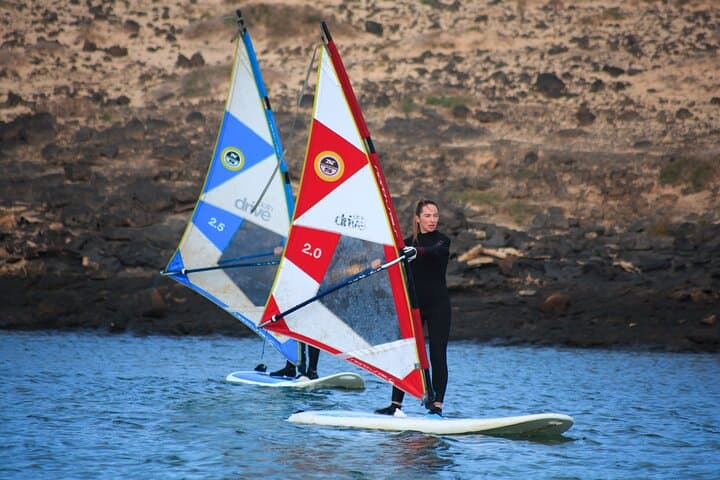
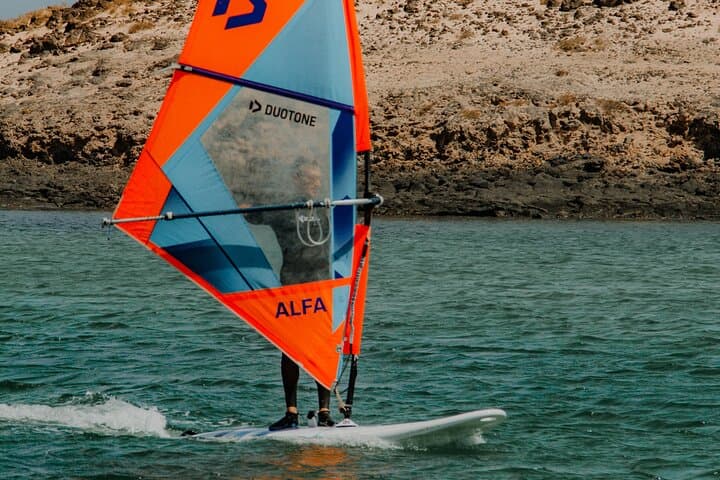
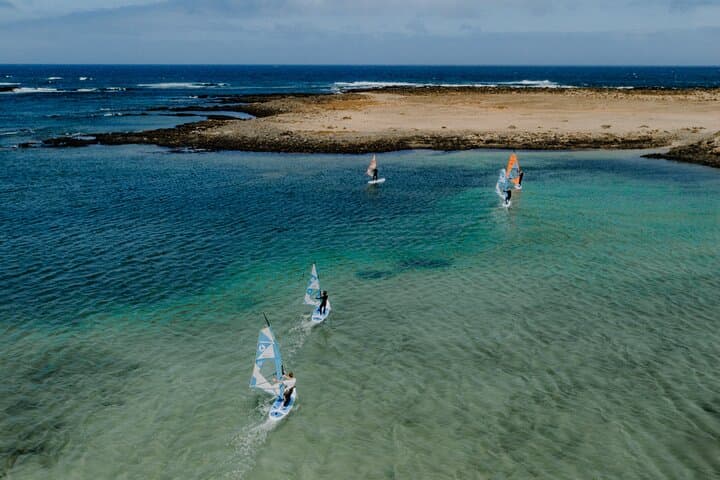
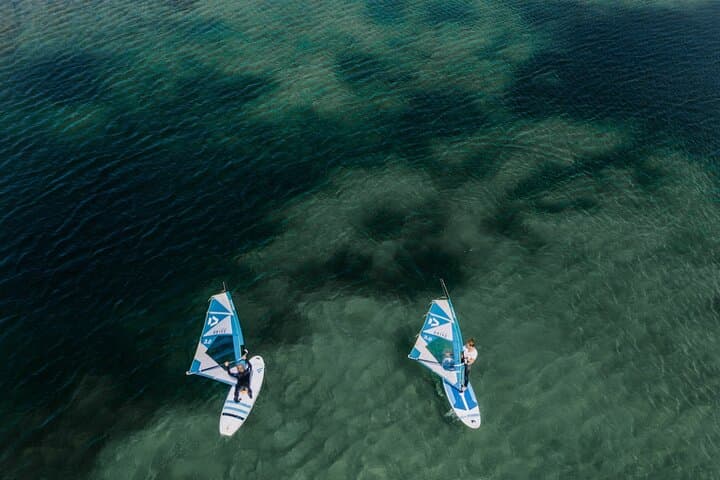
The lagoon at El Cotillo dares you to step onto its glassy surface: shallow, protected water framed by black volcanic rock and pale sand where steady trade winds riffle the surface. A minivan from Puerto del Rosario or nearby resorts eases you along the coast, depositing you at a lagoon chosen for its flat water and predictable onshore breeze — the quiet side of the island that teaches first-time sailors the basics without being pushed into open swell.
The lagoon at El Cotillo dares you to step onto its glassy surface: shallow, protected water framed by black volcanic rock and pale sand where steady trade winds riffle the surface. A minivan from Puerto del Rosario or nearby resorts eases you along the coast, depositing you at a lagoon chosen for its flat water and predictable onshore breeze — the quiet side of the island that teaches first-time sailors the basics without being pushed into open swell.
Geology and history are visible in the shore: wind-polished lava fields slope toward tidal flats shaped by Atlantic swells and the prevailing northeasterly winds that make Fuerteventura a wind sports hotspot. Local fishing villages like El Cotillo grew around sheltered coves; today they balance small-scale tourism with traditional livelihoods, and windsurf schools operate with low-impact principles to protect the fragile lagoon ecosystem.
Practical guidance: expect a four-hour lesson including a short theory session, rigging practice, and progressive water time. Water is shallow with sandy bottom and some rocks at the edge; barefoot movement or neoprene boots are useful. Typical wind ranges 10–20 knots in summer and slightly lighter in spring/fall; instructors adapt drills to conditions and provide wetsuits and boots. Bring layered clothing for cool mornings, a windproof shell for the return, sunscreen, and a refillable water bottle. The lesson is suitable for most fitness levels but not recommended for serious cardiovascular or spinal conditions. Timing lessons for mid-morning avoids strongest afternoon gusts and gives calmer learning windows for first steps on the board.