THE ADVENTURE COLLECTIVE® · Independent discovery and booking for outdoor travel

Learn the essentials of Argentine tango in a two-hour class that pairs hands-on instruction with cultural context and a shared mate. Perfect for beginners who want to leave the room dancing with confidence.
Learn the essentials of Argentine tango in a two-hour class that pairs hands-on instruction with cultural context and a shared mate. Perfect for beginners who want to leave the room dancing with confidence.
You step off a cobbled San Telmo side street and the city’s rhythm changes: voices lower, a bandoneón’s melancholy leans into the air, and a modest studio door swings open onto a polished wooden floor.
Verified experiences and guided adventures in the surrounding area.
Operated by Catalina Cabana · Buenos Aires, Ciudad Autónoma de Buenos Aires
You step off a cobbled San Telmo side street and the city’s rhythm changes: voices lower, a bandoneón’s melancholy leans into the air, and a modest studio door swings open onto a polished wooden floor.
This two-hour experience starts with a guided, patient hour of tuition where porteño instructors teach basic embrace, axis, and simple ochos. Tango grew from late-19th-century port neighborhoods where immigrants, working-class porteños, and Afro-Argentines fused European steps, African rhythms and bandoneón laments into a dance of close communication—what you learn here is as much listening as stepping.
After the lesson the host pours bitter mate and offers bizcochitos while explaining local etiquette: how to read a milonga, the respeto between dancers, and where to watch street tango in neighborhoods like San Telmo and La Boca.
Practical details are straightforward. Classes accept all levels and require no prior skill; expect partner rotation in groups up to ten. Wear shoes with a smooth, supportive sole for pivoting, and bring ID—bookings may request passport details. Public transit drops you nearby; studios are generally stroller-accessible and physically easy, but the lesson is active—bring water and lightweight layers for a warm room.
Timing matters: mornings are quieter for private focus, evenings give a milonga ambiance if you plan to continue. Cancellation is typically allowed up to 24 hours prior. For a first-time visitor, this lesson gives an authentic, compact introduction to tango’s movement, manners, and the social ritual of mate—enough to leave the floor dancing with new confidence.
easy.
2 hours.
Light physical activity; should be able to stand and move for an hour with brief rests.
No—lessons rotate partners so solo travelers are welcome and will be paired during exercises.
Yes, the lesson is designed for beginners and focuses on basic steps, posture, and musicality.
In Buenos Aires, lessons are often taught in Spanish; many instructors also explain basics in English—confirm at booking if you require English instruction.
Comfortable clothing that allows leg movement and shoes with smooth but non-slip soles; avoid new shoes that may blister.
Tango originated in late-19th-century port neighborhoods of Buenos Aires and Montevideo, born from immigrant and working-class cultures and the bandoneón’s distinctive sound.
Support local studios and small cultural operators; use public transit to reduce congestion and respect studio rules to protect historic flooring and community spaces.
Catalina Cabana operates guided outdoor trips and adventures with an emphasis on safety, stewardship, and memorable experiences.


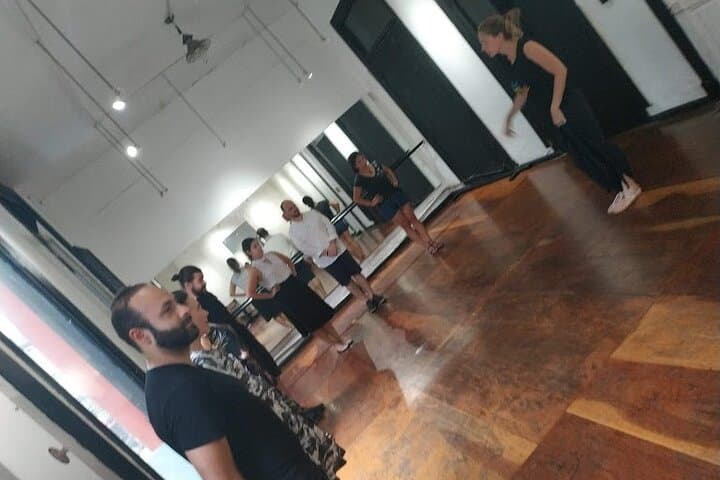
You step off a cobbled San Telmo side street and the city’s rhythm changes: voices lower, a bandoneón’s melancholy leans into the air, and a modest studio door swings open onto a polished wooden floor.
You step off a cobbled San Telmo side street and the city’s rhythm changes: voices lower, a bandoneón’s melancholy leans into the air, and a modest studio door swings open onto a polished wooden floor.
This two-hour experience starts with a guided, patient hour of tuition where porteño instructors teach basic embrace, axis, and simple ochos. Tango grew from late-19th-century port neighborhoods where immigrants, working-class porteños, and Afro-Argentines fused European steps, African rhythms and bandoneón laments into a dance of close communication—what you learn here is as much listening as stepping.
After the lesson the host pours bitter mate and offers bizcochitos while explaining local etiquette: how to read a milonga, the respeto between dancers, and where to watch street tango in neighborhoods like San Telmo and La Boca.
Practical details are straightforward. Classes accept all levels and require no prior skill; expect partner rotation in groups up to ten. Wear shoes with a smooth, supportive sole for pivoting, and bring ID—bookings may request passport details. Public transit drops you nearby; studios are generally stroller-accessible and physically easy, but the lesson is active—bring water and lightweight layers for a warm room.
Timing matters: mornings are quieter for private focus, evenings give a milonga ambiance if you plan to continue. Cancellation is typically allowed up to 24 hours prior. For a first-time visitor, this lesson gives an authentic, compact introduction to tango’s movement, manners, and the social ritual of mate—enough to leave the floor dancing with new confidence.