THE ADVENTURE COLLECTIVE® · Independent discovery and booking for outdoor travel

Learn to surf the Pacific off Miraflores with a structured 90‑minute beginner lesson that combines land drills and guided water time. This practical guide covers what to expect, local context, and essential tips to get standing in your first class.
Learn to surf the Pacific off Miraflores with a structured 90‑minute beginner lesson that combines land drills and guided water time. This practical guide covers what to expect, local context, and essential tips to get standing in your first class.
A cool Pacific breeze cuts across the Malecon as students gather on the sand, boards aligned like a small fleet ready to launch. In Lima, surf is both classroom and playground: instructors walk through paddle technique and pop-up drills on the shore, then lead short swims into the rolling sets where the ocean quickly tests balance and timing.
Verified experiences and guided adventures in the surrounding area.
Operated by Escuela Pukana Surf · Lima, Lima Province
A cool Pacific breeze cuts across the Malecon as students gather on the sand, boards aligned like a small fleet ready to launch. In Lima, surf is both classroom and playground: instructors walk through paddle technique and pop-up drills on the shore, then lead short swims into the rolling sets where the ocean quickly tests balance and timing.
Peru’s coastline has a long relationship with the sea—pre‑Inca cultures used coastal craft and engaged recreationally with waves long before modern boards arrived. Geologically, the Lima coast is shaped by strong Pacific swells and the Humboldt Current, which brings cooler water and productive surf but can also create choppy, variable conditions; winds and tides change the breaks across beaches from Miraflores to Punta Hermosa.
Locally, surf culture in Lima blends neighborhood beach life with competitive clubs; classes are often small and bilingual, and instructors emphasize safety and etiquette—taking turns, reading sets, and respecting local riders.
Practical guidance: expect a 90‑minute session that begins with 30 minutes of land drills and stretches, followed by water time. Students are provided wetsuits, booties and beginner boards, but you should be comfortable in the water and able to swim. Morning slots (6:30–10:00) often offer gentler winds and cleaner waves; later sessions can be windier.
Bring a swimsuit under your wetsuit, reef‑safe sunscreen, a towel and a positive attitude. Hydrate before the lesson, listen to your coach, and treat the ocean with respect—waves will push you forward, but they also demand attention.
moderate.
90 minutes.
Requires moderate fitness: basic swimming ability, core strength, and comfort in open water
Age requirements vary by operator, but many beginner lessons accept children as young as six with parental consent and depending on swimming ability.
Lessons typically follow a cancellation/refund policy—full refunds are often available if you cancel at least 24 hours in advance; operators may reschedule or cancel sessions based on unsafe sea conditions.
Yes—basic swimming ability is required; the class involves entering the surf and paddling, so non‑swimmers are not recommended.
Yes—beginner lessons usually provide a wetsuit, booties and a soft beginner board, but bring your own swimsuit and sunscreen.
Coastal communities in Peru engaged with the sea long before modern surfing; archaeological evidence shows coastal peoples used reed vessels and recreational watercraft, and modern surf culture has roots in mid‑20th century coastal towns.
Beaches near Lima face pollution pressure; opt for reef‑safe sunscreen, pack out trash, and support local beach cleanup efforts to protect the coastline.
Escuela Pukana Surf operates guided outdoor trips and adventures with an emphasis on safety, stewardship, and memorable experiences.
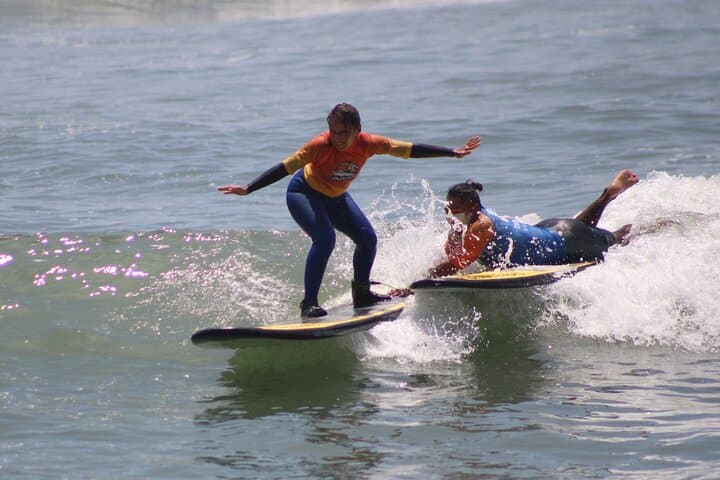
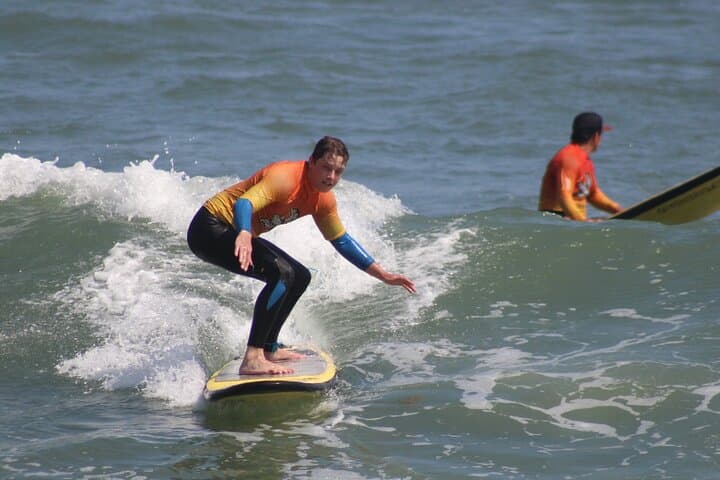
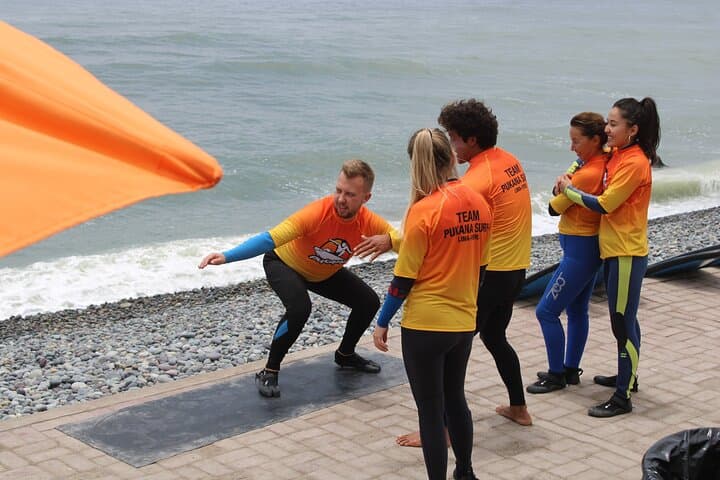
A cool Pacific breeze cuts across the Malecon as students gather on the sand, boards aligned like a small fleet ready to launch. In Lima, surf is both classroom and playground: instructors walk through paddle technique and pop-up drills on the shore, then lead short swims into the rolling sets where the ocean quickly tests balance and timing.
A cool Pacific breeze cuts across the Malecon as students gather on the sand, boards aligned like a small fleet ready to launch. In Lima, surf is both classroom and playground: instructors walk through paddle technique and pop-up drills on the shore, then lead short swims into the rolling sets where the ocean quickly tests balance and timing.
Peru’s coastline has a long relationship with the sea—pre‑Inca cultures used coastal craft and engaged recreationally with waves long before modern boards arrived. Geologically, the Lima coast is shaped by strong Pacific swells and the Humboldt Current, which brings cooler water and productive surf but can also create choppy, variable conditions; winds and tides change the breaks across beaches from Miraflores to Punta Hermosa.
Locally, surf culture in Lima blends neighborhood beach life with competitive clubs; classes are often small and bilingual, and instructors emphasize safety and etiquette—taking turns, reading sets, and respecting local riders.
Practical guidance: expect a 90‑minute session that begins with 30 minutes of land drills and stretches, followed by water time. Students are provided wetsuits, booties and beginner boards, but you should be comfortable in the water and able to swim. Morning slots (6:30–10:00) often offer gentler winds and cleaner waves; later sessions can be windier.
Bring a swimsuit under your wetsuit, reef‑safe sunscreen, a towel and a positive attitude. Hydrate before the lesson, listen to your coach, and treat the ocean with respect—waves will push you forward, but they also demand attention.