THE ADVENTURE COLLECTIVE® · Independent discovery and booking for outdoor travel

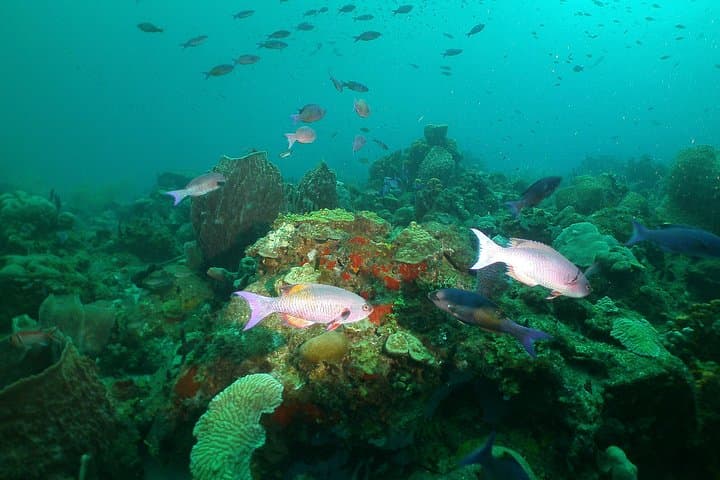
Take your first regulated breath beneath St. Lucia’s sheltered west-coast waters on a guided beginner dive from Marigot Bay. This half-day trip mixes reef-side marine reserve dives with hands-on instruction and a post-dive buffet lunch.
Take your first regulated breath beneath St. Lucia’s sheltered west-coast waters on a guided beginner dive from Marigot Bay. This half-day trip mixes reef-side marine reserve dives with hands-on instruction and a post-dive buffet lunch.
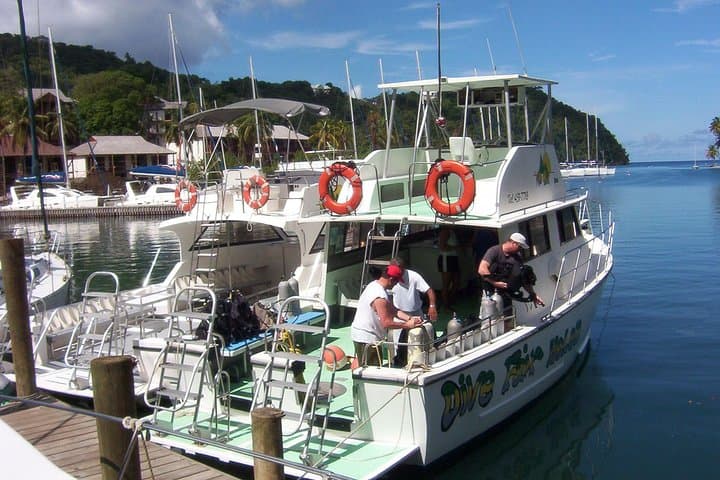
The engine settles, the boat rocks against Marigot Bay and the water ahead turns from deep blue to a clear, inviting turquoise. A line of islands and volcanic ridges frames the horizon while dive masters run through checks on aluminum tanks and weights; the smell of salt and diesel hangs in the air as the group readies for a first breath under the surface.
Verified experiences and guided adventures in the surrounding area.
Operated by Dive Fair Helen · Marigot Bay, Saint Lucia
The engine settles, the boat rocks against Marigot Bay and the water ahead turns from deep blue to a clear, inviting turquoise. A line of islands and volcanic ridges frames the horizon while dive masters run through checks on aluminum tanks and weights; the smell of salt and diesel hangs in the air as the group readies for a first breath under the surface.
St. Lucia’s west coast is defined by volcanic geology and a history of fishing and sugar plantations; its reefs grew on lava flows and reef rubble, and today much of the area is managed as marine reserve. The entry points—Anse Cochon and Soufriere Beach—offer sheltered walls, coral gardens and visibility often exceeding 30 feet on calm days. Local guides blend safety instruction with cultural notes about coastal communities and marine stewardship.
For beginners this is a focused, approachable dive: a single guided tank to about 45 feet, 45–60 minutes in-water, with surface time and a buffet lunch back on the boat. Expect basic skills coaching, close supervision from instructors, and a paced descent designed to build confidence.
Practical tips: arrive with a light breakfast, bring a swimsuit and reef-safe sunscreen, and declare any medical conditions on the health form. If you’re flying in or out within 24 hours, plan your schedule around decompression safety. The trip suits casual swimmers and travelers who want an accessible first dive in some of the Caribbean’s quieter, well-protected reefs.
moderate.
5 hours (total, including transfers and lunch).
Suitable for casual fitness: must be comfortable swimming and able to climb a ladder on/off a boat.
No; this is a guided beginner (intro) dive with instruction and supervision—certification is not required, but participants must complete a health questionnaire.
Beginner dives are typically up to 45 feet (approximately 13 meters) with an in-water time around 45–60 minutes depending on air consumption and conditions.
Minimum age for participation is 10 years; children must be accompanied by an adult and meet safety criteria.
Complimentary pickup is offered for northern to western island locations; southern or distant hotels require independent transfer to the dive shop in Marigot Bay.
The west coast reefs developed along the island’s volcanic margins; Marigot Bay was historically a strategic anchorage during colonial maritime activity and is now a hub for small-boat operations.
Diving takes place in marine reserve areas—avoid touching or collecting coral, use reef-safe sunscreen, and follow dive-master briefings to minimize impact.
Dive Fair Helen operates guided outdoor trips and adventures with an emphasis on safety, stewardship, and memorable experiences.
The engine settles, the boat rocks against Marigot Bay and the water ahead turns from deep blue to a clear, inviting turquoise. A line of islands and volcanic ridges frames the horizon while dive masters run through checks on aluminum tanks and weights; the smell of salt and diesel hangs in the air as the group readies for a first breath under the surface.
The engine settles, the boat rocks against Marigot Bay and the water ahead turns from deep blue to a clear, inviting turquoise. A line of islands and volcanic ridges frames the horizon while dive masters run through checks on aluminum tanks and weights; the smell of salt and diesel hangs in the air as the group readies for a first breath under the surface.
St. Lucia’s west coast is defined by volcanic geology and a history of fishing and sugar plantations; its reefs grew on lava flows and reef rubble, and today much of the area is managed as marine reserve. The entry points—Anse Cochon and Soufriere Beach—offer sheltered walls, coral gardens and visibility often exceeding 30 feet on calm days. Local guides blend safety instruction with cultural notes about coastal communities and marine stewardship.
For beginners this is a focused, approachable dive: a single guided tank to about 45 feet, 45–60 minutes in-water, with surface time and a buffet lunch back on the boat. Expect basic skills coaching, close supervision from instructors, and a paced descent designed to build confidence.
Practical tips: arrive with a light breakfast, bring a swimsuit and reef-safe sunscreen, and declare any medical conditions on the health form. If you’re flying in or out within 24 hours, plan your schedule around decompression safety. The trip suits casual swimmers and travelers who want an accessible first dive in some of the Caribbean’s quieter, well-protected reefs.