THE ADVENTURE COLLECTIVE® · Independent discovery and booking for outdoor travel

Learn scuba in small groups off Puerto Rico, Gran Canaria: a two‑hour session that combines shallow-water skills with a guided reef dive. Perfect for first-timers who want hands-on instruction, marine encounters and a calm Atlantic introduction.
Learn scuba in small groups off Puerto Rico, Gran Canaria: a two‑hour session that combines shallow-water skills with a guided reef dive. Perfect for first-timers who want hands-on instruction, marine encounters and a calm Atlantic introduction.
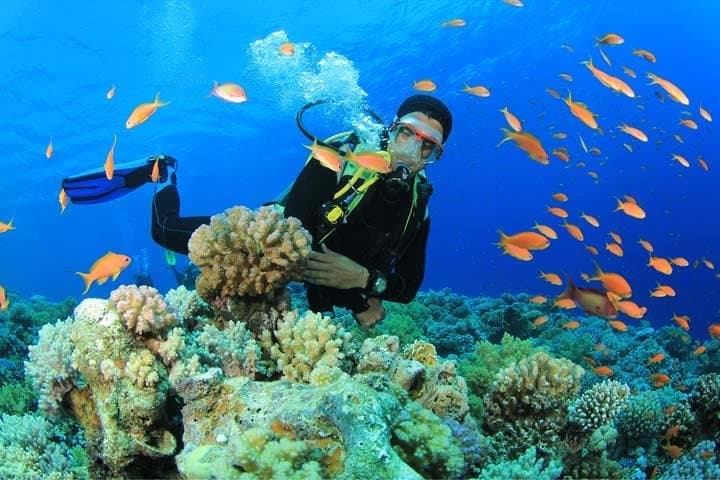
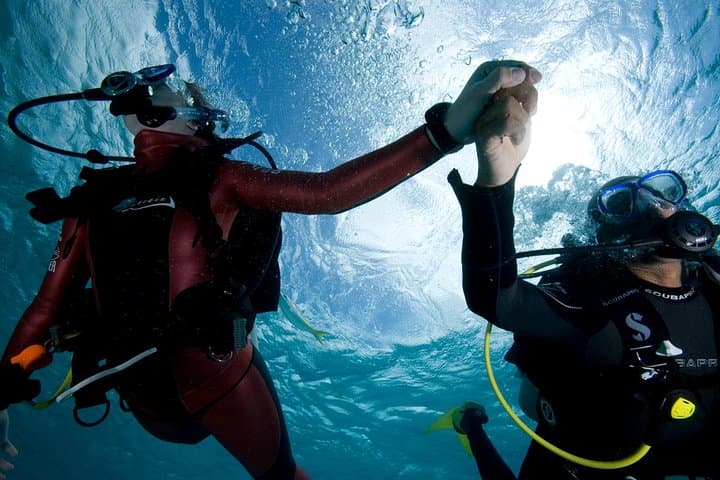
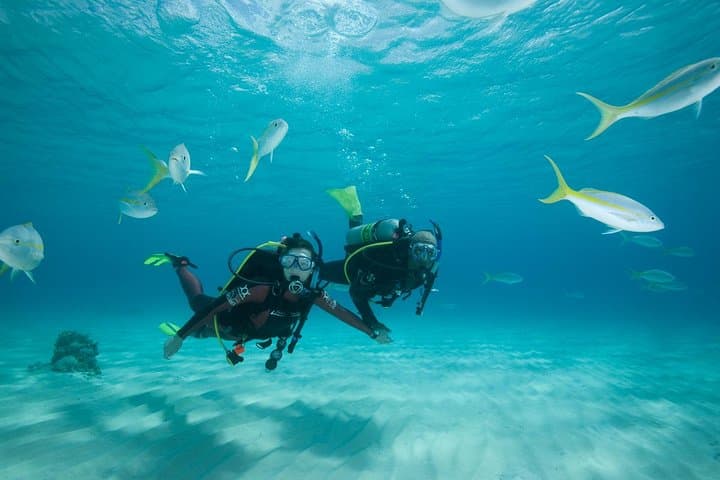
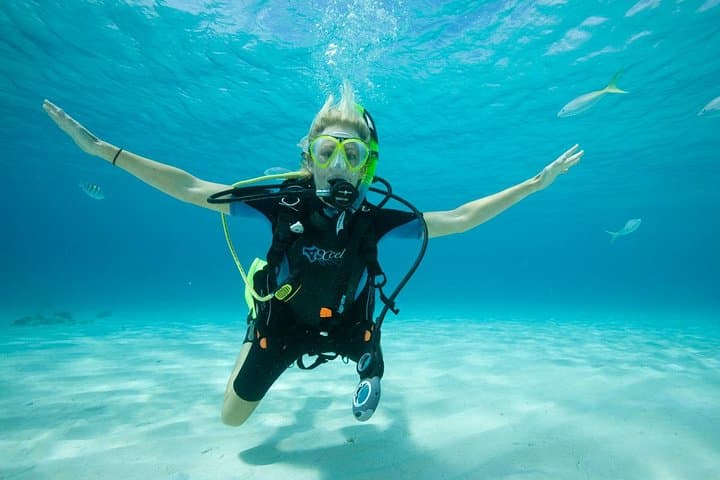
A stretch of concrete and palm trees gives way to a small harbour where the Atlantic loosens itself into translucent blues. You meet your instructor on the jetty, kit clinking, salt on a warm breeze—then walk into shallow water to learn how a regulator breathes, how your mask clears, how neutral buoyancy feels. The sea here dares you forward, and the reef answers with boulders, crevices and bright parrotfish weaving through rockweed.
Verified experiences and guided adventures in the surrounding area.
Operated by Blue Water Diving · Puerto Rico, Las Palmas
A stretch of concrete and palm trees gives way to a small harbour where the Atlantic loosens itself into translucent blues. You meet your instructor on the jetty, kit clinking, salt on a warm breeze—then walk into shallow water to learn how a regulator breathes, how your mask clears, how neutral buoyancy feels. The sea here dares you forward, and the reef answers with boulders, crevices and bright parrotfish weaving through rockweed.
Gran Canaria is a volcanic island shaped by eruptions and wave-cut cliffs; its southern coves were long used by small-scale fishers from Mogán and Añasco. The reefs around Puerto Rico are modest in altitude but rich in tide-sculpted rock and marine life adapted to Atlantic swell and seasonal upwelling. Local dive operators emphasize small groups and beginner-friendly sites—ideal for a first open-water taste.
Expect a structured session: paperwork and health screening, confined-water skills in shallow sea, then a guided reef dive usually under 10–12 metres where instructors supervise skill application and marine-spotting. Practical notes: bring a swimsuit, towel and, if you have one, a compact underwater camera. Operators supply all basic dive kit and brief on the no-fly window after diving.
Timing matters—morning sessions often mean calmer seas and better visibility. If you have asthma, heart conditions or recent flights, consult your doctor. For most people with basic swimming ability, this is an accessible, instructive way to meet Atlantic diving on Gran Canaria.
moderate.
2 hours.
Suitable for most people with basic swimming ability and reasonable mobility; able to kneel in shallow water and follow breathing exercises.
No—this beginner session is designed for unlicensed participants; skills are taught in shallow water under direct supervision.
Minimum age is 10 years old; minors usually need parental consent and supervision depending on operator policy.
Beginner reef dives typically stay between 5–12 metres and offer views of parrotfish, bream, small octopus, and rocky reef formations.
Operators may cancel in poor sea conditions; the booking policy allows a full refund if cancelled at least 24 hours before the session or if weather forces cancellation.
Gran Canaria’s coastline is the product of volcanic activity and long-term marine erosion; small southern harbours grew alongside fishing traditions tied to Mogán’s fishing villages.
Respect local marine rules: don’t touch or stand on the reef, avoid feeding fish, and choose operators that follow no‑anchor practices and use moorings where available.
Blue Water Diving operates guided outdoor trips and adventures with an emphasis on safety, stewardship, and memorable experiences.
A stretch of concrete and palm trees gives way to a small harbour where the Atlantic loosens itself into translucent blues. You meet your instructor on the jetty, kit clinking, salt on a warm breeze—then walk into shallow water to learn how a regulator breathes, how your mask clears, how neutral buoyancy feels. The sea here dares you forward, and the reef answers with boulders, crevices and bright parrotfish weaving through rockweed.
A stretch of concrete and palm trees gives way to a small harbour where the Atlantic loosens itself into translucent blues. You meet your instructor on the jetty, kit clinking, salt on a warm breeze—then walk into shallow water to learn how a regulator breathes, how your mask clears, how neutral buoyancy feels. The sea here dares you forward, and the reef answers with boulders, crevices and bright parrotfish weaving through rockweed.
Gran Canaria is a volcanic island shaped by eruptions and wave-cut cliffs; its southern coves were long used by small-scale fishers from Mogán and Añasco. The reefs around Puerto Rico are modest in altitude but rich in tide-sculpted rock and marine life adapted to Atlantic swell and seasonal upwelling. Local dive operators emphasize small groups and beginner-friendly sites—ideal for a first open-water taste.
Expect a structured session: paperwork and health screening, confined-water skills in shallow sea, then a guided reef dive usually under 10–12 metres where instructors supervise skill application and marine-spotting. Practical notes: bring a swimsuit, towel and, if you have one, a compact underwater camera. Operators supply all basic dive kit and brief on the no-fly window after diving.
Timing matters—morning sessions often mean calmer seas and better visibility. If you have asthma, heart conditions or recent flights, consult your doctor. For most people with basic swimming ability, this is an accessible, instructive way to meet Atlantic diving on Gran Canaria.