THE ADVENTURE COLLECTIVE® · Independent discovery and booking for outdoor travel

Learn to ride a scooter in Ubud with a two-hour beginner lesson that covers controls, safety drills and short supervised rides. Trainers provide bikes, helmets and local tips so you can explore Bali’s lanes with confidence.
Learn to ride a scooter in Ubud with a two-hour beginner lesson that covers controls, safety drills and short supervised rides. Trainers provide bikes, helmets and local tips so you can explore Bali’s lanes with confidence.
The lesson begins in a shaded courtyard on the edge of central Ubud, helmets lined up like quiet promise. Trainers walk students through controls, the throttle’s sensitivity and the brakes’ bite, then guide short circuits on calm streets until the scooter feels like an extension of intent. Local traffic — a patient, improvisational flow of cars, bikes and walkers — teaches timing as much as technique; learners leave feeling capable of navigating narrow lanes and rice-field roads.
Verified experiences and guided adventures in the surrounding area.
Operated by Nyoman Scooter Taxi and Tour · Ubud, Bali
The lesson begins in a shaded courtyard on the edge of central Ubud, helmets lined up like quiet promise. Trainers walk students through controls, the throttle’s sensitivity and the brakes’ bite, then guide short circuits on calm streets until the scooter feels like an extension of intent. Local traffic — a patient, improvisational flow of cars, bikes and walkers — teaches timing as much as technique; learners leave feeling capable of navigating narrow lanes and rice-field roads.
Ubud’s culture is steeped in temple ceremonies, woodcarving and music; its geography owes shape to volcanic activity from Mount Agung and Mount Batur, producing the terraced rice fields that flank many riding routes. Riding here is as much about reading the landscape — sudden shade from a frangipani tree, a river that dares you to follow its course — as it is about mastering the machine. Trainers emphasize respect for local norms: modest dress near temples, yielding to ritual processions and careful speed where children play.
Practically, expect a two-hour session that covers basic handling, helmet fit, safety drills and short supervised rides. Equipment is provided (scooter, helmet, safety gear, bottled water). Wear closed-toe shoes and long pants, and ask about local traffic rules and scooter rental insurance if you plan to continue riding after the lesson. Mornings are best for lighter traffic and cooler temperatures; sunset brings a busier road network.
This lesson is ideal for first-time riders or visitors who want independence to explore Ubud’s surrounds with competence and cultural awareness.
easy.
2 hours.
Minimal fitness required; ability to mount and stand the bike and basic balance are sufficient.
No license is required to participate in the basic lesson, but an international motorcycle license is recommended if you plan to legally ride unsupervised on public roads afterward.
Yes — the lesson includes trainers, motorbikes, helmets, safety equipment and bottled water.
Yes — the course is designed for first-time riders and focuses on fundamentals in a controlled environment.
Lessons often run in light rain with adjusted routes; heavy rain may force rescheduling for safety—check cancellation policy and local forecasts.
Ubud developed as a cultural center in the early 20th century, drawing artists and musicians; its roads weave between temples and traditional villages shaped by centuries of rice cultivation.
Respect terrace irrigation systems (subak) and avoid littering; many operators encourage using provided reusable water bottles and following local community rules to limit tourism impact.
Nyoman Scooter Taxi and Tour operates guided outdoor trips and adventures with an emphasis on safety, stewardship, and memorable experiences.
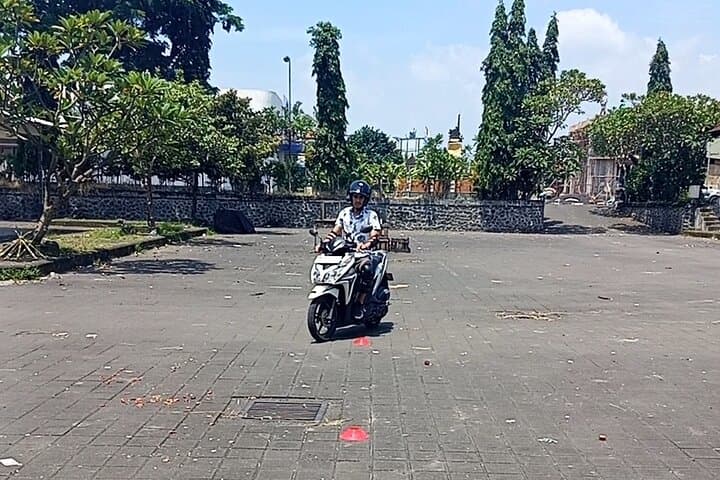
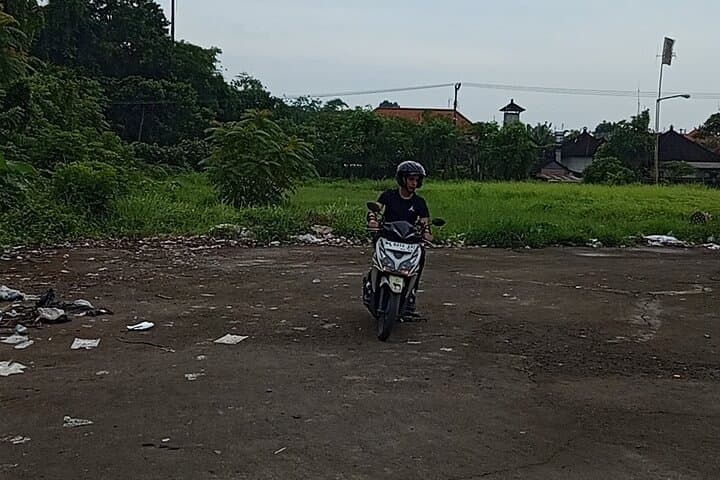
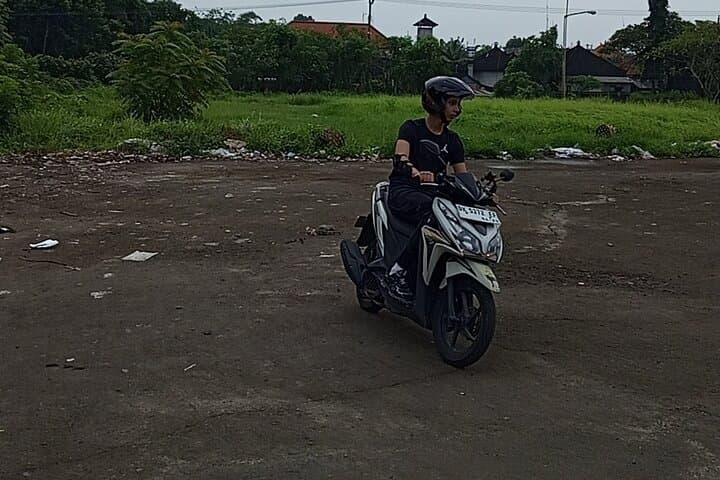
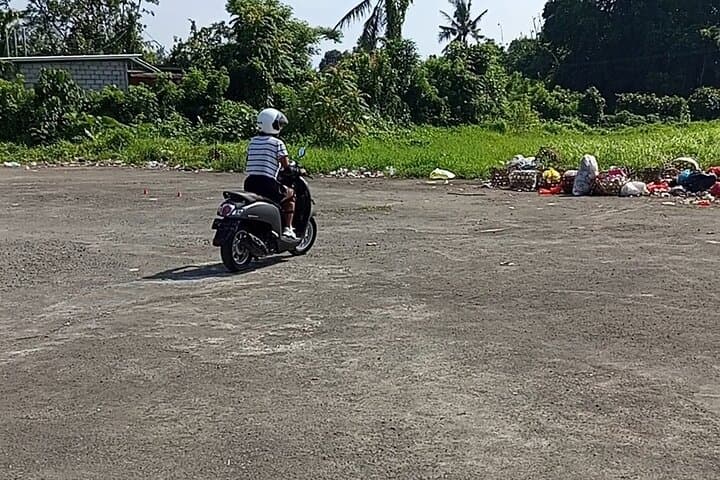
The lesson begins in a shaded courtyard on the edge of central Ubud, helmets lined up like quiet promise. Trainers walk students through controls, the throttle’s sensitivity and the brakes’ bite, then guide short circuits on calm streets until the scooter feels like an extension of intent. Local traffic — a patient, improvisational flow of cars, bikes and walkers — teaches timing as much as technique; learners leave feeling capable of navigating narrow lanes and rice-field roads.
The lesson begins in a shaded courtyard on the edge of central Ubud, helmets lined up like quiet promise. Trainers walk students through controls, the throttle’s sensitivity and the brakes’ bite, then guide short circuits on calm streets until the scooter feels like an extension of intent. Local traffic — a patient, improvisational flow of cars, bikes and walkers — teaches timing as much as technique; learners leave feeling capable of navigating narrow lanes and rice-field roads.
Ubud’s culture is steeped in temple ceremonies, woodcarving and music; its geography owes shape to volcanic activity from Mount Agung and Mount Batur, producing the terraced rice fields that flank many riding routes. Riding here is as much about reading the landscape — sudden shade from a frangipani tree, a river that dares you to follow its course — as it is about mastering the machine. Trainers emphasize respect for local norms: modest dress near temples, yielding to ritual processions and careful speed where children play.
Practically, expect a two-hour session that covers basic handling, helmet fit, safety drills and short supervised rides. Equipment is provided (scooter, helmet, safety gear, bottled water). Wear closed-toe shoes and long pants, and ask about local traffic rules and scooter rental insurance if you plan to continue riding after the lesson. Mornings are best for lighter traffic and cooler temperatures; sunset brings a busier road network.
This lesson is ideal for first-time riders or visitors who want independence to explore Ubud’s surrounds with competence and cultural awareness.